


According to data from the World Health Organization, there are as many as 650 million obese patients worldwide. Obesity, along with various complications (diabetes, cardiovascular diseases, fatty liver, heart disease, hypertension, metabolic disorders, etc.), has become the primary threat to human health. Obesity has become a common metabolic disorder. When the body consumes more calories than it expends, the excess calories are stored as fat, which exceeds the normal physiological requirements and eventually leads to obesity. It is often believed that maintaining energy balance in the body is an effective method to prevent obesity.
Adipose tissue is one of the largest organs in the body and is considered a major regulatory factor for energy balance in mammalian systems. Dietary fiber and polyphenols are known for their great potential in preventing obesity and related metabolic disorders. As a dietary supplement, Enteromorpha prolifera polysaccharide (EPP) is considered a natural, safe compound and has shown many biological effects (Tanna & Mishra, 2019), including antioxidant, anti-inflammatory, hypoglycemic, and lipid-lowering activities. However, the mechanisms of EPP in preventing and treating obesity and its complications remain unclear.
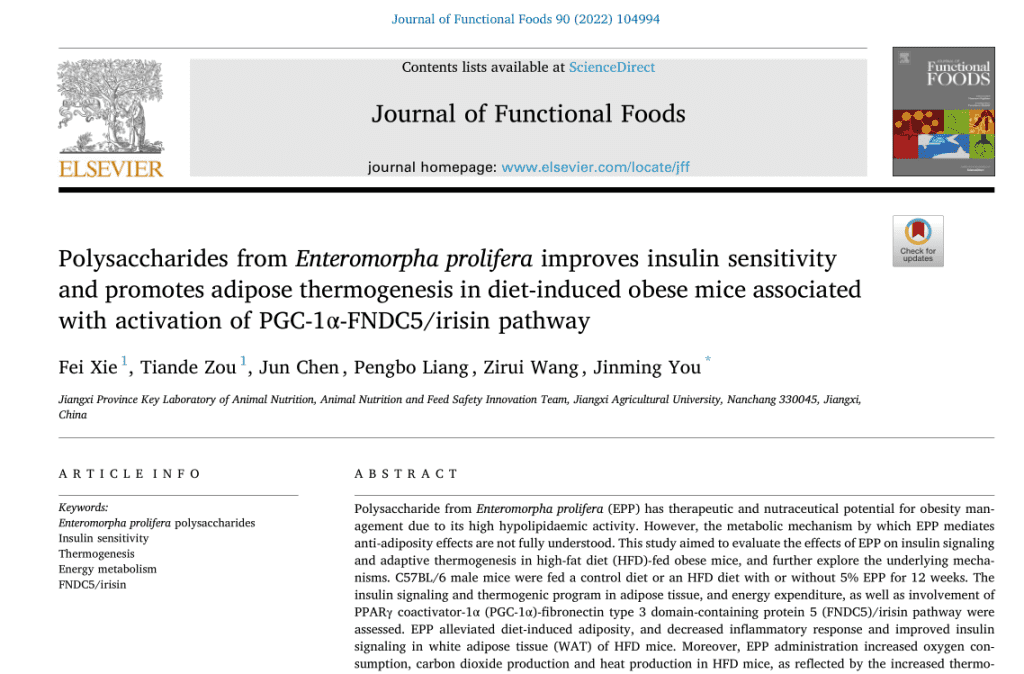
In this regard, a paper published in 2022 by Xie Fei, Zou Tiande, and colleagues from the Animal and Nutrition Laboratory at Jiangxi Agricultural University in the Journal of Functional Foods titled “Polysaccharides from Enteromorpha prolifera improves insulin sensitivity and promotes adipose thermogenesis in diet-induced obese mice associated with activation of the PGC-1a-FNDC5/irisin pathway” revealed that EPP can prevent obesity caused by a high-fat diet in mammals. It was confirmed that EPP improves insulin sensitivity in diet-induced obese mice and promotes adipose thermogenesis, thereby leading to energy expenditure and achieving anti-obesity effects.
In the study, the experimental mice were randomly divided into 4 groups, with 10 mice per group: LFD (low-fat diet), HFD (high-fat diet); LFD+5%EPP (low-fat diet + 5% Enteromorpha polysaccharide), HFD+5%EPP (high-fat diet + 5% Enteromorpha polysaccharide). The experimental design is shown in Figure 2.
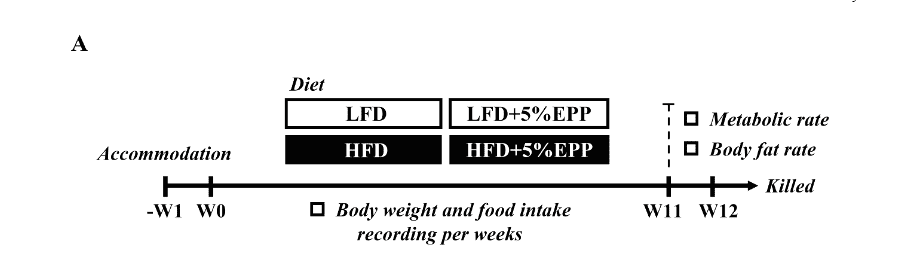
Figure 2: Experimental Design and Timeline
After 12 weeks of dietary intervention, the body weight of each group of mice was recorded (Table 1). Body composition analysis was performed on the mice using a low-field NMR (Niumai, Suzhou, China) instrument to measure fat and lean mass, determining the percentage of fat mass and lean mass (fat mass/total body weight × 100). At the end of the experiment, the mice were euthanized by CO2 inhalation and cervical dislocation, blood samples were collected, and the interscapular BAT (brown adipose tissue) and inguinal WAT (white adipose tissue) were precisely separated and weighed. The NMR body composition measurements and the inguinal WAT fat diagram after euthanasia are shown in Figure 3:
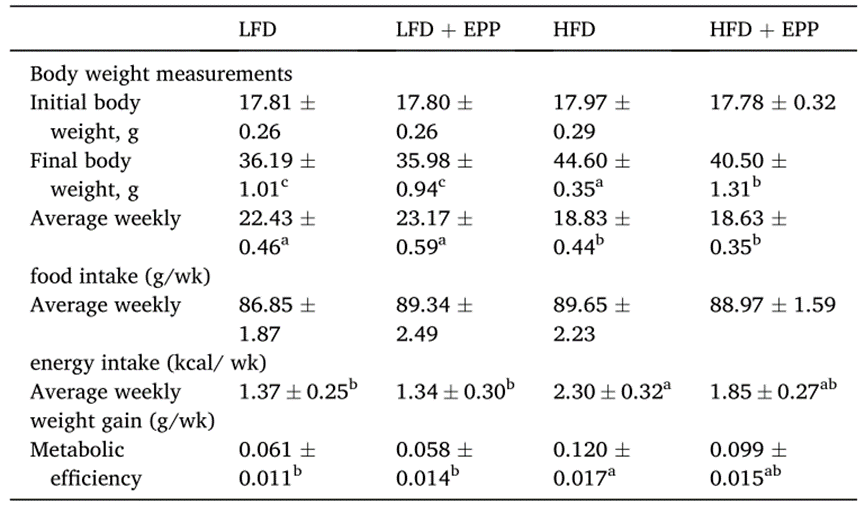
Table 1: Mice Body Weight and Other Parameters
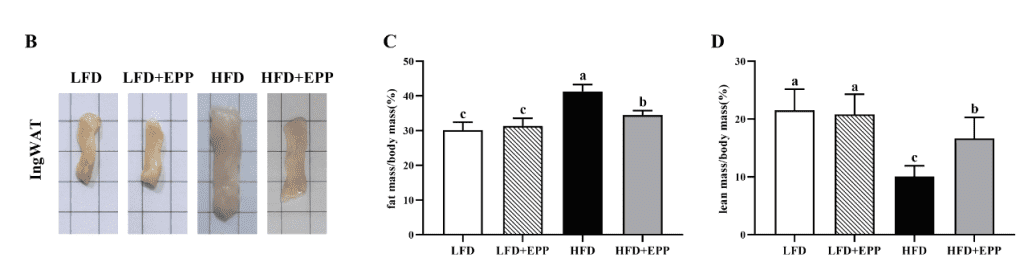
Figure 3: EPP Diet Prevents Diet-Induced Obesity
(B) Inguinal WAT (white adipose tissue) dissection after 12 weeks of feeding. (C) Percentage of body fat content after 12 weeks of feeding. (D) Percentage of lean mass in mice after 12 weeks of feeding.
The weight parameters in Table 1 show that after 12 weeks of EPP treatment, the final body weight of the HFD group was higher than that of the LFD group (23.24%, HFD vs LFD 44.60g vs 36.1g) and the LFD+EPP group (23.96%, HFD vs LFD+EPP 44.60g vs 35.98g). The final body weight of the HFD+EPP group was lower than that of the HFD group (9.19%, HFD vs HFD+EPP 44.60g vs 40.50g). As shown in Figure 3B, the inguinal WAT weight of the HFD group mice increased significantly, while the weight of the EPP group mice decreased significantly, consistent with the final body weight.
The NMR body composition fat and lean mass analysis in Figures 3C and D showed that after 12 weeks of EPP treatment, the HFD group had significantly increased fat content and decreased lean mass compared to the LFD group, while the LFD+EPP group showed no significant changes in fat and lean content compared to the LFD group. The HFD+EPP group showed a significant decrease in fat content and a significant increase in lean mass compared to the HFD group, which was consistent with the final body weight and dissection weight of the inguinal WAT.
In addition to the mouse body composition indicators, this study also measured and analyzed various metabolic markers, including serum irisin levels, histology, immunohistochemistry, and other methods (not elaborated here). The results of the study indicate that in addition to preventing diet-induced obesity, EPP diet also:
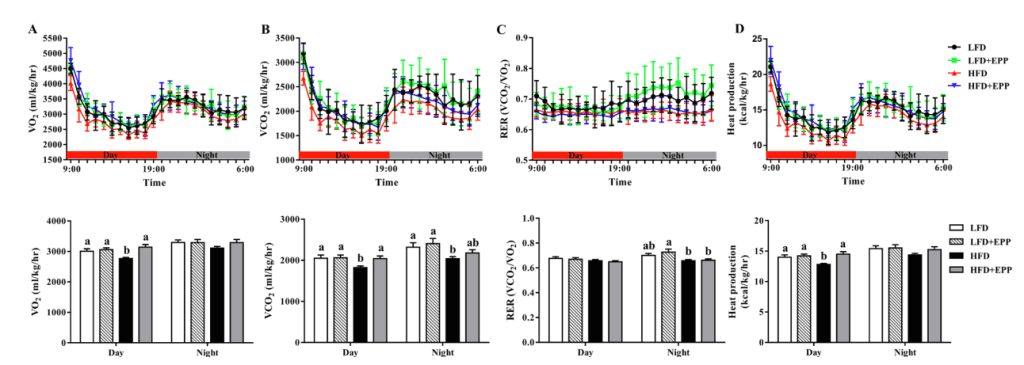
Figure 4: Metabolic Changes in Experimental Mice
(A) Oxygen consumption (VO2) during the 12-hour light-12-hour dark cycle and the average values. (B) Carbon dioxide production (VCO2) during the 12-hour light-12-hour dark cycle and its average. (C) Respiratory exchange ratio (RER, VCO2/VO2) calculated from the metabolic chamber data. (D) Thermogenesis during the 12-hour light-12-hour dark cycle and the average. The results show that compared with the high-fat diet group, the EPP group mice had higher oxygen consumption, carbon dioxide production, and thermogenesis during the daytime, and during the night (active phase), the RER of high-fat diet mice was lower than that of the LFD+EPP mice. In conclusion, the EPP diet increased energy expenditure in obese mice fed a high-fat diet, thereby preventing diet-induced obesity.
In summary, the indirect calorimetry system showed that the enhanced metabolic activity and decreased body fat percentage caused by EPP were related to increased energy expenditure. The study data suggests that supplementing the diet with EPP reduces fat and inflammation, enhances insulin sensitivity, and promotes the generation of brown and beige fat, thereby improving metabolic health in HFD mice. These findings suggest that EPP can be a potential functional ingredient to counteract the adverse effects of an unhealthy lifestyle (high energy, high fat intake, and lack of physical activity), including obesity and obesity-induced complications.
Enteromorpha (Enteromorpha) is a large green algae, belonging to the division Chlorophyta, order Cladophorales, family Cladophoraceae, a multicellular eukaryote widely distributed in marine areas around the world, commonly growing on rocks in the intertidal zone or in rock pools. The common species of Enteromorpha in China include Enteromorpha, Enteromorpha intestinalis, Enteromorpha linza, Enteromorpha prolifera, and others.
In addition to being rich in carbohydrates, proteins, crude fiber, amino acids, fatty acids, vitamins, and various minerals, Enteromorpha contains the highest iron content in the Chinese food nutrition composition table. It also contains fats and vitamins. In Enteromorpha proteins, the amino acid composition is complete, with a higher content of essential amino acids. The limiting amino acid in Enteromorpha linza is lysine, with an amino acid score of 79; the limiting amino acid in Enteromorpha prolifera is methionine, with an amino acid score of 80. The fatty acid composition of Enteromorpha consists of 50.5% polyunsaturated fatty acids, 12.7% monounsaturated fatty acids, and 36.8% saturated fatty acids, including nearly 4% odd-chain fatty acids. Therefore, Enteromorpha is a high-protein, high-dietary fiber, low-fat, low-calorie, and naturally mineral- and vitamin-rich ideal raw material for nutritional food. Enteromorpha can be eaten, and fresh Enteromorpha, when dried, can be consumed, crushed, and added to cakes and snacks, giving them a unique fragrance.
Enteromorpha polysaccharide is the main active ingredient of Enteromorpha. It is a negatively charged water-soluble sulfated heteropolysaccharide, mainly composed of mannose, rhamnose, glucose, galactose, xylose, and uronic acid, including glucuronic acid and iduronic acid. Enteromorpha polysaccharide mainly exists in the intercellular matrix and cell walls of the algae, with a small amount located in the cytoplasm. It has various biological activities, including enhancing immunity, antioxidant effects, inhibiting cancer cells, anti-aging, lowering blood lipids, and antibacterial and antiviral activities. It has also been reported that Enteromorpha polysaccharide has moisturizing and water-absorbing activities similar to the natural moisturizing factor hyaluronic acid. Therefore, Enteromorpha has been widely applied in the fields of food, medicine, feed, cosmetics, etc., with good application results.
Fei Xie, Tiande Zou, et al. 2022. “Polysaccharides from Enteromorpha prolifera improves insulin sensitivity and promotes adipose thermogenesis in diet-induced obese mice associated with activation of the PGC-1a-FNDC5/irisin pathway”, Journal of Functional Foods, 2022.

 Scan QR Code
 Scan QR Code
 Phone Support
Phone: 400-060-3233
After-sales: 400-060-3233
 WeChat Support

 Official Account

Back to Top