


The phenomenon of water rising in tall trees has fascinated scientists for a century. However, the microscopic state and dynamic behavior of water in natural, undisturbed trees remain unknown. In this article, Professor Wu’s team employed low-field nuclear magnetic resonance (NMR) technology to in situ monitor the distribution and movement of water in living trees, revealing the unique water transport processes within trees. The layered walls of xylem vessels are the main pathways for water to rise continuously, while the xylem vessels themselves act more like temporary water reservoirs. The spiral nanofibers in the vessel walls, composed of crystalline regions and amorphous zones arranged in a helix, form a spiral Venturi molecular pump structure, effectively drawing water from the xylem reservoir. Importantly, these spiral nanofibers have a semi-disordered surface that embeds a layer of solid-state water resembling ice. This self-lubricating ice-like monolayer water, combined with the new ‘reference plane’ created by the helical arrangement of the nanofibers, makes long-distance water transport almost frictionless under low negative pressure. This finding challenges existing theories and provides new ideas for developing bio-inspired fiber pumps with high efficiency and low energy consumption in fluid transport.
The rising of water in tall trees has long perplexed scientists. The cohesion-tension theory, proposed in 1894, provides an explanation for this phenomenon. According to this theory, the evaporation of water in the leaves lowers the pressure inside the leaves relative to atmospheric pressure, creating a suction that draws water up from the soil through the xylem, thereby sustaining the upward movement of water in tall trees. Although this theory is widely accepted, the cohesion-tension theory still faces several limitations. First, the continuous upward water column from the roots to the leaves requires a pressure gradient of several megapascals. However, due to the low cohesion (tension) between water molecules, the tensile strength of water is insufficient to sustain continuous motion under this negative pressure. Although synthetic tree models have been created that rely on the tensile strength of water for vertical transport, their validity is limited to a height of 5 cm. Field xylem pressure probes have confirmed that the negative pressure inside tall trees’ xylem is only between 0.1 and 0.6 megapascals. These results contradict the existence of a continuous water column with a high tension gradient in the xylem vessels. The formation of air bubbles, cavitation, and gas pockets further complicates the requirement for a stable and continuous water column in the xylem. In spring, about 10% of the xylem vessels are filled with gas, and by summer, nearly 50% of the water in the tree trunk is replaced by cavities. The fluctuation in water potential due to transpiration also affects the continuity of the water column in the xylem.
The rising of water in tall trees is a complex phenomenon influenced by various factors, including the complex layered structure of xylem vessels, the variations in negative pressure within the vessels, and the interactions between water molecules and the vessel walls. The complexity described here exceeds the explanatory power of the cohesion-tension theory. To accurately understand the dynamic behavior of water within xylem vessels, this study uses low-field NMR equipment to track the transport process of water in living trees in situ.
Eucalyptus seedling, helical cellulose nanofiber (CNF) microtubes, aligned cellulose nanofiber (CNF) microtubes.
Experimental Instrument: VTMR20-010V-I NMR Analyzer (Suzhou Niumai Analytical Instrument Co., Ltd.).
Experimental Methods: T1 measurement (IR sequence), T2 measurement (CPMG sequence), T1-T2 measurement, T2-T2 measurement.
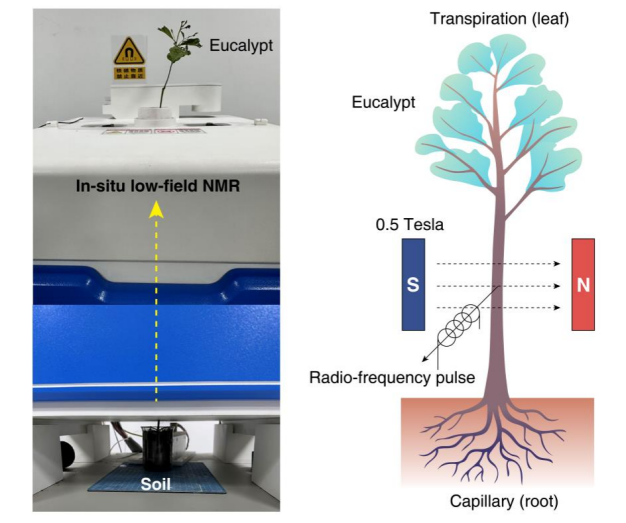
Figure 1: Experimental setup image
2.1 Water Kinetics Monitoring
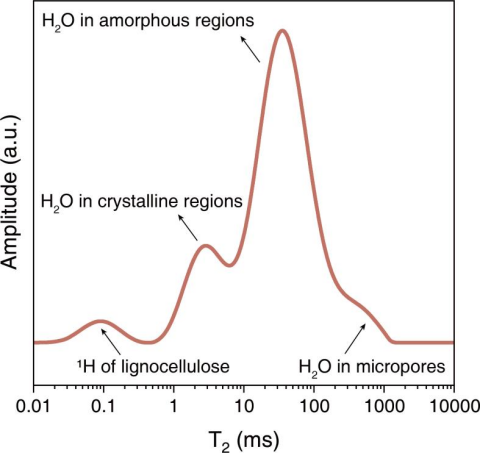
Figure 2: 1H T2 spectrum of a living eucalyptus tree
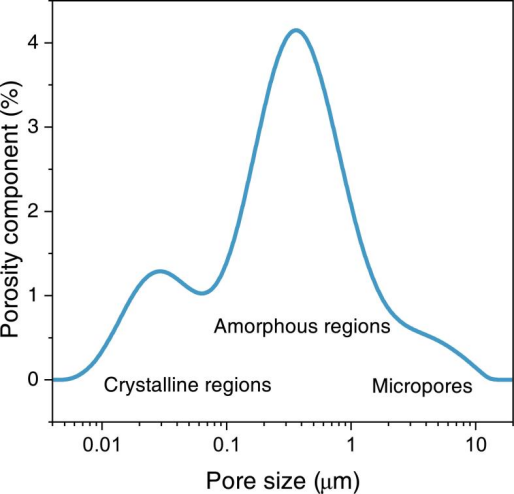
Figure 3: 1H pore size distribution of a living eucalyptus tree
A super-short T2 time of 0.09 ms corresponds to proton relaxation in lignocellulose. The two shorter T2 times (2 ms and 40 ms) are attributed to water in nano-sized pores, corresponding to the crystalline and amorphous regions of cellulose. The long T2 time (600 ms) corresponds to water inside the micron-sized xylem vessels. These results are further confirmed through pore size distribution analysis. The T2 amplitude of amorphous region water is much higher than other areas, indicating that water is primarily concentrated in the amorphous regions of the xylem vessel walls. Meanwhile, the xylem vessels contain only a small amount of water, suggesting the presence of numerous voids in these vessels.
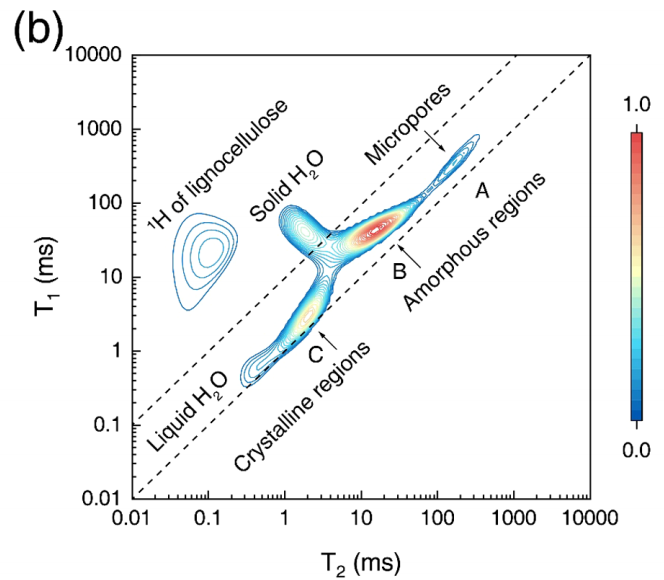
Figure 4: T1-T2 spectrum of a living eucalyptus tree
Two-dimensional (2D) low-field NMR maps provide a combination of T1 and T2. The T2 time corresponds to the activity of water, with longer times indicating higher activity. The T1/T2 ratio corresponds to the mobility of water, with a higher ratio indicating lower mobility. The shape of the spin distribution is closely related to the state of water. Circular spin distributions indicate that water is in an equilibrium state in a confined space, while spindle-shaped spin distributions suggest that water is undergoing exchange processes in an open space. When the spindle shape is parallel to the diagonal, it indicates the presence of fully open spaces where water can freely exchange with the external environment. When the spindle shape is orthogonal to the diagonal, the water is confined to partially closed spaces, and its movement is restricted by the surrounding environment.
As shown in Figure 4, the spin distribution with (T2 = 0.1, T1 = 24) corresponds to protons in lignocellulose of the living eucalyptus tree. Spin distributions near the diagonal are assigned to the water inside the tree. Specifically, spin distributions of (1.7, 2.3) and (1.9, 49.6) are assigned to water in the crystalline region, (16.6, 42.5) to water in the amorphous region, and (168.1, 391.7) to water in the xylem vessels. Notably, water in the crystalline region exhibits two different shapes of spin distributions, one parallel to the diagonal spindle and the other perpendicular to the diagonal spindle.
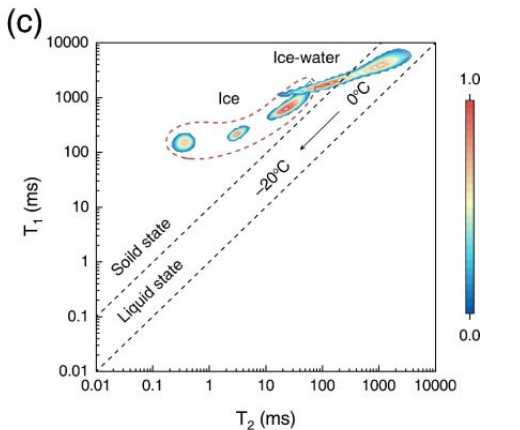
Figure 5: Overlay T1 – T2 maps at 0 and -20°C
From a migration rate perspective, when T1/T2 = 10 (Figure 5), the boundary between solid and liquid phases appears. The T1/T2 ratio of the spin distribution perpendicular to the diagonal in the crystalline region is 26, indicating that some water is trapped on the semi-disordered surface of the spiral fibers in the crystalline region. This embedded semi-disordered surface solid-state water exhibits ice-like properties.
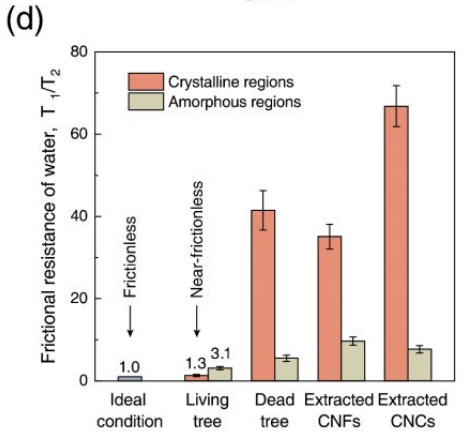
Figure 6: Overlay T1 – T2 maps of water at 0 and -20℃
Comparison of friction resistance of water in the crystalline and amorphous regions of living eucalyptus tree, dead eucalyptus tree, cellulose nanofibers (CNFs), and cellulose nanocrystals (CNCs).
The T1/T2 ratio quantifies the frictional resistance of water molecules through multi-scale narrow pores. In the crystalline regions, the T1/T2 ratio of water is only 1.3, approaching the ideal frictionless state (T1/T2 = 1) (Figure 6). The narrow channels in the crystalline regions are covered by a self-lubricating layer resembling ice, allowing water to flow through these areas in a near-frictionless superfluid state. This ice-like self-lubricating layer is a unique feature observed only in living trees. When trees die or are separated from the tree, the frictional resistance of water molecules in these areas significantly increases, reaching 41.5, 35.1, and 66.8 in dead eucalyptus trees, extracted CNFs, and CNCs, respectively. This increase is primarily due to the absence of the ice-like self-lubricating layer.
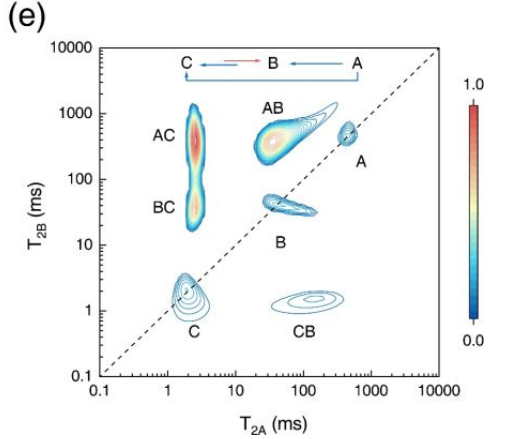
Figure 7: T2-T2 Spectrum
The T2-T2 spectrum is a non-invasive technique used to study water transport processes within opaque materials. Figure 7 shows three T2 values with decreasing diagonal peaks (labeled A, B, C), which are allocated as follows: Peak A corresponds to water in xylem vessels, Peak B represents water in the amorphous region, and Peak C represents water in the crystalline region. The AB cross-peak indicates unidirectional diffusion of water from xylem vessels to the amorphous region of the vessel wall (A→B). Similarly, the AC cross-peak shows unidirectional diffusion of water from xylem vessels to the crystalline region of the vessel wall (A→C). The water exchange between the crystalline and amorphous regions of the xylem vessel wall is represented by BC and CB cross-peaks (B↔C). Peak intensity indicates that unidirectional diffusion of water from xylem vessels to the crystalline region of the vessel wall dominates, driven by the radial negative pressure gradient created by the spiral Venturi molecular pump.
2.2 Role of the Spiral Structure
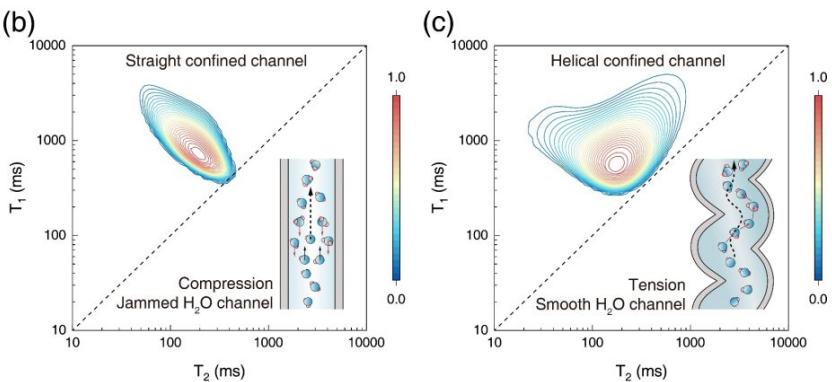
Figure 8: T1-T2 Spectrum of aligned cellulose nanofiber (CNF) microtubes and helical cellulose nanofiber (CNF) microtubes
The T1-T2 spectrum of water in aligned CNF microtubes shows a spindle-shaped pattern perpendicular to the diagonal, indicating that water molecules experience significant repulsive forces during upward movement (Figure 8). In contrast, the helical CNF microtubes show a spindle-shaped pattern parallel to the diagonal, indicating that water molecules move upward smoothly. The results suggest that when CNFs are arranged in a spiral within microtubes, the tension on the water is lower than when arranged vertically. Furthermore, water accumulates horizontally in the gaps between the helical nanofibers, forming a new ‘reference plane’ that counteracts part of the gravity acting on the water, thereby reducing the energy consumption during the upward movement of water.
2.3 Adaptability of the Spiral Venturi Molecular Pump
The spiral Venturi pump in the xylem vessel walls has strong adaptability. The spiral nanofibers adjust their tilt angle to adapt to changes in water potential caused by diurnal and seasonal rhythms. When the xylem vessels are filled with numerous cavities, a water film is adsorbed onto the vessel wall, which helps seal the bottom of the vessel. When the water potential rises again, this water film guides the water to refill the vessel.
This study used low-field NMR technology to explore the mechanisms of water transport in eucalyptus trees, offering a fresh perspective. The layered walls of xylem vessels serve as the main pathway for water rise, and the xylem vessels act more like temporary water reservoirs. A helical Venturi molecular pump structure is constructed within the xylem vessel walls, efficiently drawing water from the xylem reservoirs. The helical nanofibers possess an ice-like self-lubricating layer, significantly reducing friction and ensuring smooth water transport. Moreover, the helical Venturi molecular pump adapts to fluctuating water supply, ensuring continuous water flow within the tree. These findings have broader implications in plant physiology and potential applications in biomimetics and modern architectural engineering. In summary, this research offers deeper insights into the complex water transport process in tall trees and provides a new perspective on the ingenious design in nature, advancing research in fluid dynamics and bioengineering.
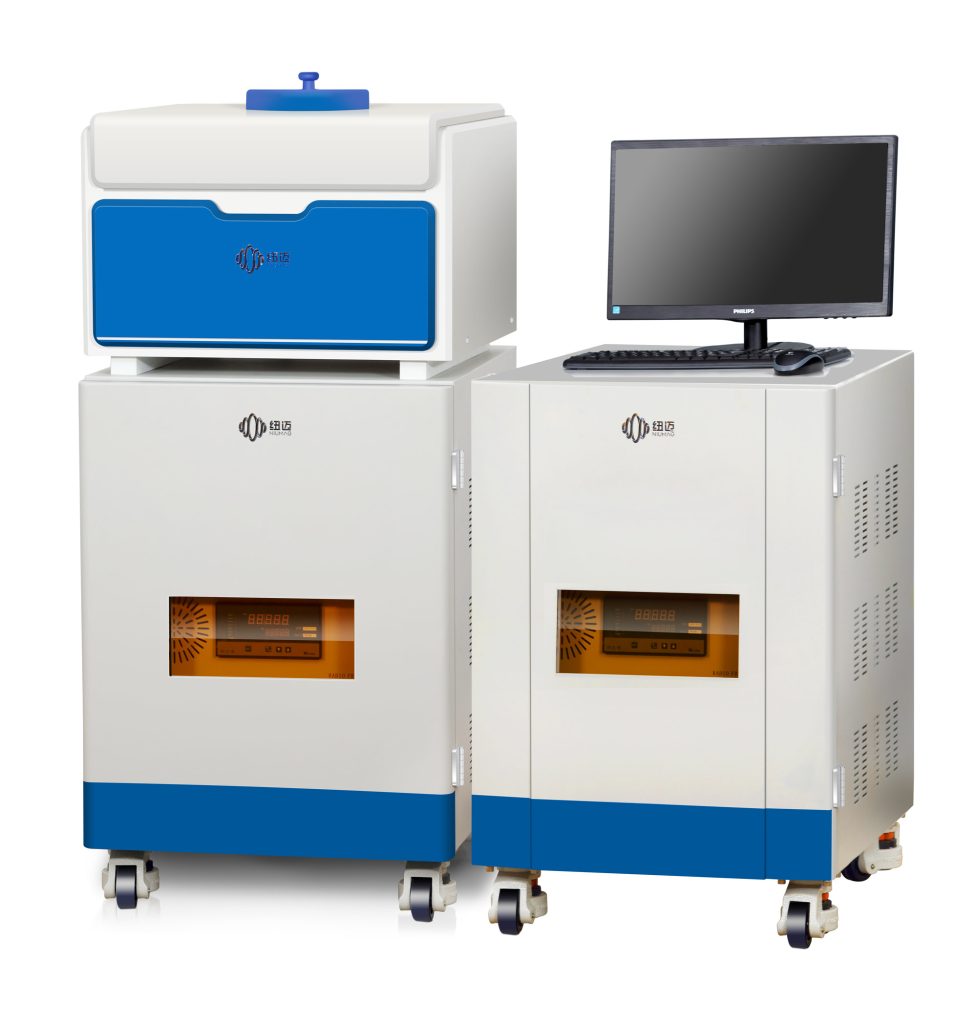
VTMR20-010V-I NMR Analyzer (Suzhou Niumai Analytical Instrument Co., Ltd.)
If you are interested in the above applications, feel free to contact us at: 15618820062
References
[1] Yanjun Liu, Jialin Zhang and Peiyi Wu. Near-Frictionless Long-Distance Water Transport in Trees Enabled by Hierarchically Helical Molecular Pumps. CCS Chemistry, 2024, 0, 1–9
 Scan QR Code
 Scan QR Code
 Phone Support
Phone: 400-060-3233
After-sales: 400-060-3233
 WeChat Support

 Official Account

Back to Top