


May 3-8, 2026 – The global geoscience community once again turned its attention to the EGU 2026 General Assembly of the European Geosciences Union. This premier international conference, covering all disciplines of Earth, planetary and space sciences, is not only a hub for academic exchange but also a showcase for cutting-edge analytical technologies.

Suzhou Niumag Analytical Instrument Corporation (“Niumag Analysis”) actively participated in the conference, presenting its full-range low-field nuclear magnetic resonance (LF-NMR) solutions for geology. The company demonstrated how low-field NMR technology can unveil the microstructural secrets of rock and soil.

The EGU General Assembly is dedicated to providing an open, inclusive platform for scientists worldwide – especially early-career researchers – to share ideas. Here, frontier theories and innovative technologies meet to answer the unresolved questions of Earth science.
As a representative of China’s high‑end analytical instruments, Niumag Analysis aimed to offer a non‑destructive, accurate, and intuitive “Chinese solution” for microstructural characterization and fluid dynamics analysis in geological research using low‑field NMR.
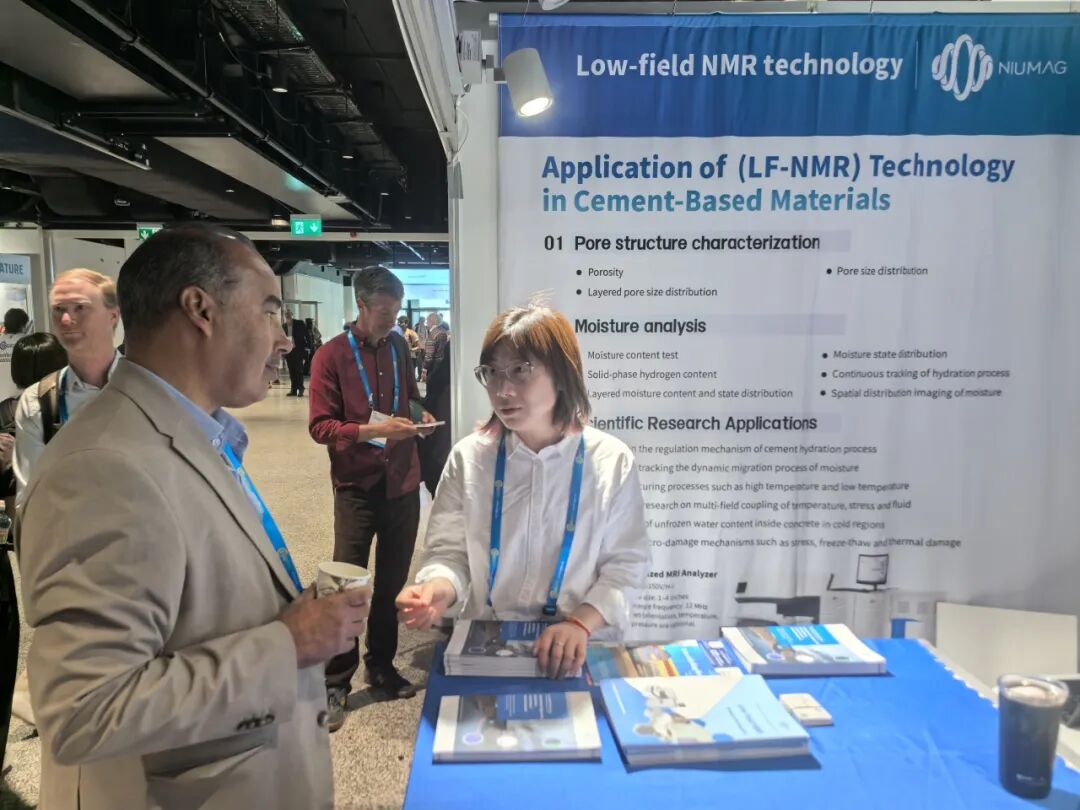
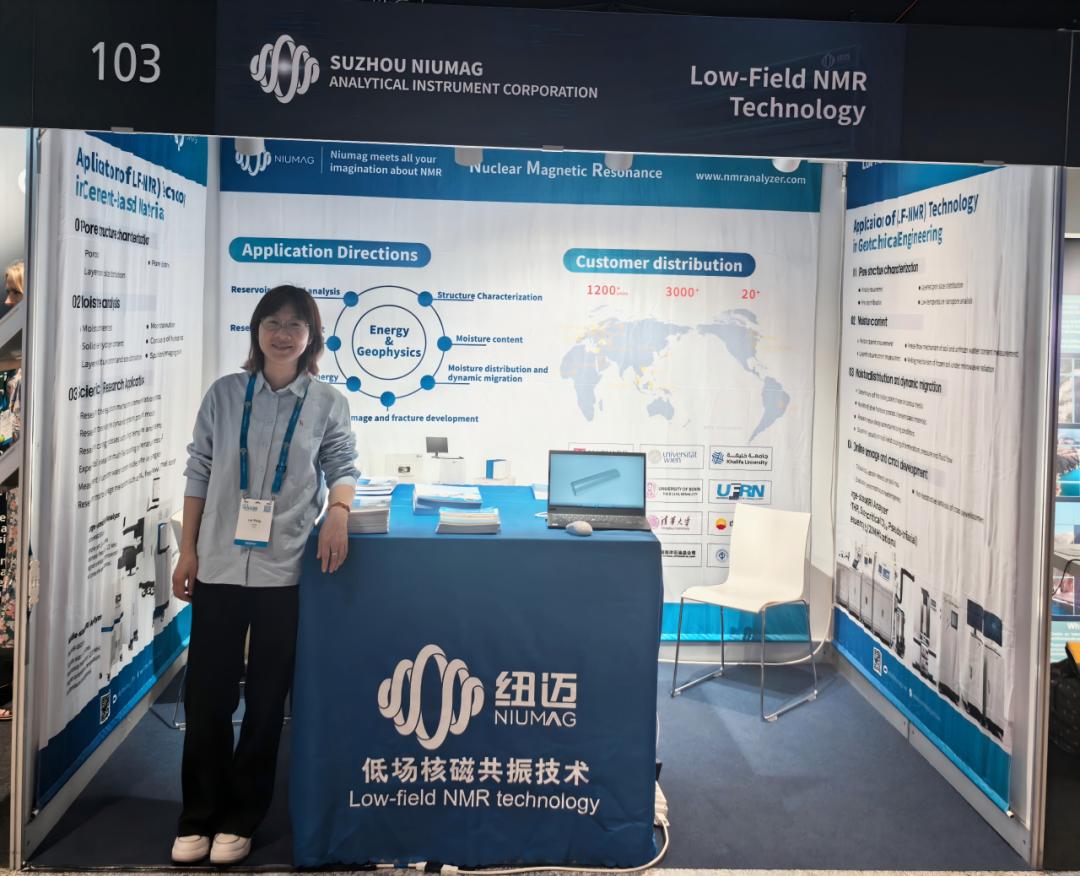
Facing complex geotechnical environments, Niumag‘s LF‑NMR technology provides dynamic monitoring from “pore‑water‑stress” perspectives:
Extreme cold & freeze–thaw research: Precisely determine soil freezing/thawing mechanisms and unfrozen water content; study permafrost thaw under microwave radiation; tackle difficult issues in cold‑region engineering. Combined with low‑temperature nanopore analysis, reveal the evolution of microscopic pores.
Dynamic water migration: Determine the binding state of water in porous media; perform multi‑field (temperature, pressure, seepage) coupling experiments; track water migration in real time.
Online damage & fracture evaluation: During triaxial stress‑strain loading of soils, achieve non‑destructive fracture analysis and microstructural heterogeneity assessment, providing critical data for geotechnical stability evaluation.
In cement‑based materials, the microscopic pore structure and water state directly determine macroscopic performance. Based on LF‑NMR technology, Niumag Analysis achieves a comprehensive view of “pore‑water‑damage”:
Deep pore structure characterization: Non‑destructively measure porosity and multi‑scale pore size distribution; accurately portray hierarchical pore structures – from nanoscale gel pores to microscale capillary pores.
Full water–state analysis: Not only measure water content and water state distribution, but also distinguish bound water from free water; analyse solid‑phase hydrogen content and continuously track hydration processes for real‑time monitoring of cement hydration kinetics.
Multi–dimensional spatial imaging: Visually obtain spatial water distribution images; combined with layered water content analysis, make water migration pathways visible.
Cutting–edge research tool: Support studies on cement hydration mechanisms, multi‑field coupling (temperature, stress, fluid), unfrozen water determination in cold‑region concrete, and micro‑damage mechanisms (freeze‑thaw/thermal damage) – ideal for exploring complex service conditions.
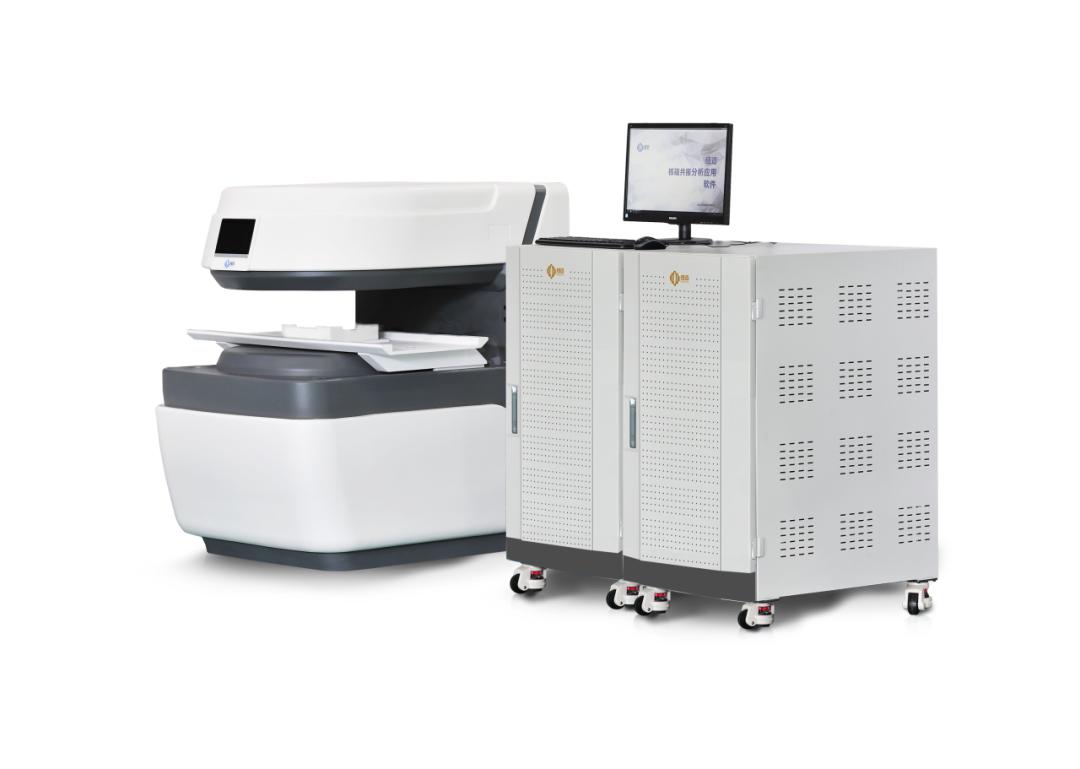
To meet the varying demands from laboratory to extreme environments, Niumag Analysis has built a complete low‑field NMR instrument matrix:
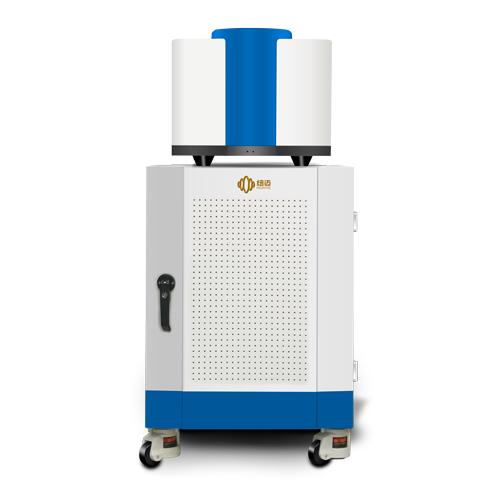
Cement–Based & General Geotechnical Analysis Series
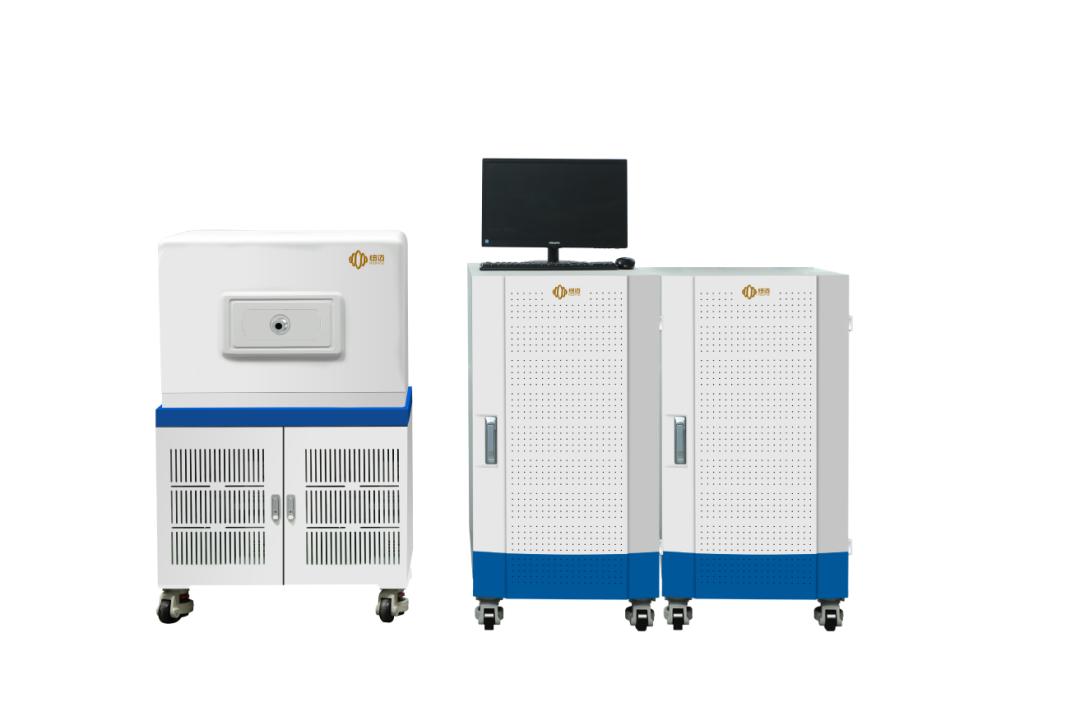
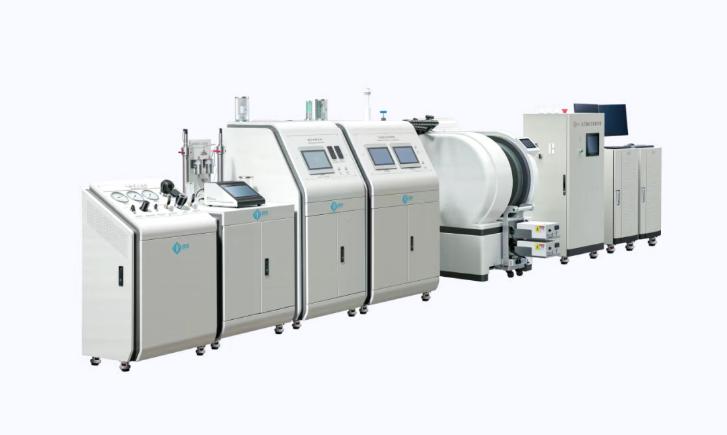
High‑Temperature / High‑Pressure Geotechnical Expert Series
MacroMR (High‑Temperature/High‑Pressure / Supercritical CO₂ / Pseudo‑Triaxial) : 12/20 MHz optional. Specifically designed to simulate extreme temperature‑pressure conditions deep in the Earth. Supports multi‑field coupling seepage and pseudo‑triaxial stress experiments under supercritical CO₂ environments – a powerful experimental platform for deep‑sea and deep‑earth research.
From second‑by‑second tracking of cement hydration, to precise capture of unfrozen water in frozen soil, to invisible probing of fractures under triaxial stress – low‑field nuclear magnetic resonance technology is redefining the depth and accuracy of geotechnical and geological research.
At the EGU 2026 General Assembly, Niumag Analysis looks forward to exploring the microscopic driving forces of Earth science together with the global community. We will continue to provide more stable and intelligent experimental tools for Earth scientists worldwide, powered by China‘s high-end analytical instruments.
 Scan QR Code
 Scan QR Code
 Phone Support
Phone: 400-060-3233
After-sales: 400-060-3233
 WeChat Support

 Official Account

Back to Top