

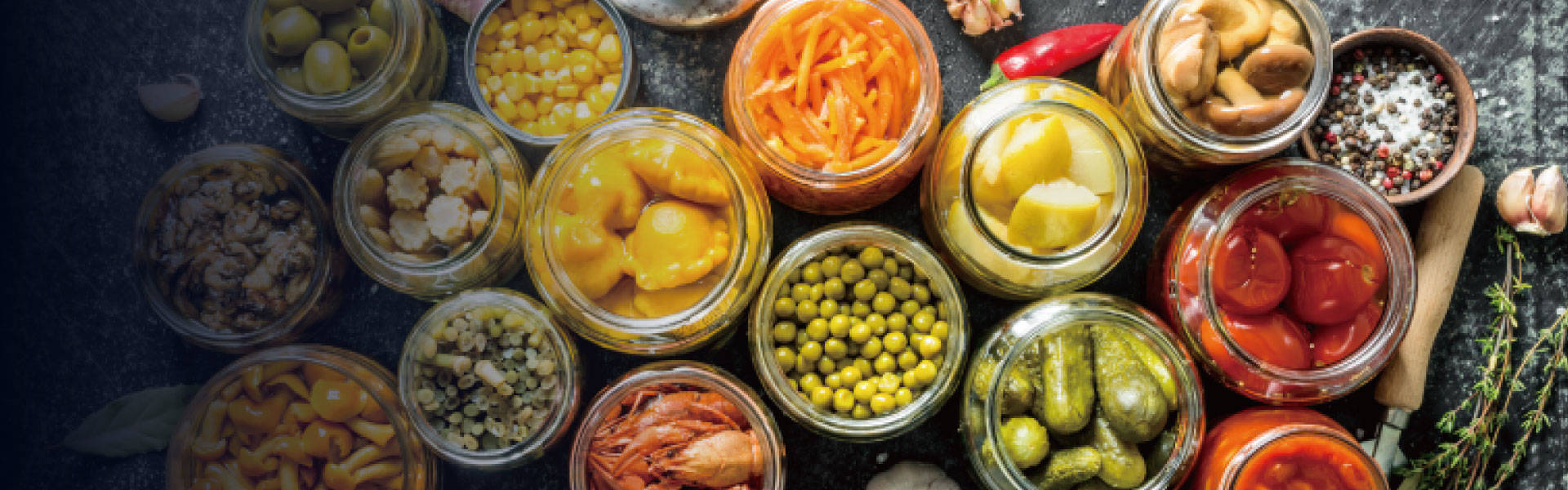
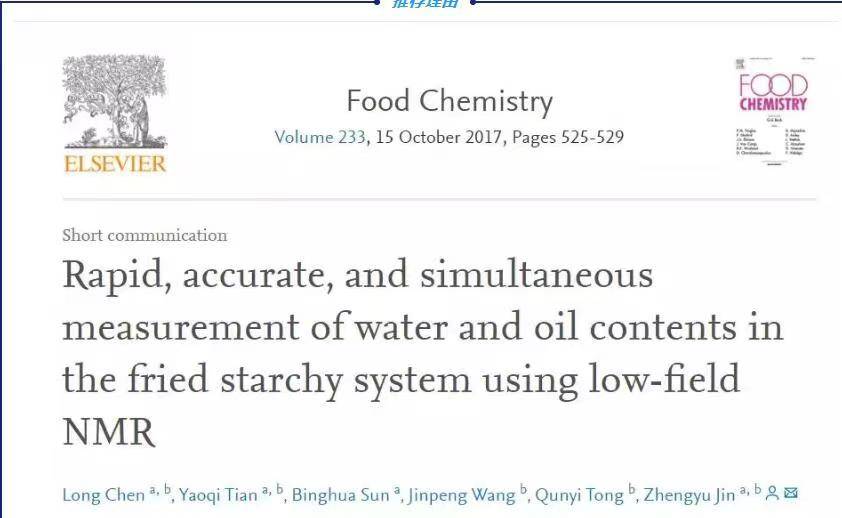
Today, we’re highlighting a publication from Long Chen at Jiangnan University, published in *Food Chemistry* in 2017 — a study on the application of low-field NMR for rapid and simultaneous quantification of water and oil content in model fried food systems.
Why we recommend this paper:
1. Key Conclusion: LF-NMR enables simultaneous quantification of water and oil in fried food systems.
2. Method Foundation: Combined with oven drying experiments, the study successfully identified the respective signals of oil and water in the transverse relaxation spectrum. The signals were clearly separated, without overlap, providing a solid basis for the development of simultaneous LF-NMR quantification methods.
3. Method Advantages: LF-NMR is fast, non-destructive, and eco-friendly. Compared to traditional Soxhlet extraction or oven drying, it requires no harmful chemicals and is safe and sustainable. Unlike NIR spectroscopy, LF-NMR is a direct detection method that is unaffected by darkening of fried products, offering speed, precision, rigor, environmental safety, and innovation in one.
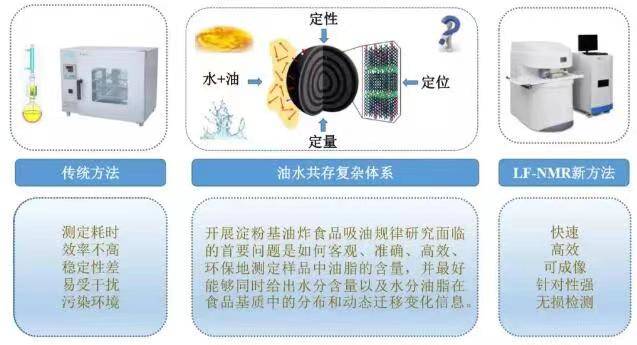
Figure 1: Comparison of methods for water-oil analysis in complex food systems
Moisture and oil content are critical quality indicators in food. However, current detection methods are often outdated and inefficient.
In many foods, water and oil coexist in complex matrices. Their respective concentrations and distributions determine quality, taste, and shelf stability. Rising concerns over obesity and cardiovascular disease have further driven research aimed at reducing oil content in foods.
Traditional methods like Soxhlet extraction or oven drying are time-consuming, unstable, and easily disrupted. (Anyone who’s worked with them knows the frustration — unpredictable results and tense lab silence are all too familiar.)
The need for a fast, non-destructive, and green analytical method is increasingly urgent.
01. Differentiating Oil and Water Signals in a Starch-Based Fried Model
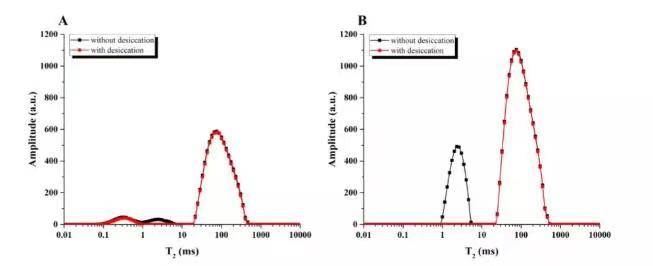
Figure 2: CPMG proton transverse relaxation spectra of fried starch-based samples
A. 20% moisture content; B. 50% moisture content during frying
LF-NMR was used to collect transverse relaxation spectra of fried samples. These samples were also oven-dried and re-tested to compare signal changes pre- and post-drying — allowing assignment of oil and water signals. The frying process involved deep frying in soybean oil at 180°C for 20 minutes.
LF-NMR analysis revealed two primary peaks: one for oil and another for bound water. Bound water itself appeared as weakly and strongly bound forms. Weakly bound water was removed at 105°C, while strongly bound water remained (Figure 2). Manganese ions were added to suppress the free water signal, aligning the water peak position with that of bound water for clear differentiation.
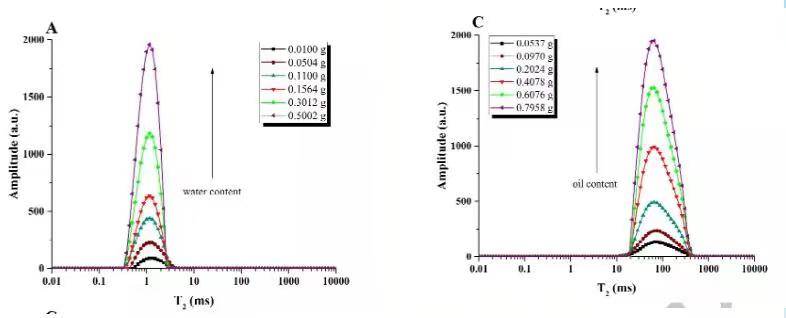
Figure 3: Transverse relaxation spectra of oil and water standards
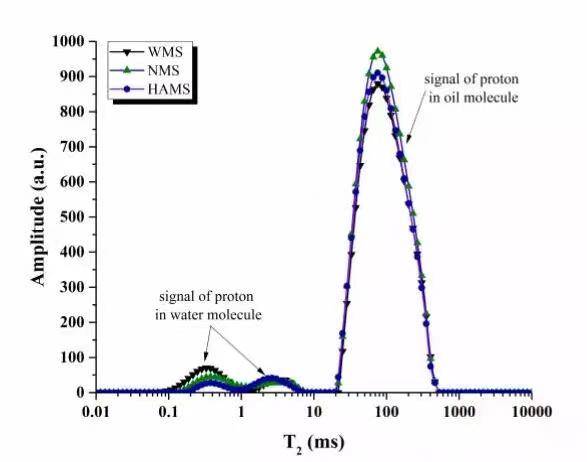
Figure 4: Transverse relaxation spectra of fried model samples
Manganese chloride solutions were prepared with concentrations adjusted to match water peak positions in fried samples. A series of oil and water standards were measured using the CPMG sequence. Signal peak area was plotted against sample mass to create calibration curves.
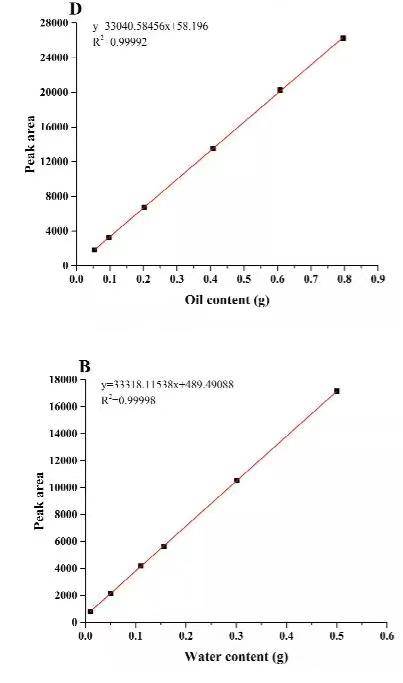
Figure 5: Oil and water calibration curves
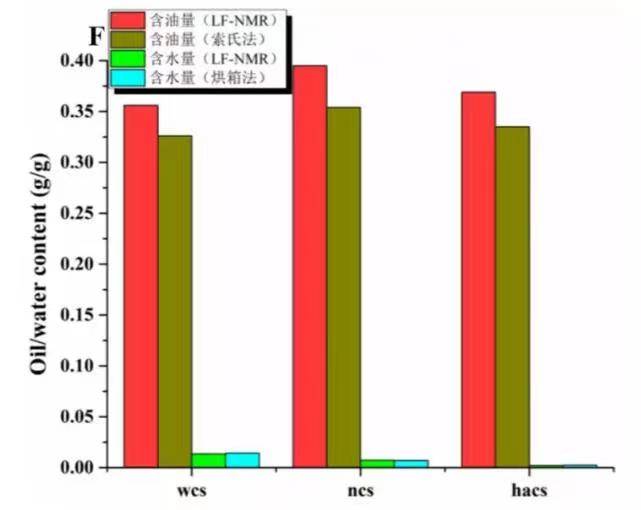
Figure 6: Comparison of LF-NMR and traditional methods in three starch systems
The R² values of all calibration curves exceeded 0.99, proving excellent linearity. Three representative starches—waxy corn (WCS), normal corn (NCS), and high-amylose corn (HACS)—were tested under frying conditions. Oil and water content determined by LF-NMR closely matched those measured by traditional methods.
Just when you think the paper is over, the author goes further — testing the robustness of the method under various frying parameters (moisture, oil temperature, time), since these vary widely in real food systems.
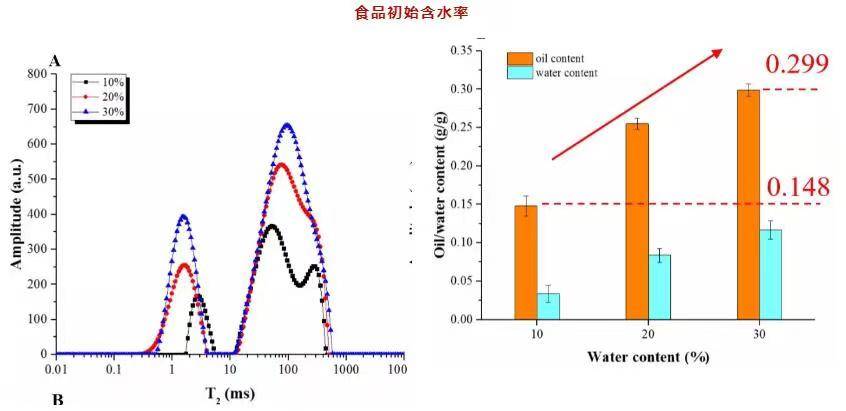
Figure 7: Effect of moisture content on oil and water uptake
Initial moisture content has a major impact on oil absorption. For example, normal corn starch at 30% moisture absorbed nearly twice as much oil as at 10%. This is likely due to increased gelatinization and structural loosening, which enhances oil uptake.
Frying Temperature
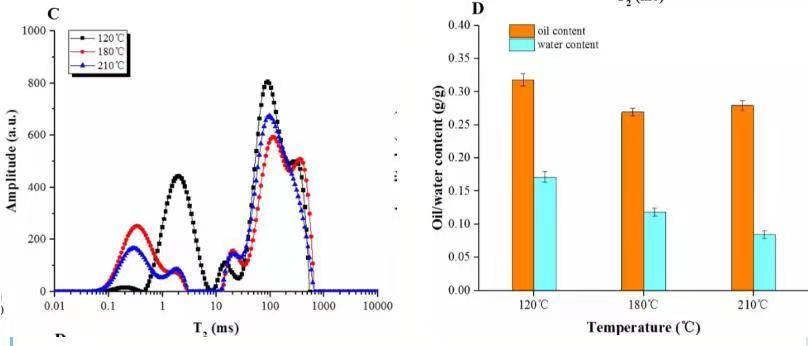
Frying temperature also influences oil absorption, though the mechanism is more complex. For normal corn starch, 180°C resulted in the lowest oil uptake.
Frying Time
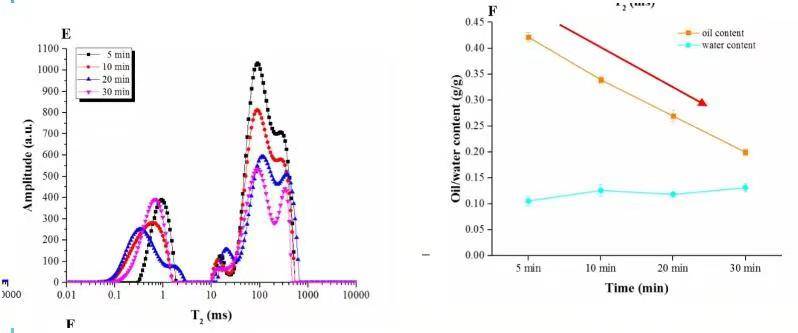
Interestingly, oil absorption decreased with prolonged frying across all starch types. This may be due to swelling and rupture of starch particles, releasing previously absorbed oil.
Outlook
This method shows great potential for real-time industrial monitoring of water and oil content during frying.
It also offers valuable insight into the mechanisms of oil binding in starchy food matrices.
Reference:
Long Chen, Yaoqi Tian, Binghua Sun, Jinpeng Wang, Qunyi Tong, Zhengyu Jin*. Rapid, accurate, and simultaneous measurement of water and oil contents in the fried starchy system using low-field NMR, *Food Chemistry*, 2017, Vol. 233, pp. 525–529. (SCI, IF = 4.529, Tier 1 Journal in Food Science)
 Scan QR Code
 Scan QR Code
 Phone Support
Phone: 400-060-3233
After-sales: 400-060-3233
 WeChat Support

 Official Account

Back to Top