


Solid Fat Content (SFC) refers to the amount of fat present in the solid state at a given temperature.
Naturally occurring fats are typically mixtures of solid and liquid components at room temperature. SFC is a standard parameter for cocoa butter, margarine, butter, and other fats. It indicates melting behavior and hardness at different temperatures—properties that greatly influence mouthfeel, flavor release, and spreadability.
According to National Standard GB/T 31743-2015, the NMR direct method is the approved testing standard for SFC. Using Free Induction Decay (FID) sequences, the NMR system directly distinguishes between signals from solid and liquid fats. The solid fat content is calculated based on signal separation and integration.
Hydrogen atoms in solid and liquid fats exhibit different behaviors in FID decay curves due to their molecular mobility. As shown in the diagram below, signals from solid fat decay rapidly—typically disappearing by 70 microseconds. In contrast, liquid fat decays slowly and remains relatively stable at the 70-microsecond mark.
However, due to instrument dead time, part of the solid signal decays before acquisition begins. The system captures the first FID signal point S after the dead time, during which some solid fat signal (S′−S) has already decayed. Using signal correction techniques, accurate SFC values can be calculated.
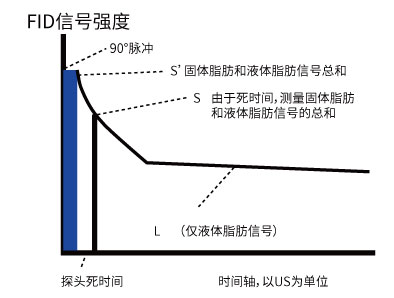
Schematic Diagram of NMR Signal for Solid and Liquid Fat
1. Preheat at 100°C for 15 minutes
2. Preheat at 60°C for 5 minutes
3. Preheat at 0°C for 60 minutes
4. Preheat at the target test temperature for 30 minutes before testing
Measure at multiple temperatures for full SFC profiling.
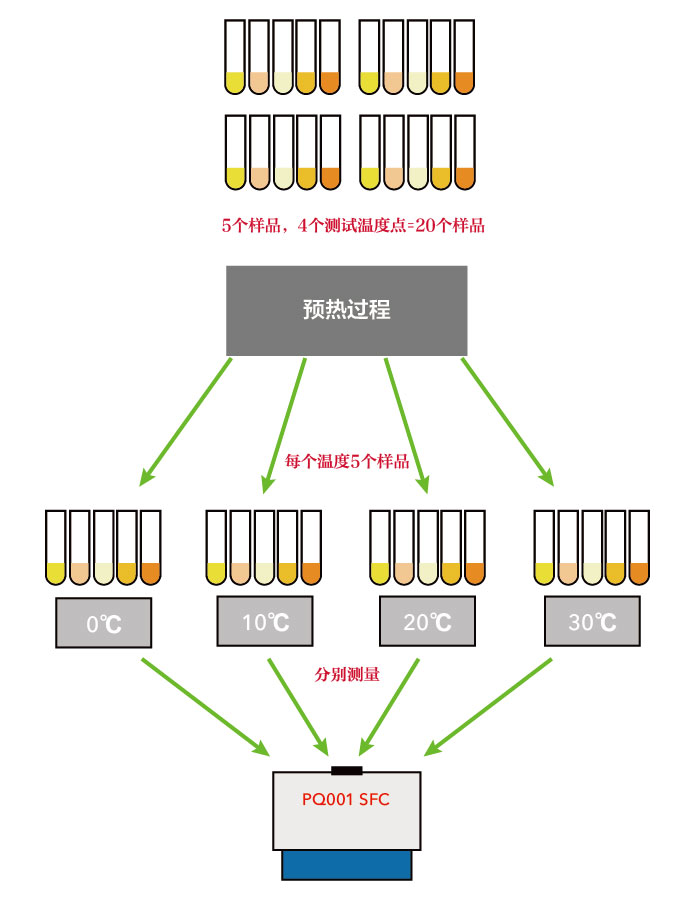
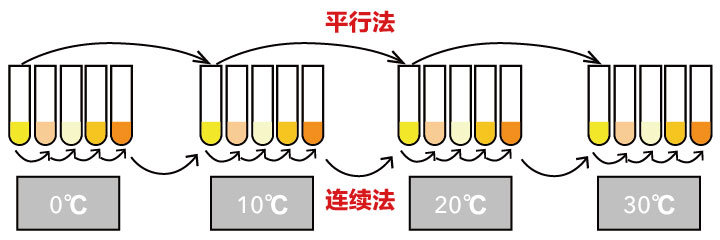
This method requires one water bath per target test temperature. Identical samples are placed in different water baths, each held at a distinct temperature. Once the first sample is measured at one temperature, it is immediately tested at the next temperature, and so on. After testing one sample across all temperatures, the next sample series begins.
The challenge with the parallel method is that each sample group experiences different thermal histories. While faster than using a single water bath for all temperatures, this approach demands more sample tubes and more water baths.
Sequential testing uses one water bath for all temperatures. All samples are tested at the same temperature before increasing the bath temperature for the next round. Although fewer baths are required, more time is needed to stabilize the bath at each new temperature. Temperature lag between tests may also introduce small errors.
This method uses multiple water baths like the parallel approach but applies sequential testing. All samples are preheated to the same starting temperature before being moved sequentially through each bath. This process is more time-consuming than parallel testing.
Test instrument: PQ001 NMR Solid Fat Content Analyzer (Manufacturer: Shanghai Niumag Electronic Technology Co., Ltd. – www.www.nmranalyzer.com)
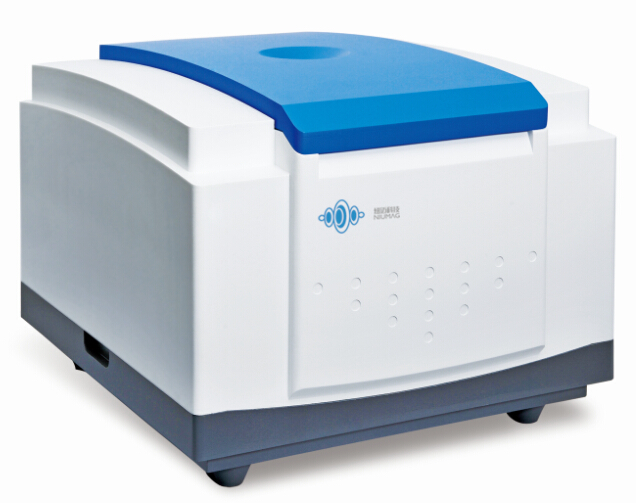
PQ001 NMR Solid Fat Content Analyzer
Test Results: Two types of cocoa butter samples were tested for SFC at different temperatures. A clear difference was observed between them: Standard cocoa butter had higher SFC values than reduced-calorie cocoa butter at ambient temperatures below 30°C. Additionally, the melting rate of solid fat in standard cocoa butter was faster than in the reduced-calorie variant.

 Scan QR Code
 Scan QR Code
 Phone Support
Phone: 400-060-3233
After-sales: 400-060-3233
 WeChat Support

 Official Account

Back to Top