

Fat is the most concentrated source of energy and, alongside carbohydrates and nitrogen-containing compounds, forms one of the three primary components of animal nutrition. It is not only a key natural nutrient in feed but also an indispensable ingredient in high-energy formulated feed. Appropriate fat levels in feed can replace equivalent energy from carbohydrates and proteins, enhancing metabolizable energy, reducing energy loss during digestion, lowering heat increment, and ultimately increasing the net energy value of the feed.
Appropriate fat content in feed can significantly influence animal growth rates. While fats offer numerous benefits, more is not always better. Fat in feed acts as a double-edged sword, offering advantages while also posing potential challenges that require careful management.
As the second most important quality parameter after protein, fat content is a crucial nutritional and quality control metric in feed production. Rapid and reliable measurement methods are essential for optimising production processes.
Traditional feed fat measurement relies on the Soxhlet extraction method, which is influenced by numerous factors such as sample particle size, extraction solvent, extraction time, accuracy of balances and ovens, performance of extraction equipment, ambient temperature, cleanliness of utensils, moisture content of the sample, and operator expertise. This method is also time-consuming and cannot provide real-time quality monitoring. In contrast, low-field Nuclear Magnetic Resonance (NMR) can measure fat content directly in animal feed with 9–14% moisture without drying. The process is fast, non-destructive, and highly accurate, making it ideal for on-site factory testing and robust quality control.
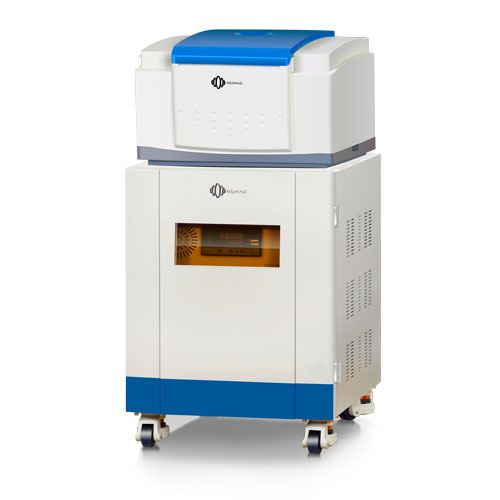
Newmae PQ001 Series Low-Field NMR Analyser
Fat content can be quantified by measuring the relaxation rates of hydrogen nuclei in different components of a sample using NMR. In animal feed, water is tightly bound to the solid matrix, while fat exists in a free state. By exploiting the differences in relaxation times, water and fat signals can be separated, allowing accurate quantification of fat content.

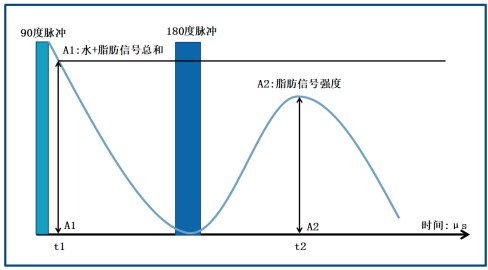
The diagram below illustrates the spin-echo sequence and corresponding NMR signal detection. After a 90° radiofrequency pulse, the Free Induction Decay (FID) signal is measured at time t1. The amplitude (A1) reflects the combined signal from both water and fat. Following a 180° pulse, the spin-echo signal amplitude (A2) is recorded, at which point the water signal has decayed to zero, leaving only the fat signal. By correlating signal intensity with fat content, precise quantification of fat in feed can be achieved.
 Scan QR Code
 Scan QR Code
 Phone Support
Phone: 400-060-3233
After-sales: 400-060-3233
 WeChat Support

 Official Account

Back to Top