


As a non-destructive detection method, low-field nuclear magnetic resonance (LF-NMR) based on relaxation time measurement has been extensively studied and widely applied in the analysis of oil and moisture content in oilseeds. It holds a solid position in agricultural and food industries for oil content determination.
There are existing standards such as ISO 10565:1995 “Oilseeds—Simultaneous Determination of Oil and Moisture Content—Pulsed NMR Method” and China’s GB/T 15690:1995 “Determination of Oil Content in Oilseeds by NMR”. These standards apply to oilseeds with moisture content below 10%, such as rapeseed, soybean, flaxseed, sunflower seed, sesame, and cottonseed.
For samples with moisture content exceeding 10%, a drying step is required prior to oil content testing to bring moisture levels into the acceptable range.
We assume that the NMR signals detected from seeds originate exclusively from water and oil. The hydrogen protons in water and oil differ significantly in their relaxation behavior—i.e., they have different T2 relaxation times. Water molecules that are bound or tightly associated exhibit short relaxation times, while oil and free water typically have longer T2 values.
Within seeds, water exists primarily in a bound state; thus, its T2 is significantly shorter than that of oil. Initially, the total magnetization signal M is contributed by both water and oil protons (and is not yet affected by relaxation time).
After a half-echo delay time (τ), the magnetization M becomes: Poil × (−e−τ/T2oil) + Pwater × (−e−τ/T2water)
If τ is much greater than T2water but less than T2oil, the contribution from water is negligible (approximated as 0), meaning water signal has fully decayed and the remaining echo peak is attributed to oil protons.
At this point, the FID signal reflects the combined contribution of oil and water. The peak of the first echo represents the oil signal. By subtracting this value from the total FID signal, the water signal is isolated. According to ISO 10565:1998, the τ value for testing oil and moisture content in seeds is set at 3.5 ms.
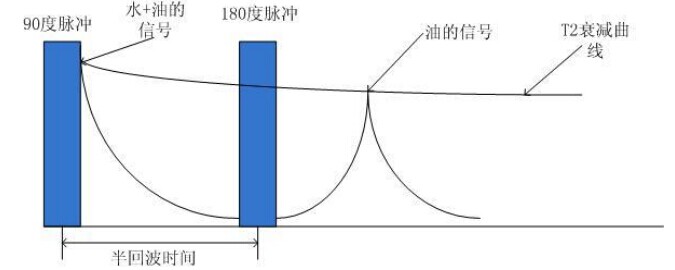
Figure 1. Principle of Oil and Moisture Determination in Seeds Using CPMG Sequence
Because the NMR signal strength of oil (or water) is linearly proportional to its actual mass, calibration curves can be established. This allows for the direct correlation between signal amplitude and oil (or water) content. As a result, the oil or moisture content of the tested sample can be accurately calculated.
 Scan QR Code
 Scan QR Code
 Phone Support
Phone: 400-060-3233
After-sales: 400-060-3233
 WeChat Support

 Official Account

Back to Top