


Thermosetting polymer composites form a three-dimensional crosslinked network through intermolecular reactions of binder chains. This crosslinking structure is crucial for achieving desirable material properties such as mechanical strength, aging resistance, and wear performance. Investigating the microscopic crosslink structure of polymers helps us better understand the relationship between structure and performance—and provides valuable guidance for optimizing material formulations.
Low-field nuclear magnetic resonance (LF-NMR) has become widely used in the field of polymer research. It enables the detection of crosslink density and relaxation times, making it a powerful tool for studying vulcanization, aging, modification, and water absorption/drying behavior. It also supports crystallinity evaluation and molecular dynamics studies—offering valuable insights for both quality control and materials development.

LF-NMR primarily detects hydrogen nuclei (¹H). In polymers, hydrogen atoms on different chain segments exist in varied chemical environments, causing differences in nuclear spin behavior. When a radio-frequency pulse is applied, the resulting spin system relaxes back to equilibrium at different rates. These relaxation times provide rich information about polymer molecular dynamics, which directly relate to properties such as crosslink density, aging, and filler content.

The transverse relaxation of hydrogen protons arises from dipolar interactions both within and between molecules. At temperatures well above the polymer’s glass transition temperature (Tg), these dipolar interactions are modulated by thermal motion and can be averaged out. Hydrogen atoms on polymer chains effectively serve as internal NMR probes. A modified single-chain model has been introduced to explain transverse relaxation behavior in such polymer systems.
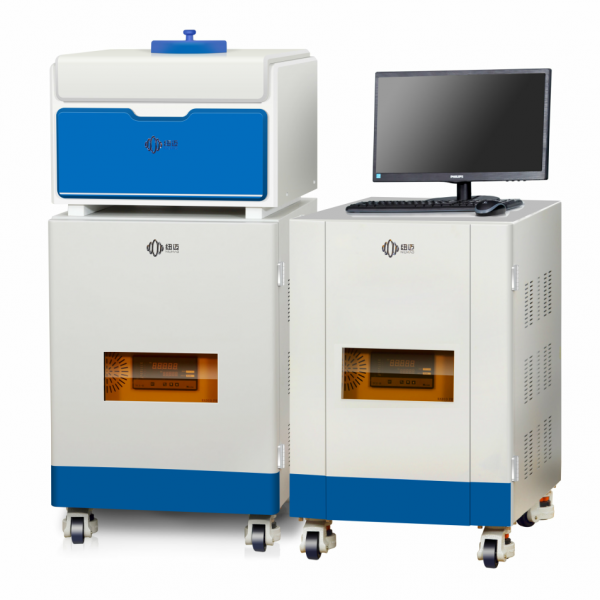
Variable-temperature LF-NMR Analyzer by Niumag
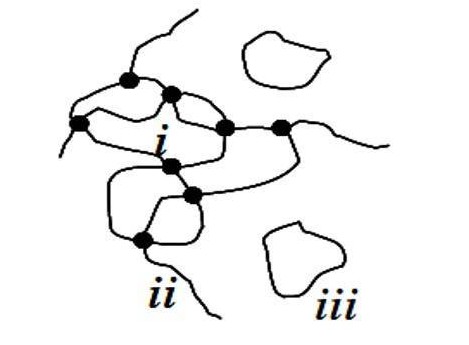
Entanglement is one of the most critical features of polymer chains. It significantly influences physical properties such as viscosity and rheology. According to recent research, entanglements can be broadly categorized into topological and cohesive types. Although the exact mechanisms are still under investigation, it’s well established that the degree of entanglement depends on factors like molecular weight, concentration, and temperature. Because entanglement affects molecular motion, NMR relaxation measurements provide an effective means to study these interactions.
 Scan QR Code
 Scan QR Code
 Phone Support
Phone: 400-060-3233
After-sales: 400-060-3233
 WeChat Support

 Official Account

Back to Top