


The wettability of coal is a key physicochemical parameter in coal reservoir studies. Beyond applications in coal chemistry, mining, and safety, understanding coal wettability is crucial for enhancing coalbed methane production.
What is Wettability?
Wettability refers to the ability of a fluid to flow and preferentially adhere to a solid surface in the presence of another immiscible fluid. It is primarily determined by interactions at the interface between fluid and solid, as well as between different fluid molecules. Accurately and rapidly assessing coal wettability during production is essential for guiding strategies to increase coalbed methane yield.
Methods for Determining Coal Wettability
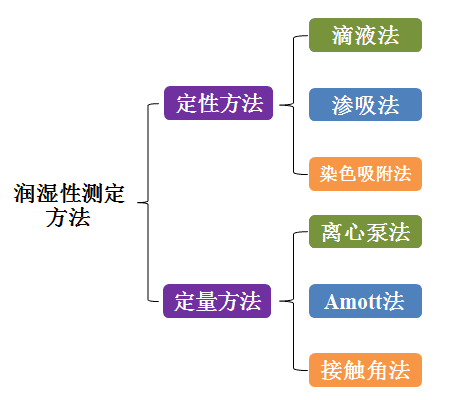
Common Methods for Measuring Coal Wettability
Each traditional method has limitations. For low-porosity, low-permeability coal samples, techniques based on displacement, such as the centrifugal pump method or Amott test, are typically used. However, displacement efficiency is often limited, and measurements can be time-consuming. Most methods also focus on liquid wettability and are not suitable for gas wettability. There is therefore a need for a new, fast, and non-destructive method. Low-field NMR (LF-NMR) is ideal, as it enables observation of transitions among adsorbed water, capillary-bound water, and free water in T2 spectra, allowing determination of changes in coal wettability.
Core Idea: To investigate coal’s relative wettability towards water, CO2, and He gas, LF-NMR was used to analyse water saturation in wet coal powder under different conditions. Gas injection experiments with various gases were also conducted on water-saturated coal powder to explore how gas properties influence the coal–water system’s wettability.
1. Sample Preparation and Experimental Procedure
Low-rank coal was selected, with a maximum vitrinite reflectance of 0.81%. Prior to testing, coal samples were ground to 200–250 μm, then dried in an air oven at 110°C until constant weight to complete pre-treatment. The detailed experimental workflow is illustrated below.
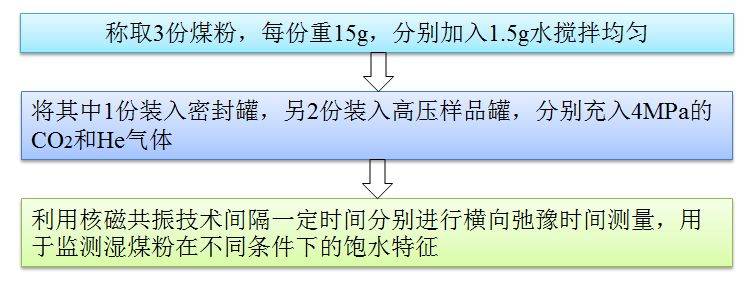
2. Main Experimental Equipment
The experiments employed a full-diameter core NMR imaging analysis system. The sealed canister (holding wet coal powder) and high-pressure sample chamber (holding CO2 and coal–water reactions) are made from non-magnetic materials. Detailed experimental parameters are available in the cited literature.
1. Characteristics of Coal Wettability
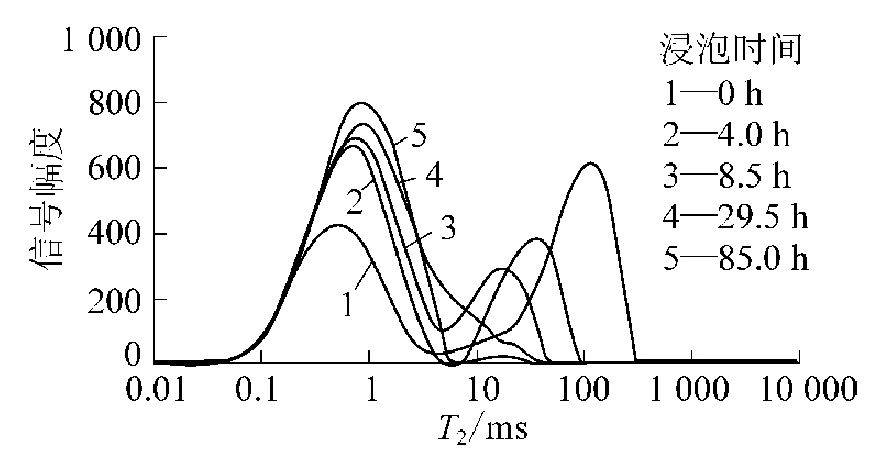
Figure 1: T2 Spectrum Changes During Natural Water Saturation of Wet Coal Powder
From Figure 1, as the coal powder absorbs water over time, the capillary-bound water peak shifts left and gradually decreases in area, while the adsorbed water peak area steadily increases.
2. Effect of Different Gases on Coal Wettability
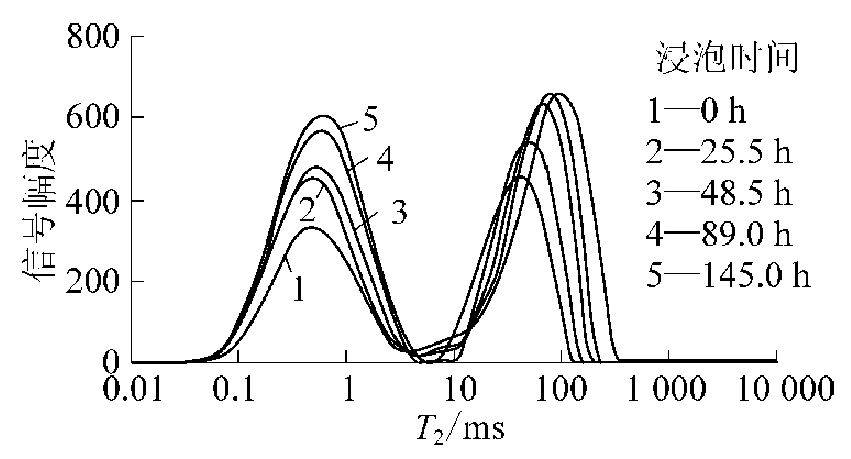
Figure 2: T2 Spectrum Changes of Wet Coal Powder Under 4 MPa CO2 Saturation
As shown, the NMR T2 spectrum exhibits a bimodal structure. With increasing water absorption, the adsorbed water peak area rises, while the capillary-bound water peak shifts left and slightly decreases in area, but the change is minimal.
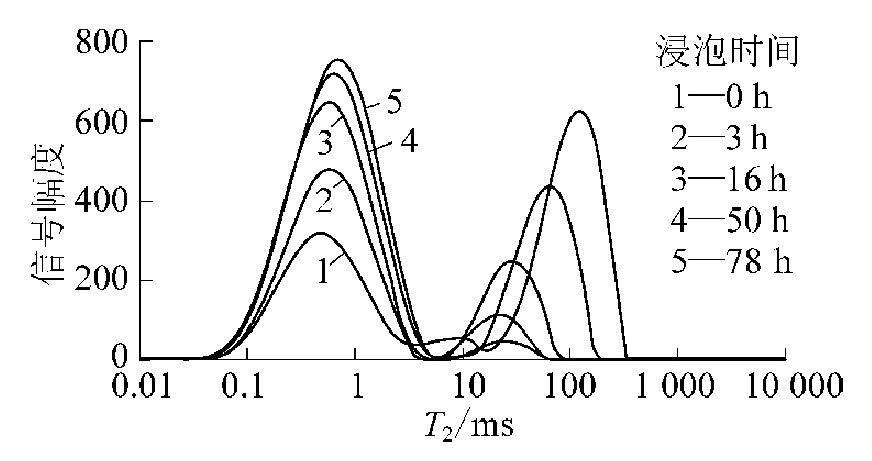
Figure 3: T2 Spectrum Changes of Wet Coal Powder Under 4 MPa He Saturation
Analysis shows that initially the spectrum has a bimodal structure. Over time, the adsorbed water peak increases, and the capillary-bound water peak gradually shifts left, eventually transforming into the adsorbed water peak.
The following figure illustrates how the different water phases convert under various conditions and how T2 changes over time.

Figure 4: Mass Fractions of Different Water Phases and T2 Variation Over Time Under Different Conditions
3. Gas Displacement Tests on Water-Saturated Coal Powder – CO2 Injection
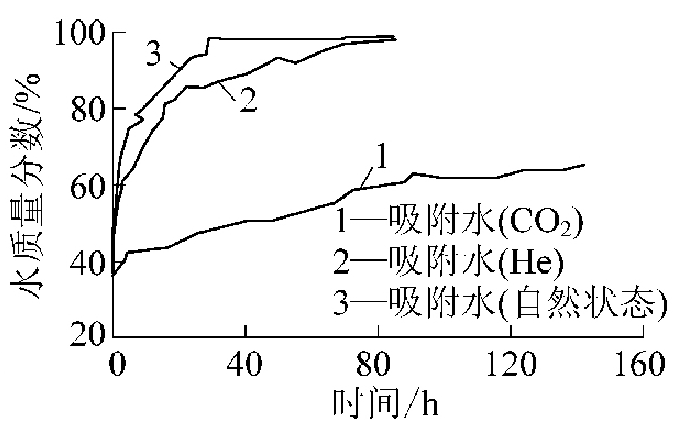
Figure 5: T2 Spectrum Changes During CO2 Displacement of Water-Saturated Coal Powder
Analysis indicates that as water-saturated coal powder is exposed to increasing CO2 pressure, the NMR T2 spectrum evolves from a single peak to a clear bimodal structure. The adsorbed water peak decreases while a new capillary-bound water peak emerges and gradually shifts right, showing adsorbed water transforming into capillary-bound water. Once adsorbed water reaches saturation, excess water remains in capillaries as capillary-bound water.
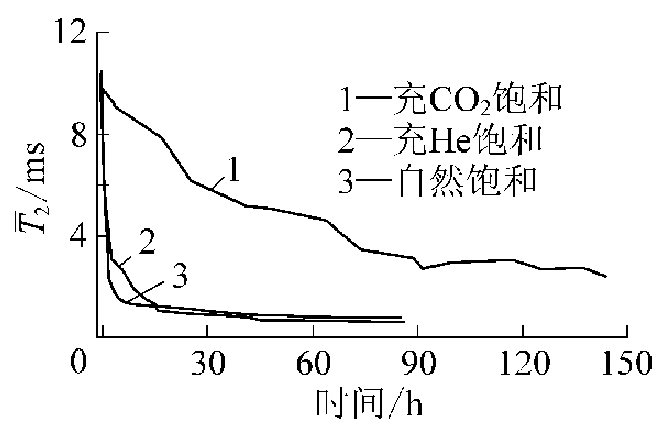
Figure 6: Mass Fractions and T2 Changes of Adsorbed and Capillary-Bound Water During CO2 Displacement
4. Gas Displacement Tests on Water-Saturated Coal Powder – He Injection
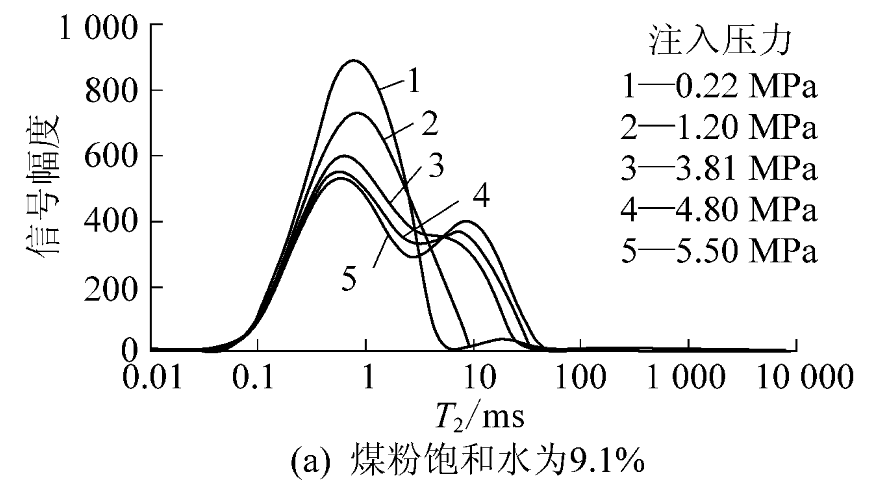
Figure 7: T2 Spectrum During He Gas Displacement Test
When water-saturated coal powder is exposed to He at various pressures, the NMR T2 spectrum remains largely unchanged. This indicates that He is non-adsorptive and does not compete with water molecules, thus having no effect on coal wettability.
5. Experimental Conclusions
1. In water-wet coal samples, CO2 alters coal’s water wettability, and its effect increases with injection pressure within the tested range. Helium has no effect.
2. The extent to which different gases modify coal water wettability varies, mainly due to differing adsorption capacities of coal for each gas.
3. CO2 injection reduces coal’s water wettability, enhancing water-phase permeability in coal reservoirs and significantly improving coalbed methane recovery.
References:
Chen Jiyu, Yao Yanbin, Sun Xiaoxiao, Xie Songbin, Guo Wei. Study on the Effects of CO2 and He on Wettability of Low-Rank Coal[J]. Coal Science and Technology, 2015, 43(11):129-134.
Numay Editor: Xiao K. Leave a comment to request the full text!
 Scan QR Code
 Scan QR Code
 Phone Support
Phone: 400-060-3233
After-sales: 400-060-3233
 WeChat Support

 Official Account

Back to Top