


Part 1 – Research Background Information
Journal: Journal of Petroleum Science and Engineering
Affiliation: Kazan Federal University (Russia)
Sample system: 22 crude oils, API gravity range 4.6–42.0°, covering extra-heavy, heavy, medium, and light crude oils
Reference standard method: ASTM D 4124 column chromatography SARA separation
Core instrument: Proton 20M 20 MHz low‑field NMR relaxometer, using FID + modified CPMG pulse sequences
Part 2 – Research Background and Limitations of Conventional Methods
SARA (Saturates, Aromatics, Resins, Asphaltenes) is a core characterization approach for crude oil. It is used to evaluate asphaltene stability, guide oil production, pipeline transportation, refining, heavy oil upgrading, and oxidation performance assessment. It is a fundamental analytical tool for both petroleum geology and petrochemical industries.
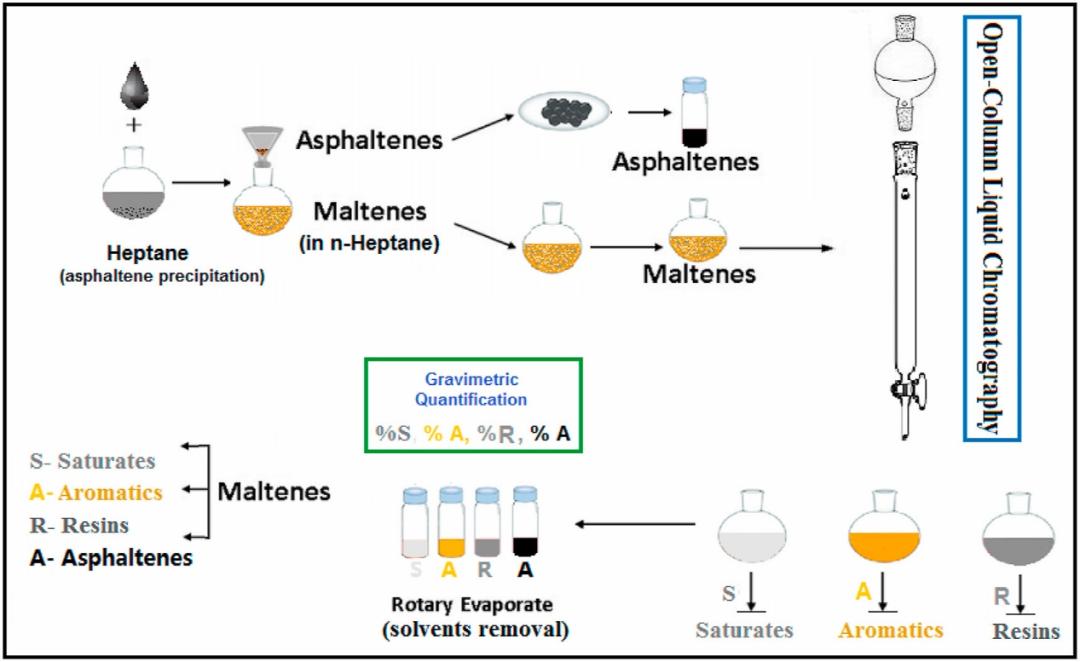
Cumbersome, time‑consuming, and resource‑intensive: Requires large volumes of organic solvents (n‑heptane, toluene, isopropanol), multi‑step precipitation, and alumina column chromatography; not automatable.
Destroys the native structure of crude oil: Solvent dilution and component separation alter the original colloidal system, causing component loss.
Poor repeatability and large errors: Inter‑laboratory comparisons show errors of 2 %–10 % for resins/asphaltenes, 12 %–28 % for aromatics, and up to 45 % for saturates. Severe cross‑contamination occurs, e.g., up to 26 % aromatics can mix into the saturates fraction.
Unable to perform in‑situ measurement: Crude oil must be fractionated; direct measurement of the original sample is not possible.
HPLC, TLC‑FID, and multi‑dimensional liquid chromatography each have shortcomings: incomplete separation, high instrument costs, and reliance on highly qualified operators. High‑field NMR instruments are expensive and difficult to industrialize. Low‑field NMR, being non‑destructive, low‑cost, and rapid, presents a highly promising alternative.
Part 3 – Experimental Protocol Design
22 crude oil samples from global oilfields, viscosity range 3.1–52,713.84 mPa·s. Reagents for conventional SARA: n‑heptane, toluene, isopropanol.
Asphaltenes precipitated with 40 volumes of n‑heptane.
De‑asphaltened maltenes separated by open‑column chromatography on 420 °C calcined alumina: saturates eluted with n‑heptane, aromatics with toluene, resins with toluene/isopropanol mixture.
Each fraction dried and weighed; mass fractions calculated gravimetrically.
Sample conditions: Sealed in 10 mm ampoules, measured at 40 °C, each sample measured ≥3 times with averaging.
Pulse sequences: 90°/180° pulses + FID + modified CPMG echo sequence.
Data processing: Multi‑exponential fitting model resolving five components.
Relaxation signal : asphaltene rigid core, asphaltene amorphous side chains, resins, aromatics, and saturates. Component contents quantified by T₂ signal amplitudes.
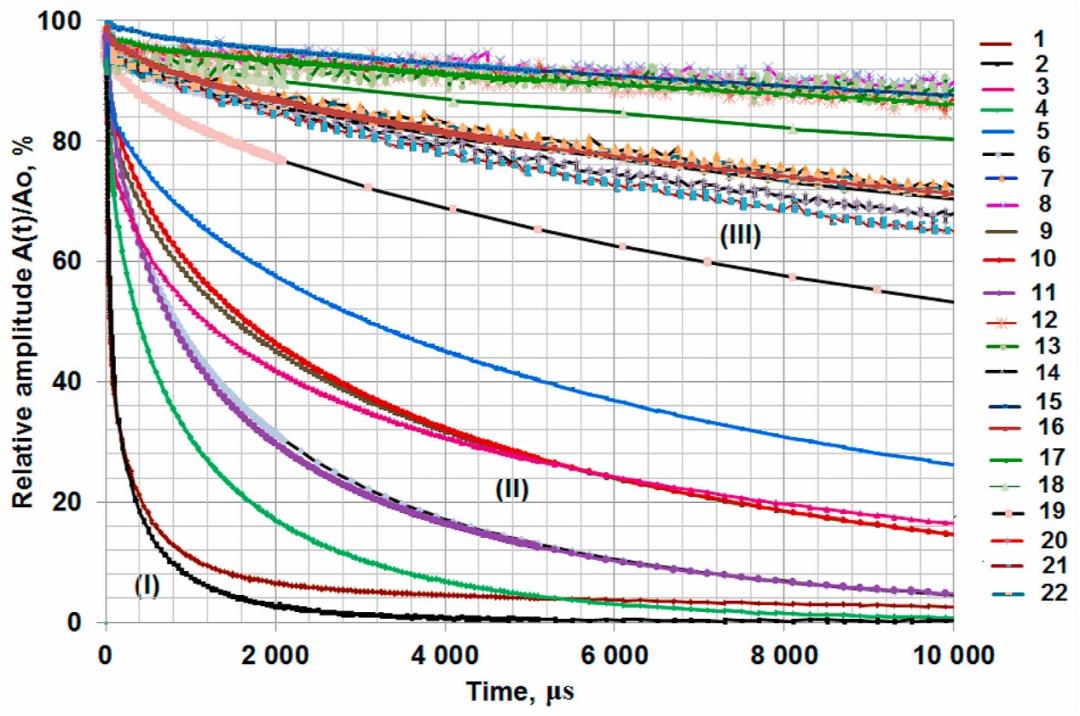
The T₂ relaxation time is determined by molecular mobility differences among crude oil components:
Asphaltenes: Rigid fused‑ring structure, shortest T₂ (19.35 ± 1.90 μs, 42.21 ± 3.30 μs), easily distinguished.
Resins: Large molecular size, affected by paramagnetic asphaltene centers, T₂ much shorter than light fractions.
Saturates + Aromatics: Strong molecular mobility, significantly longer T₂. Their similar chain lengths and mobility make individual distinction challenging.
Part 4 – Core Experimental Results
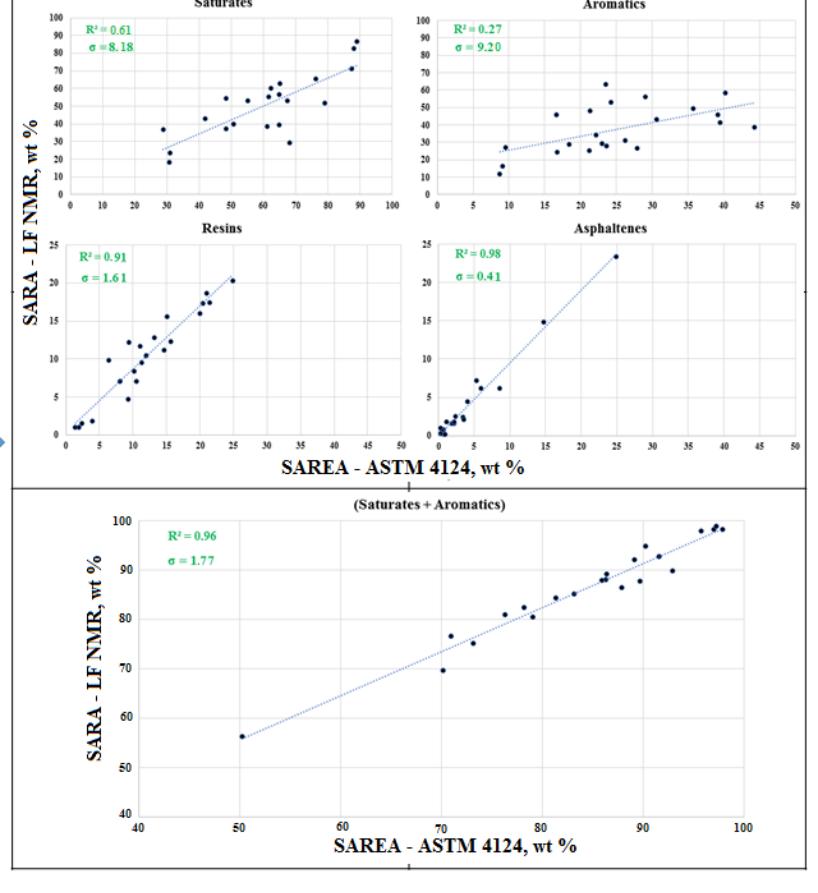
Correlation comparison between the two methods
Part 5 – Advantages and Limitations of LF‑NMR Technology
Advantages
In‑situ, non‑destructive: No solvents or extraction steps; preserves the original colloidal structure of crude oil.
Rapid and efficient: Eliminates multi‑step chromatography, precipitation, and drying, greatly shortening the analysis cycle.
Broad applicability: Suitable for extra‑heavy, heavy, medium, and light crude oils.
Low instrument cost: Significantly lower acquisition and maintenance costs compared to high‑field NMR and large‑scale chromatographic systems.
Good reproducibility: Very low errors for asphaltene, resin, and total light fraction quantification.
Limitations
Cannot distinguish saturates from aromatics individually; only provides their combined content. For separate quantification of these two light fractions, conventional chromatography remains necessary.
Application Recommendations
LF‑NMR relaxometry can replace the ASTM standard method for rapid determination of asphaltene, resin, and total light fractions in crude oils – suitable for oilfield on‑site rapid screening and online monitoring.
Particularly advantageous for heavy oil and extra‑heavy oil evaluation, enabling rapid pre‑assessment of asphaltene stability and real‑time monitoring of heavy oil upgrading.
Can serve as a primary screening tool for large laboratory sample batches, reducing organic solvent consumption and waste liquid pollution while lowering analytical costs.
Limitation note: For applications requiring separate quantification of saturates and aromatics, LF‑NMR cannot fully replace conventional column chromatography.

 Scan QR Code
 Scan QR Code
 Phone Support
Phone: 400-060-3233
After-sales: 400-060-3233
 WeChat Support

 Official Account

Back to Top