


Benchtop NMR can be applied to measure the oil content of tea seeds. Since benchtop NMR signal intensity is directly proportional to oil mass, oil content in tea seeds can be determined through calibrated oil-content measurement.
This article outlines the use of benchtop NMR to measure oil content in tea seed samples:
In nature, water and oil are the richest sources of hydrogen protons, and NMR signals arise primarily from hydrogen. The more hydrogen protons present, the higher the oil or water content. Conversely, fewer protons indicate lower levels. By applying calibration with signal intensity, NMR can thus be used to determine oil or moisture content.
For oil-content measurement, according to national standards, oil signals only appear after TE = 7 ms. Therefore, the signal point at TE = 7 ms in a CPMG echo train is taken as the reference for calibration and measurement. Converting this signal into unit-mass intensity for each sample produces a calibration line that correlates oil percentage with unit-mass signal strength. This calibration curve is key to the experiment. By substituting the unit-mass signal of test samples into the calibration line, the oil percentage of each sample can be determined.
Experimental materials:
Tea seed samples for testing; calibration standards.
(1) Standards: Create calibration standards using pure tea seed oil, or prepare tea seed samples with known oil content by other methods. Typically, 5–6 calibration samples are prepared. Once calibration is complete, the calibration line is automatically saved for subsequent testing.

(2) Test samples: Randomly select tea seed samples, weigh them, and place them into the benchtop NMR oil-content analyser. Results can then be obtained quickly.

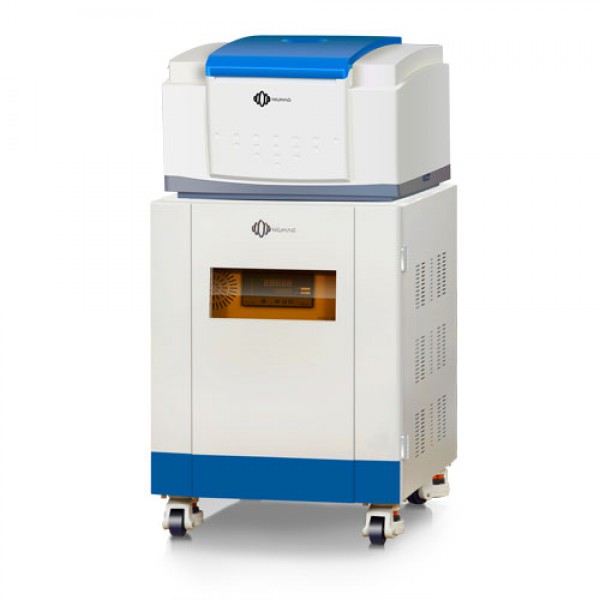
Recommended instrument: NMR Moisture and Oil Content Analyser
 Scan QR Code
 Scan QR Code
 Phone Support
Phone: 400-060-3233
After-sales: 400-060-3233
 WeChat Support

 Official Account

Back to Top