Postdoctoral Research Station

Niumag places great emphasis on talent development, actively engaging with university research resources. We explore new models for industry–academia collaboration and talent cultivation, and have established the Suzhou Niumag Postdoctoral Research Station and the Jiangsu Province University–Enterprise Graduate Workstation.

Founded in 2014, the station was upgraded from provincial to national level in 2017.

We have partnered with eight leading universities—including Fudan University, Nanjing University, Sun Yat-sen University, Shanghai University, Tongji University, Soochow University, Southwest Petroleum University, and Qiqihar Medical University—to jointly train postdoctoral researchers. To date, one postdoc has completed the program, and four are currently in residence.

In 2016, Dr. Wu Fei was selected for the Jiangsu “Double Innovation Doctor” program.

In 2017, Dr. Hua Shuai was also selected for the Jiangsu “Double Innovation Doctor” program.

Station News

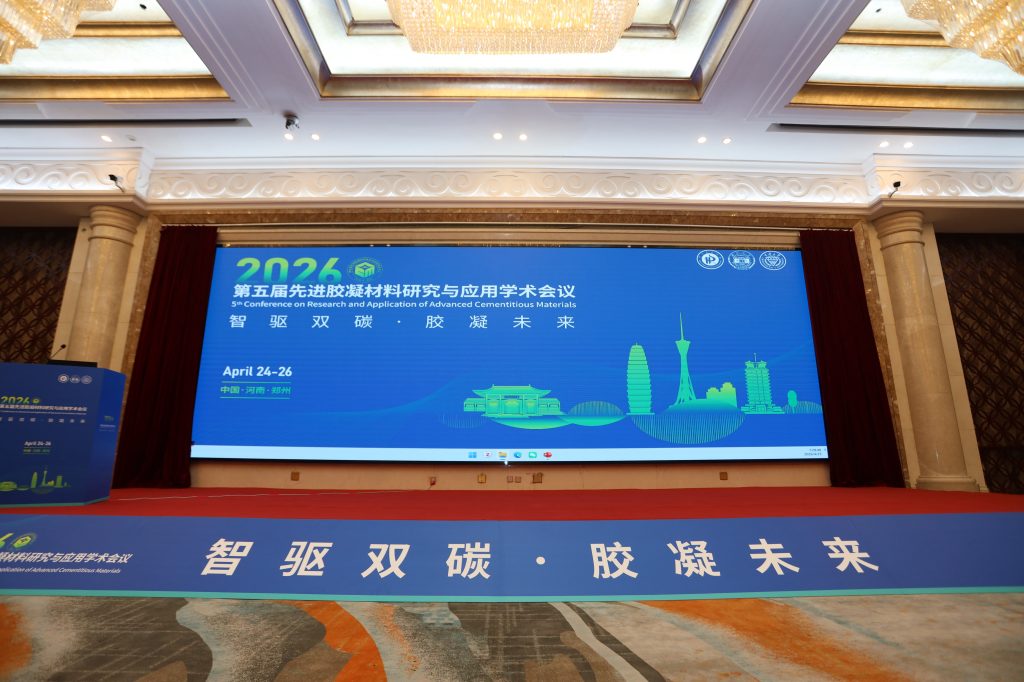
Niumag Shines at the 5th Advanced Cementitious Materials Conference: Driving Dual-Carbon Goals with Low-Field NMR as the ‘Eye’

Conference Introduction From April 24 to 26, 2026, the ‘5th Advanced Cementitious Materials Research and Application Conference’ was grandly held in Zhengzhou, Henan Province. The conference was guided by Chongqing University and Hunan University, and jointly organized by Henan Polytechnic University, Hunan University, and Chongqing University. As a highly influential academic event in the field of civil engineering materials in China, this conference focused on the theme “Driving Dual‑Carbon Goals, Cementing the Future”. It deeply addressed the industry’s dual‑carbon objectives, explored new pathways for AI‑empowered green manufacturing, and charted a blueprint for technological innovation and high‑quality development in the cementitious materials industry. At this academic feast gathering many renowned experts, Suzhou Niumag Analytical Instrument Corporation (hereinafter referred to as “Niumag Analysis”) showcased its cutting‑edge low‑field nuclear magnetic resonance (LF‑NMR) technology. The company demonstrated breakthrough applications of NMR technology in cement‑based materials, soil ecological restoration, geological disaster prevention, and other geotechnical research fields. Three NMR Powerhouses Cover Multi‑Scale Research from Core Samples to Test Specimens Traditional research on cementitious materials has mostly focused on macroscopic mechanical properties. However, microscopic mechanisms such as water migration, pore structure evolution, and ion transport in nano‑channels are often key factors determining material durability and ecological function. To address the wide range of sample sizes and diverse research requirements in cementitious materials and geotechnical engineering, Niumag Analysis highlighted three main instrument models at this conference. They cover sample size requirements from 1 inch to 4 inches, fully serving two major research directions: water distribution and dynamic migration, as well as online damage and fracture development. This provides multi‑scale analytical capabilities for cementitious materials and geotechnical research – from macroscopic specimens to microscopic pores. 1.Large‑Aperture Nuclear Magnetic Resonance Imaging Analyzer Sample size: 1–4 inches Resonance frequency: 2M, 12M optional; magnet orientation, temperature/pressure options available 2.Medium‑Size Nuclear Magnetic Resonance Imaging Analyzer Sample size: 1–2 inches Resonance frequency: 2M, 12M, 23M optional; magnet orientation, temperature/pressure options available 3.High‑Performance 2D Nuclear Magnetic Resonance Analyzer Resonance frequency: 21M Max sample size: Φ38(±1) mm × H40(±2) mm Together, these three devices form a multi‑scale, multi‑frequency, multi‑field‑loading analytical matrix. Whether for integral imaging of engineering‑scale specimens or high‑sensitivity analysis of fine structures in tiny samples, Niumag Analysis offers a one‑stop solution. Four‑Field Coupling: A High‑Fidelity, Near‑In‑Situ “Dynamic Monitoring Laboratory” In real engineering and natural environments, materials never exist in isolation – hydraulic head, temperature fluctuations, and chemical erosion always act together. Based on this understanding, Niumag Analysis proposed a four‑field coupling technical solution at this conference: integrating the seepage field, stress field, temperature field, and chemical field to achieve high‑fidelity, near‑in‑situ dynamic process monitoring. This solution can simulate the infiltration failure of dams and tunnels under hydraulic head, as well as reproduce the chemical damage of salt‑alkali erosion on concrete microstructures in freezing or hot environments. This technology overcomes the limitations of traditional “dry sample testing”, allowing research data to truly reflect the real‑world state of materials under complex service conditions. It perfectly aligns with the conference’s green manufacturing concept of “Driving Dual‑Carbon Goals” – guiding the development of more durable and lower‑carbon cementitious materials through more precise mechanistic research. Technology Driving the Future, Co‑writing a New Chapter for the Cementitious Industry Throughout the conference, the Niumag Analysis booth attracted a constant stream of visitors. Experts and scholars from civil engineering, geotechnical engineering, materials science, and other fields showed strong interest in the temperature‑pressure coupling scheme of the large‑aperture equipment and the online evaluation function of fracture‑seepage interactions. The atmosphere at the booth was vibrant. Niumag Analysis looks forward to taking this conference as an opportunity to continue deepening its expertise in low‑field nuclear magnetic resonance (LF‑NMR) technology. With accurate and intelligent multi‑scale analytical solutions, Niumag is committed to contributing technological strength to the “Driving Dual‑Carbon Goals” future.

2026-04-28
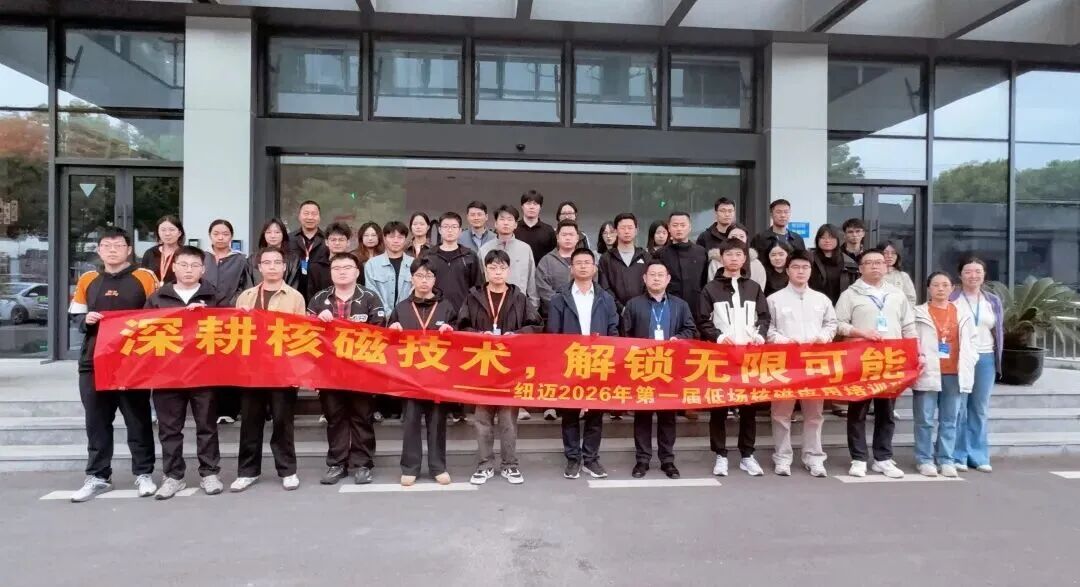
Exploring Microcosms, Forging Skills: Niumag‘s First Low-Field Nuclear Magnetic Resonance (LF-NMR) Application Training Course of 2026 Successfully Concludes!

If materials could speak, what stories would they tell about the microscopic world? On the morning of April 13, driven by curiosity and the desire to find answers, researchers and engineers from across the country arrived early at the registration desk. Today, as the final certificate was handed to a participant, the First Low-Field Nuclear Magnetic Resonance (LF-NMR) Application Training Course of 2026, organized by Niumag Analysis, came to a successful close. The Beginning: A Thrilling Intellectual Challenge After a brief opening ceremony, technical terms such as “transverse relaxation time” and “longitudinal relaxation time” filled the room. Many participants initially furrowed their brows. For many, low-field nuclear magnetic resonance (LF-NMR) remains an enigmatic black box—they know it is powerful, but when it comes to hands-on operation, there is often a hesitation, as if wielding a sharp tool for the first time. To bridge this gap, the training was carefully structured into five core modules: from the fundamental principles and hardware architecture of LF-NMR, to application methods addressing key pain points in petroleum energy, geotechnical engineering, and materials science, and further to comprehensive demonstrations of general and specialized software operations. The intensive theoretical sessions on the first day were not merely challenging—they were designed by the instructors to lay a solid foundation for demystifying the “magic” that followed. Unlocking the Magic: Hands-On Experience in the Laboratory The most exciting part of the training did not take place in the classroom, but at the laboratory bench. During the course, Niumag not only provided access to multiple core magnetic resonance imaging (MRI) and analytical instruments, but also prepared a variety of real experimental materials for the hands-on sessions. When participants placed genuine core samples and polymer materials into the NMR probes and operated specialized software for core analysis, oil/water content determination, and crosslink density measurement, the veil of mystery was completely lifted. Here, “real materials, real operation, real experience” was more than a slogan—it was the foundation that ensured participants could seamlessly transfer their acquired skills to daily research. Low-field NMR truly became a “microscopic stethoscope” in their hands. Guidance from Masters: A Collaborative Arena with No Spectators Two types of guides supported this journey of discovery. On one side, we were honored to invite Professor Xinmin Ge from the School of Petroleum Engineering at China University of Petroleum (East China). As a recipient of the Outstanding Youth Fund of Shandong Province and an expert deeply engaged in logging methods and petrophysics, Professor Ge presented complex theories in an accessible manner, helping to clear the fog on the participants‘ research paths. On the other side, Niumag’s experienced team of application engineers provided continuous on-site guidance. Rather than lecturing on abstract theories, they focused on practical details—whether the mouse clicks were correct and whether the parameters were set accurately. Thanks to the small-class teaching format, there were no passive spectators. The “Q&A and case study” sessions each afternoon were often even more lively than the lectures. Some participants brought real-world “difficult problems” from their own projects to the stage for live consultation with the instructors. In the laboratory, “How did you handle the pore size distribution of this core sample?” became one of the most frequently heard questions. Strangers in the field quickly became teammates working side by side. “I used to think low-field NMR was beyond reach. Now I feel it’s like an old friend in my laboratory. I’ve gained knowledge and found answers to my questions,” one participant remarked. Conclusion: The Story Has Just Begun Although the First Low-Field Nuclear Magnetic Resonance (LF-NMR) Application Training Course of 2026 has concluded, these participants—now equipped with new skills and insights—will return to their respective laboratories, ready to tackle real scientific challenges with their newly acquired “perspective” into the microscopic world. The spark of knowledge has been ignited, and the story has only just begun. We look forward to meeting more of you—passionate explorers—at the crossroads of the microscopic world in Niumag‘s future training courses.

2026-04-20
Phone Support

Phone: 400-060-3233

After-sales: 400-060-3233

WeChat Support
Official Account
TOP

Back to Top