


The soaking process of medicinal materials can be divided into three main stages:
When the solvent comes into contact with the material, it first adheres to the surface, wetting it, and then penetrates the cellular structure under hydrostatic pressure and capillary action. Whether a solvent can wet the surface depends on the properties of both the solvent and the material, as well as the surface layer. If the adhesion between solvent and material is greater than the cohesion between solvent molecules, wetting occurs more readily. Plant-based materials contain many polar substances such as cellulose, proteins, and sugars, which are easily wetted by polar solvents. If certain components hinder wetting, pretreatment is required—for example, oil-rich herbs are defatted before extraction with water or ethanol. Adding suitable surfactants can also improve wetting.
In dried materials, active compounds are deposited inside cells or adsorbed onto tissue. Once the solvent penetrates, adsorption must first be broken (desorption). Desorbed constituents dissolve into the solvent following the “like dissolves like” principle. Heating or adding acids, alkalis, or surfactants can increase solubility and aid desorption. As the solution becomes more concentrated, osmotic pressure rises, solvent continues to infiltrate cells, and some cell walls swell and rupture—facilitating outward diffusion of dissolved compounds.
When large amounts of constituents dissolve, the intracellular solution becomes highly concentrated, creating concentration and osmotic gradients. Pure solvent or dilute solution outside the cell penetrates inward, while solutes diffuse outward toward lower concentration. Diffusion continues until equilibrium is reached, when concentrations and osmotic pressure inside and outside the cell are equal. Thus, the driving force of diffusion is the concentration gradient.
Monitoring the soaking process with low-field NMR:
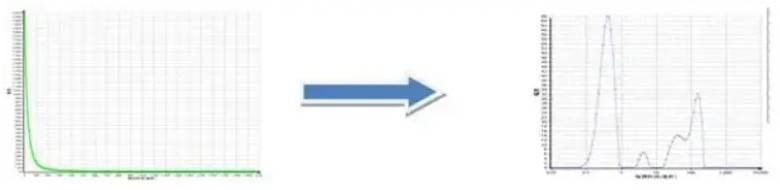
Low-field nuclear magnetic resonance (LF-NMR) is highly sensitive to water molecules with different degrees of mobility inside medicinal materials. Using water as a “probe,” LF-NMR analyses relaxation behaviour to capture microstructural changes in water during soaking. This makes it possible to non-invasively monitor the soaking process of herbal medicines in real time.
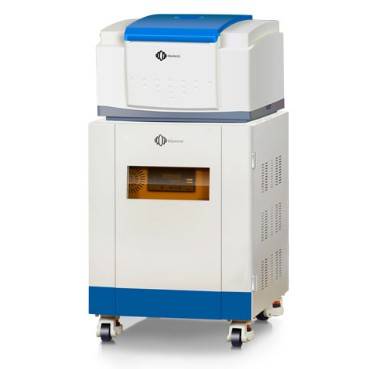
Niumag PQ001 Series Low-Field NMR Analyser
 Scan QR Code
 Scan QR Code
 Phone Support
Phone: 400-060-3233
After-sales: 400-060-3233
 WeChat Support

 Official Account

Back to Top