


Introduction: The Complexity of Modern Cement Formulations
In the pursuit of high-performance concrete, researchers are increasingly turning to nanotechnology, such as Nano-SiO₂, to enhance early-age properties. However, understanding how these additives interact with different water-cement ratios (W/C) to modify the internal pore structure is a complex challenge. Traditional testing methods often fall short in providing continuous, in-situ data. Low-Field Nuclear Magnetic Resonance (LF-NMR) offers a sophisticated solution, allowing for the precise monitoring of hydration dynamics without altering the sample.
The Experiment: Probing Nano-Silica Modified Cement Pastes
A targeted study was conducted to investigate the early hydration process of Nano-Silicate cement pastes using LF-NMR technology . The experiment analyzed five distinct mixtures with varying Nano-SiO₂contents and water-cement ratios . The formulations included a control group (NS0-0.5) and modified groups such as NS1-0.5, NS2-0.5, NS1-0.4, and NS1-0.3, allowing for a comparative analysis of how additives and water content influence microstructure .

Table 1 Sample information of different formulas
Key Findings: The Power of Signal Distribution
The LF-NMR results, visualized through T₂ distribution spectra and T₁-T₂ correlation maps, provided deep insights into the hydration process :
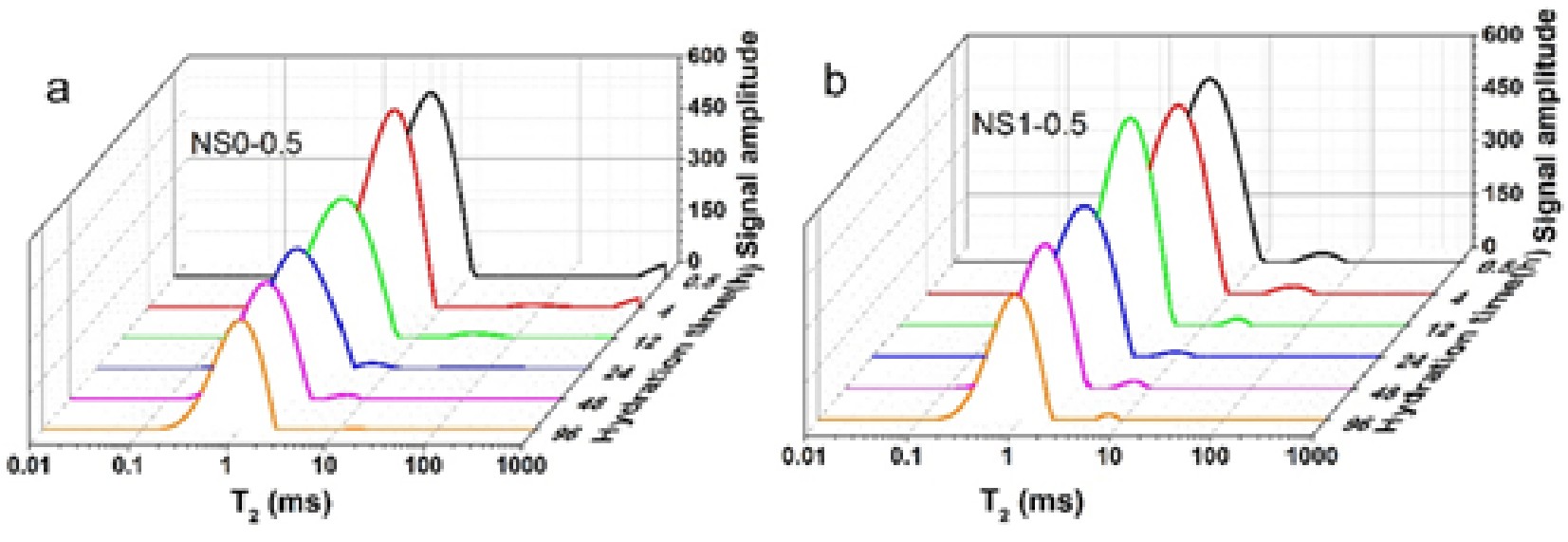
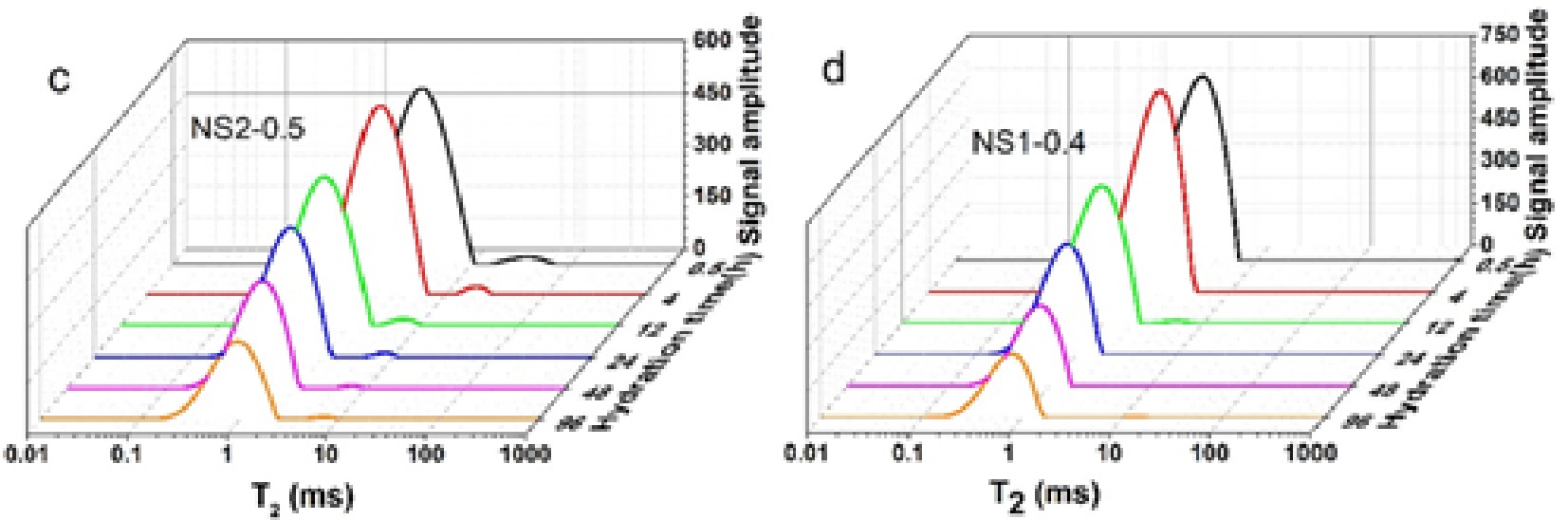
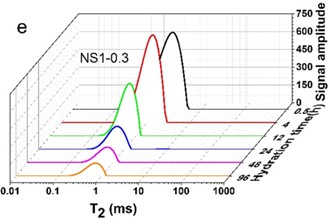
Figure 1 NMR T2 spectra of hydration process for samples with different formulas
Accelerated Hydration: The data confirmed that Nano-SiO₂ is effective in increasing early reaction speed and the overall degree of hydration .
Influence of Water-Cement Ratio: For samples with the same Nano-SiO₂ content, the degree of hydration was observed to increase with a higher W/C .
Microstructural Optimization: Perhaps most importantly for durability, the combination of Nano-SiO₂ and a low W/C was found to effectively reduce the duration of the early hydration stage. This leads to the optimization of the pore structure and results in a denser, more resilient cement paste .
Why Niumag’s NMR Analyzer is Essential for Cement Research
This study highlights the technical superiority of Niumag’s Medium-sized Nuclear Magnetic Resonance Imaging Analyzer for construction material science:
Conclusion
The ability to “see” inside the cement matrix during the critical early hours is a game-changer. By employing Niumag’s LF-NMR solutions, researchers can scientifically validate how additives like Nano-SiO₂ and water-cement ratios interact to refine pore structures, paving the way for stronger, more durable concrete.
Interested in optimizing your cement formulations? Contact Niumag today to discover how our NMR analyzers can elevate your research capabilities.
 Scan QR Code
 Scan QR Code
 Phone Support
Phone: 400-060-3233
After-sales: 400-060-3233
 WeChat Support

 Official Account

Back to Top