

Introduction: The Micro-World Within Cement & Concrete
The performance of cement-based materials—their strength, durability, and longevity—is fundamentally determined by their internal microstructure, particularly the complex network of pores that forms as they hydrate and cure. Understanding this invisible architecture is crucial for optimizing mix designs and predicting real-world behavior. Low-Field Nuclear Magnetic Resonance (LF-NMR) has emerged as a powerful, non-destructive tool that acts like a scan for construction materials, allowing scientists to peer inside and quantify critical parameters like pore size distribution and water states without damaging the sample .
From Lab to Harsh Reality: A Case Study on Freeze Protection
While standard curing conditions are well-understood, the real challenge lies in environments that threaten early-age concrete. A compelling application of LF-NMR is in evaluating how concrete withstands harsh curing regimes, such as freezing temperatures during placement. A key study used LF-NMR to investigate exactly this as shown in Figure 1.
Researchers prepared concrete specimens and subjected them to two distinct curing conditions: one standard, and another designed to simulate a harsh environment with alternating positive and negative temperatures. In this harsh cycle, samples were cured at (20±2)°C for 4 hours during the day and at (-20±2)°C for 12 hours at night, for a total of 7 days .
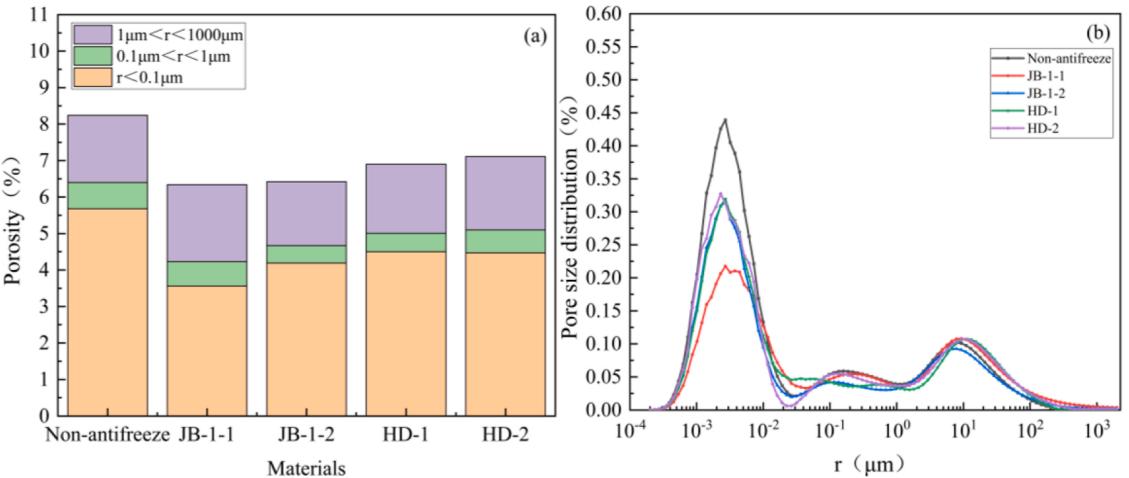
Figure 1 Porosity and Pore Size Distribution under Alternating Positive and Negative Temperature Curing
The LF-NMR Results: A Clear Picture of Microstructural Damage & Protection
The power of LF-NMR is in its ability to provide direct, quantitative evidence. By analyzing the samples after curing, the technology revealed stark differences:
Why Niumag’s LF-NMR is the Ideal Tool for Such Insights
This study underscores the unique advantages of using a benchtop LF-NMR analyzer from Niumag for advanced material science:
Conclusion
The journey of water within cement—from free capillary water to bound gel water—shapes its final properties . LF-NMR allows us to track this journey and understand how external stresses like freezing temperatures disrupt it. By providing a clear window into the microscopic world, Niumag’s LF-NMR analyzers empower the industry to develop smarter, more durable concrete that can perform from its very first days in challenging environments.
Recommended Equipment:
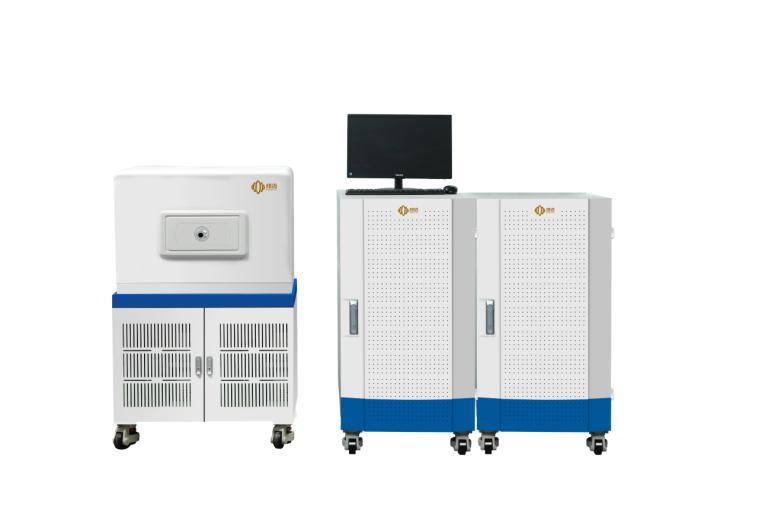
Medium-sized Nuclear Magnetic Resonance Imaging Analyzer MesoMR12-060H-I
Ready to gain unparalleled insight into your materials? Contact Niumag to discover how our LF-NMR solutions can advance your research and product development.
 Scan QR Code
 Scan QR Code
 Phone Support
Phone: 400-060-3233
After-sales: 400-060-3233
 WeChat Support

 Official Account

Back to Top