


With the continuous growth of global energy demand and the depletion of conventional oil and gas resources, improving oilfield recovery efficiency has become a critical challenge in the petroleum industry. Injection-based stimulation technology is a key enhanced oil recovery (EOR) method that increases crude oil recovery by injecting specific fluids into the reservoir to alter fluid properties and flow behaviour. Common injection techniques include polymer flooding, surfactant flooding, alkali flooding, and nano-fluid injection. These approaches enhance oil displacement efficiency by increasing fluid viscosity, reducing interfacial tension, or altering rock wettability.
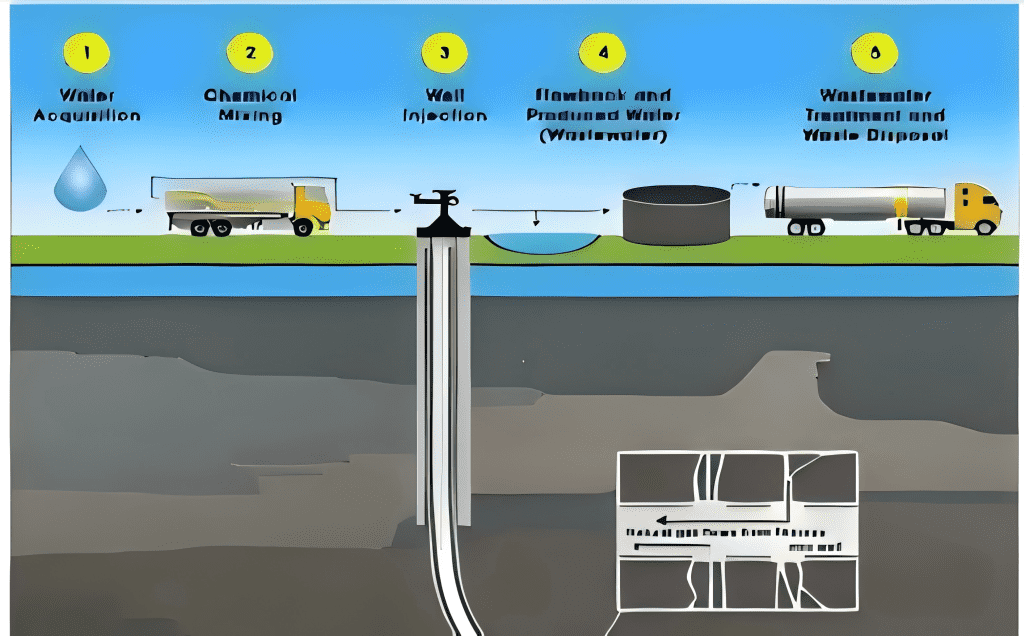
However, the practical application of injection-based stimulation faces several challenges:
1) Unclear fluid transport behaviour: The migration of injected fluids in the formation is complex and influenced by factors such as reservoir heterogeneity, injection rate, and fluid properties.
2) Complex fluid interaction mechanisms: The interactions between injected fluids, crude oil, and formation water are not fully understood, which limits the effectiveness of displacement processes.
3) Limited experimental methods: Traditional core flooding tests and numerical simulations cannot provide real-time or intuitive insight into fluid migration and interaction mechanisms during stimulation.
Application of Low-Field NMR Technology in Injection-Based Stimulation
Low-field NMR (LF-NMR) enables real-time monitoring of fluid distribution, migration, and interactions within core samples during injection-based stimulation. It provides valuable insights into EOR mechanisms and helps optimise injection parameters. Below are the main applications of LF-NMR in injection-based EOR workflows:
LF-NMR allows real-time observation of the migration of injected fluids through the core, identifying fluid fronts and quantifying the spatial distribution of oil, water, and injected agents at different stages. For example, in polymer flooding experiments, LF-NMR can clearly visualise the advancement of polymer solutions, helping researchers evaluate sweep efficiency and displacement performance.
By measuring relaxation times, LF-NMR reveals the interactions between different fluid phases. In surfactant flooding tests, it can track interfacial tension changes between surfactant and crude oil, thereby explaining how surfactants reduce oil–water interfacial tension.
LF-NMR identifies heterogeneity within cores and shows how fluid migrates in different pore structures. In low-permeability reservoirs, it distinguishes high-permeability channels from tight zones, helping optimise fluid injection profiles.
Based on LF-NMR data, engineers can fine-tune injection parameters such as flow rate, concentration, and volume to enhance stimulation performance. In polymer flooding, for example, LF-NMR helps identify the optimal polymer concentration and injection velocity to maximise oil recovery.

T₂ Relaxation Spectrum of Core during Waterflooding
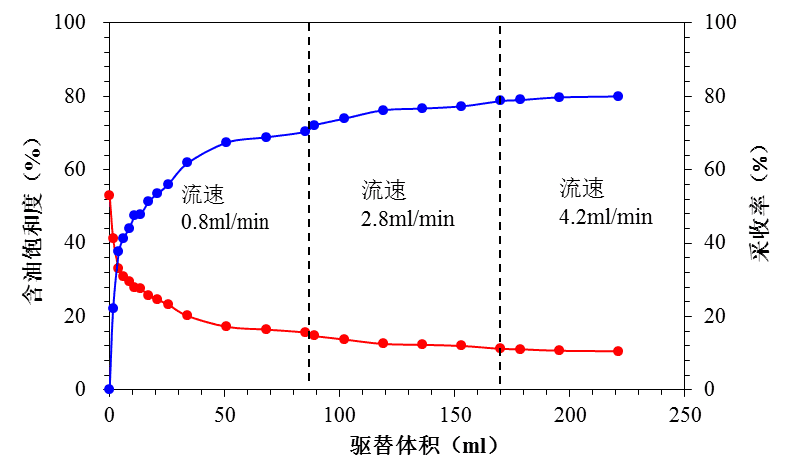
Curve Showing Displacement Volume vs. Oil Saturation Recovery
According to the T2 relaxation spectrum, the core exhibits a unimodal pore structure, indicating relatively good homogeneity.
After continuous injection stimulation, oil saturation in the core decreased from 52.9% to 10.6%, a reduction of 42.3%. The final oil recovery through waterflooding reached 80.0%.
Following the first injection rate increase (from 0.8 ml/min to 2.8 ml/min), a significant improvement in recovery was observed near the ramp-up point, likely due to increased capillary number.
A second rate increase (from 2.8 ml/min to 4.2 ml/min) still provided benefits, but the curve flattened, and oil saturation changed only slightly.
If you are interested in the above application, feel free to contact us: 18516712219
 Scan QR Code
 Scan QR Code
 Phone Support
Phone: 400-060-3233
After-sales: 400-060-3233
 WeChat Support

 Official Account

Back to Top