


Tar-rich coal is a coal-based oil and gas resource that combines coal, oil, and gas properties. Given China’s domestic energy endowment of “relatively abundant coal, but limited oil and gas,” developing tar-rich coal is of strategic importance. It can help alleviate the pressure on the country’s oil and gas supply while promoting green coal utilisation and low-carbon energy development.
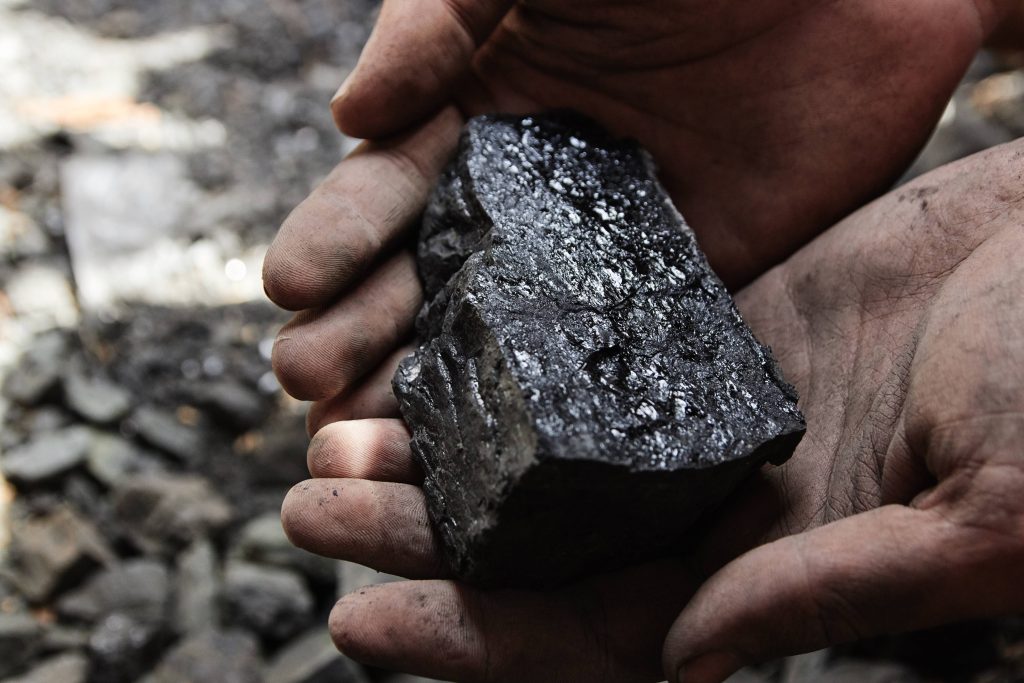
Tar-rich coal contains hydrogen-rich structures capable of generating oil and gas through pyrolysis, such as aliphatic side chains, bridging bonds, and weak bonds at the periphery of condensed aromatic nuclei. These coals are typically formed in terrestrial sedimentary environments with stable sediment supply, warm and humid climates, and strongly reducing conditions. The pore structure of tar-rich coal significantly influences pyrolysis efficiency, tar release, and hydrocarbon migration[1-2].
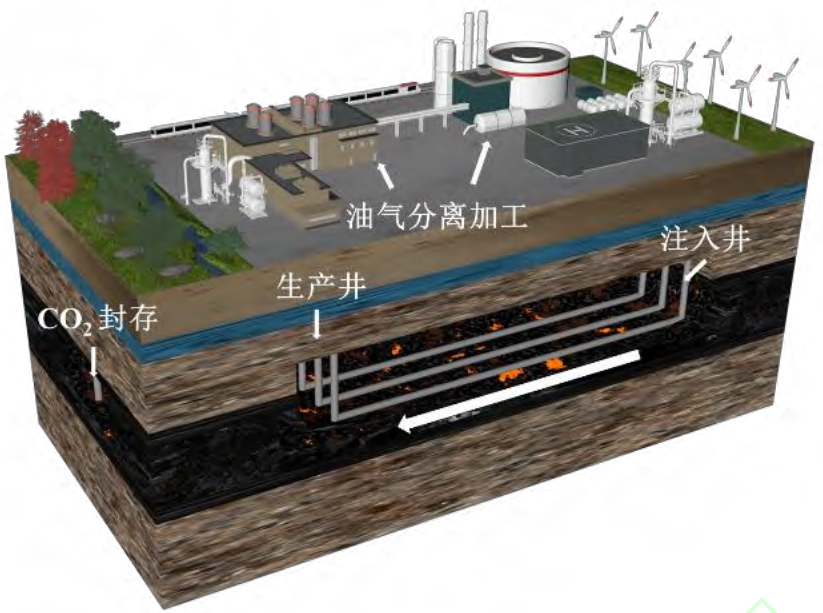
Schematic of in situ coal pyrolysis
Although research on tar-rich coal in China has been vigorous in recent years, its pyrolysis characteristics and the evolution of pore structures still require further in-depth study.
Low-field NMR offline saturation testing of tar-rich coal supports research on pyrolysis behaviour and the evolution of its pore structure.
Experimental procedure:
1) Select coal samples with high oil content for testing.
2) Dry the samples at 120℃ and allow them to cool. Perform baseline NMR measurements, followed by high-pressure water saturation tests to record NMR saturation signals.
3) Place the coal samples in a high-temperature pyrolysis reactor. Heat the reactor to 300℃ and maintain this temperature for one hour.
4) Collect and weigh the pyrolysis products.
5) Remove the samples, allow them to cool, and repeat baseline and high-pressure NMR saturation measurements.
6) Repeat steps 3–5 at 400℃, 500℃, and 600℃, recording both NMR signals and pyrolysis product weights for each stage.
Data analysis:
Using high-temperature pyrolysis combined with low-field NMR offline measurements, the physical properties of tar-rich coal were characterised. Baseline and saturated NMR signals, together with pyrolysis product weights, allow assessment of oil and gas yields and pore development at various temperatures during pyrolysis.
Pore development directly affects heat transfer within the coal and the release of pyrolysis products. Analysis of porosity and pore size distribution is crucial for understanding the pyrolysis mechanisms of tar-rich coal[3-4].
By investigating oil yields at different pyrolysis temperatures and mapping post-pyrolysis NMR micro-pore structures and pore size distributions, researchers can further analyse porosity, pore size evolution, and fracture development under high-temperature pyrolysis. This reveals how micro-pore structures and pyrolysis products respond to temperature changes, providing guidance for in situ pyrolysis process development.
Moreover, low-field NMR can selectively excite hydrogen atoms. After each high-temperature pyrolysis, hydrogen signals in the coal decrease. By comparing pre- and post-pyrolysis baseline signals, changes in hydrogen content can be quantified. Although pyrolysis products are complex, higher hydrogen content generally indicates higher pyrolysis yields, offering a rapid screening criterion for coal samples.
For inquiries regarding this application
please contact: 15618820062
[1] Geng J, Wang S, Sun Q, et al. Pyrolysis characteristics and pore-fracture evolution of tar-rich coal[J]. Coalfield Geology & Exploration, 2024, 52(7):1.
[2] Chang Z, Wang C, Kuang W, et al. Product characterization and pore structure evolution of a tar-rich coal following pyrolysis under nitrogen, steam/nitrogen, and oxygen/nitrogen atmospheres[J]. Journal of Analytical and Applied Pyrolysis, 2024, 180.
[3] Chang Z, Wang C, Kuang W, et al. Study on the effect of adhesiveness on pore structure evolution and flow in tar-rich coal[J]. Coalfield Geology & Exploration, 2024, 52(7):54-63.
[4] Fan J, Du M, Liu L, et al. Macerals particle characteristics analysis of tar-rich coal in northern Shaanxi based on image segmentation models via U-Net variants and image feature extraction[J]. Fuel, 2023, 341:127757.
 Scan QR Code
 Scan QR Code
 Phone Support
Phone: 400-060-3233
After-sales: 400-060-3233
 WeChat Support

 Official Account

Back to Top