


Injecting carbon dioxide (CO2) into core samples for Enhanced Oil Recovery (EOR) is a cutting-edge petroleum extraction technique. This method emerges in response to the dual challenges of rising global energy demand and increasing environmental concerns. As conventional oil reserves continue to deplete, improving the recovery rate of existing reservoirs has become a crucial objective in the energy sector. CO2 injection enhances oil mobility by dissolving into crude oil, causing it to expand and lowering its viscosity—thereby significantly boosting recovery efficiency[1].
Extensive research has been conducted on CO2 sequestration and its EOR mechanisms. With technological advancements and reduced costs, CO2 core flooding is increasingly recognised as a viable method for boosting oil recovery[2]. However, when CO2 is injected into reservoirs, it disrupts the equilibrium system and triggers chemical reactions among the CO2, formation water, and reservoir rocks. These interactions can alter various geochemical and physicochemical properties of the target reservoir. Particularly under in-situ reservoir conditions, such reactions are still poorly quantified at the pore scale. This case study addresses that gap.
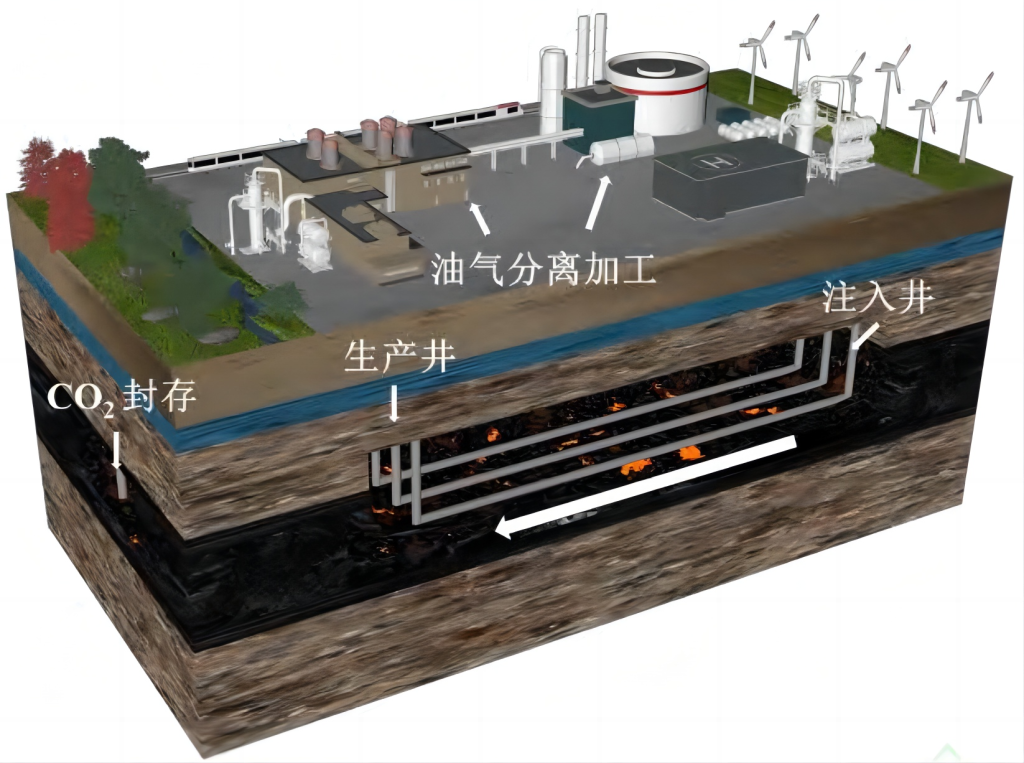
Schematic diagram of CO2-enhanced oil recovery (EOR)
In this case study, low-field NMR equipment from Niumag was used to monitor core sample changes before and after CO2 injection, including porosity, permeability, and mass. Additionally, T2 spectra were analysed under different conditions across four core samples. The study focused on the interaction mechanisms of CO2–water–rock, providing valuable insights for similar reservoirs in both CO2-EOR and CO2 sequestration applications[3].
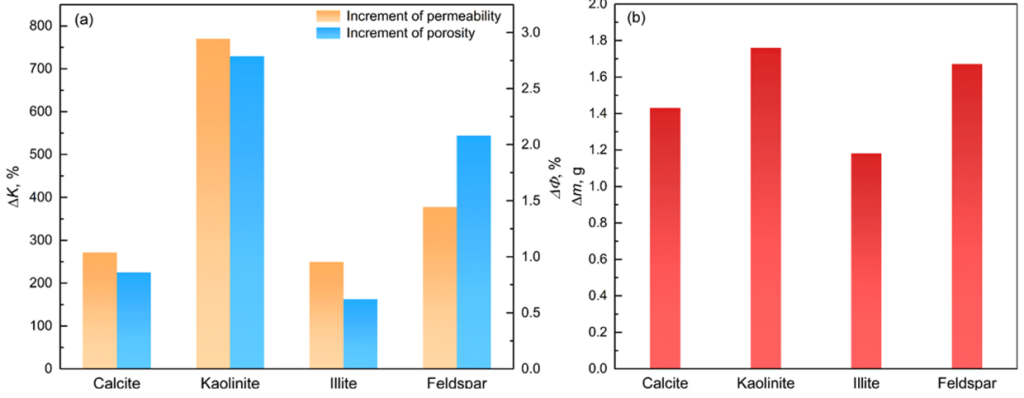
Figure 1: Porosity/permeability increment (a) and mass loss (b) in CO2, water, and rock interaction.
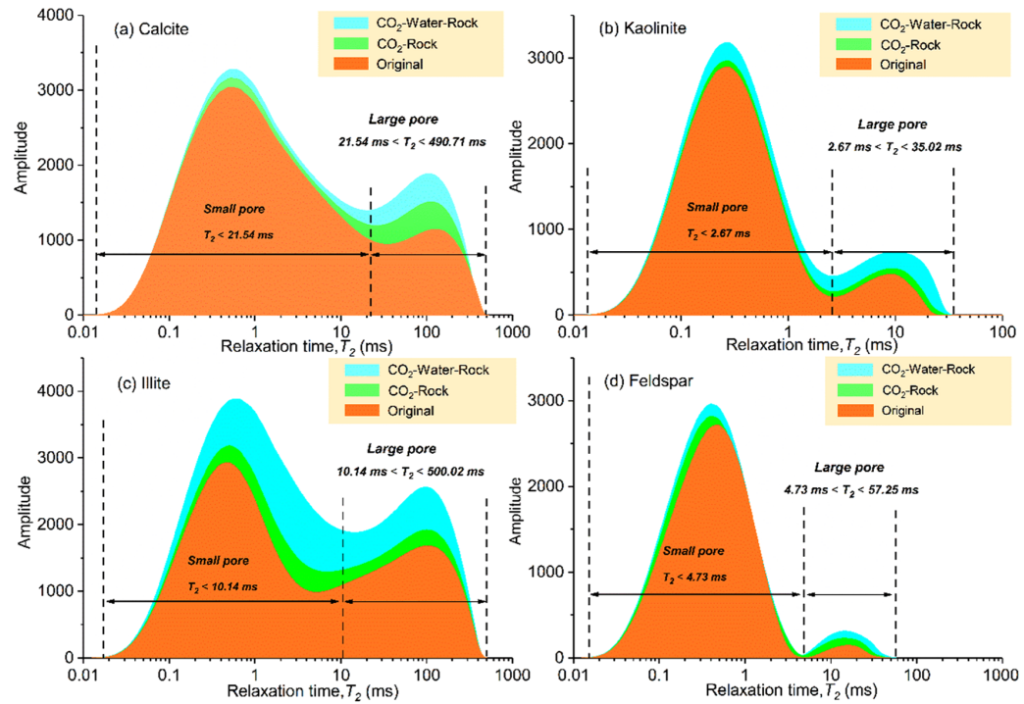
Figure 2: T2 values under CO2–rock and CO2–rock–water interactions for different core samples.
This case study investigated the interaction mechanisms of CO2, water, and core samples at the pore scale during carbon sequestration, leading to the following conclusions:
1) Figure 1 shows that after CO2 sequestration, the permeability and porosity of the core samples increased, but their mass decreased.
2) Figure 2 shows that, due to dissolution reactions, the amplitude increase of CO2–water–rock was larger than CO2–rock alone, and the amplitude change correlated with the type of minerals and porosity in the samples.
3) This study demonstrated that the interaction of CO2, brine, and core samples caused significant changes in reservoir properties (increase in porosity), which is favorable for the development of reservoir pores.
For more details, see reference[3].
If you are interested in the above applications, feel free to contact us: 15618820062
[1] Abdelaal A, Gajbhiye R, Alshehri D, et al. Improvement of supercritical carbon dioxide foam performance for EOR in sandstone reservoirs: An experimental and optimization study[J]. Gas Science and Engineering, 2022.
[2] Shiyi Y, Desheng M A, Junshi L I , et al. Progress and prospects of carbon dioxide capture, EOR-utilization and storage industrialization[J]. Petroleum Exploration and Development, 2022, 49(4):955-962.
[3] Zhang Y, Shi L, Ye Z, et al. Experimental Investigation of Supercritical CO2 –Rock–Water Interactions in a Tight Formation with the Pore Scale during CO2 –EOR and Sequestration[J]. ACS Omega, 2022, 7, 27291−27299.
 Scan QR Code
 Scan QR Code
 Phone Support
Phone: 400-060-3233
After-sales: 400-060-3233
 WeChat Support

 Official Account

Back to Top