


Polypropylene (PP) is a colorless, semi-transparent, and non-toxic thermoplastic resin. Compared with other general-purpose thermoplastics, it features low density, cost-effectiveness, and excellent overall performance. PP is widely used across multiple industries, including chemicals, construction, home appliances, agriculture, and transportation.
Based on the spatial arrangement of the methyl substituents along the polymer chain, polypropylene can be categorized into three types: isotactic, syndiotactic, and atactic. In industrial production, the most commonly produced form is isotactic homopolymer polypropylene. This article introduces the principle of measuring isotacticity using a compact NMR system.
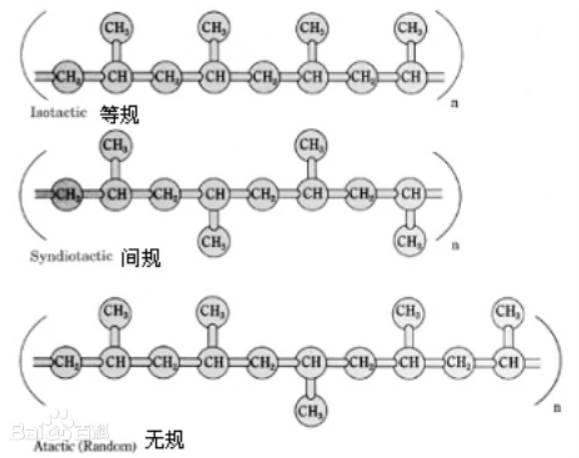
Isotactic and syndiotactic polypropylene are stereoregular polymers. The percentage of stereoregular content is referred to as the isotacticity index.
By measuring the isotacticity index, we can understand the structural regularity and crystallinity of polypropylene. A higher isotacticity indicates greater molecular order and crystallinity, resulting in improved hardness, stiffness, modulus, tensile strength, yield strength, melting point, thermal stability, aging resistance, and radiation resistance. However, increased isotacticity may lead to reduced toughness, impact resistance, and elongation at break.
Currently, common methods for determining the isotactic index of polypropylene include the solvent extraction and weighing method and the compact NMR method.
The solvent extraction method is time-consuming (up to 24 hours), requires toxic solvents, and is highly sensitive to a range of variables such as particle size, sample dryness, quantity, solvent volume, extraction cycles, duration, temperature, cooling time, and drying steps—all of which can impact result accuracy.
In contrast, the compact NMR method offers fast analysis, high accuracy, no pollution, and low operating costs—making it well-suited for both R&D and industrial quality control.
The principle behind compact NMR isotacticity measurement involves exciting the sample with radio-frequency (RF) pulses, causing atomic nuclei in a low-energy state to transition to a high-energy state. Once the RF pulse is turned off, the nuclei relax back to the low-energy state, releasing a detectable NMR signal. This signal decays exponentially over time—a process known as relaxation. The decaying signal contains two key pieces of information: (1) signal intensity reflects the number of nuclei being measured, and (2) the decay rate reflects the mobility of those nuclei. Isotactic and syndiotactic PP exhibit faster signal decay, while atactic PP shows much slower decay.

Principle of Isotacticity Measurement via Compact NMR
Based on these NMR characteristics, the polymer can be subjected to different excitation and acquisition protocols to obtain relevant relaxation data. A linear calibration curve is then established using the ratio between the decay signal of isotactic/syndiotactic PP and the extraction value from n-heptane. This enables accurate calculation of the isotacticity index of polypropylene.

Compact NMR Isotacticity Measurement Principle & Software Interface
 Scan QR Code
 Scan QR Code
 Phone Support
Phone: 400-060-3233
After-sales: 400-060-3233
 WeChat Support

 Official Account

Back to Top