


Preface
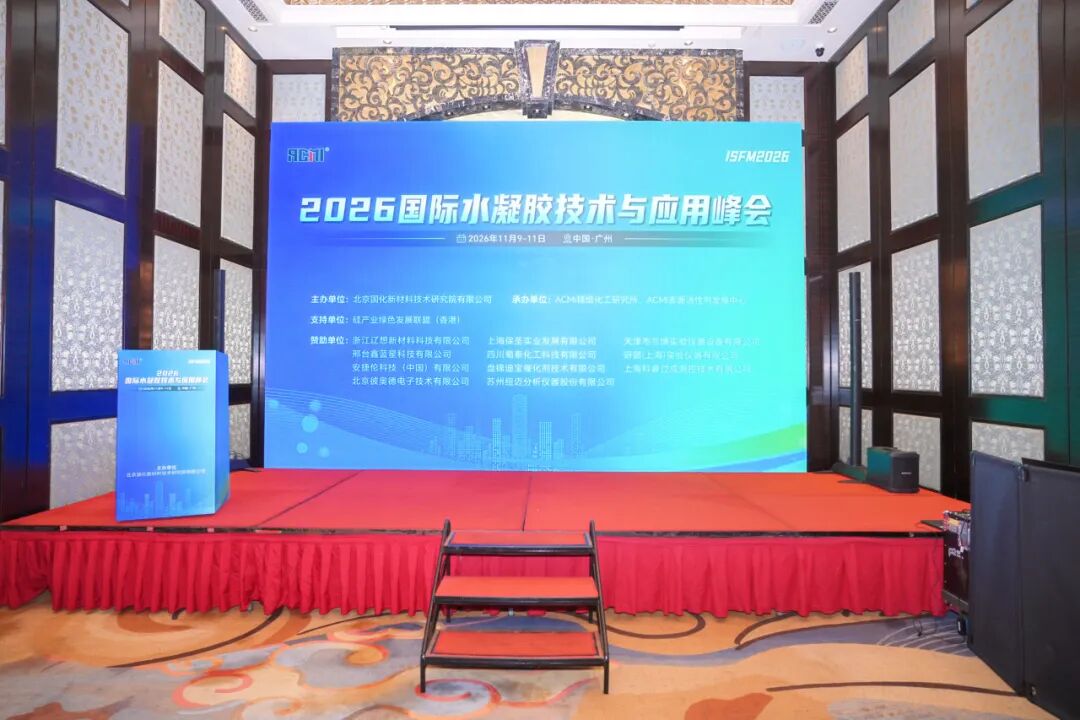
From November 9 to 11, 2026, the “2026 International Hydrogel Technology and Application Summit,” hosted by the Beijing Guohua New Material Technology Research Institute and organized by the ACMI Fine Chemical Research Institute, was held in Guangzhou. The summit focused on four main themes: “Biomedical and Tissue Engineering Hydrogels,” “Flexible Electronics and Smart Sensing Hydrogels,” “Energy, Environment, and Special Functional Hydrogels,” and “Hydrogel Preparation, Characterization, and Industrialization,” focusing on the key common technologies in the transition of hydrogels from laboratory research to industrialization.
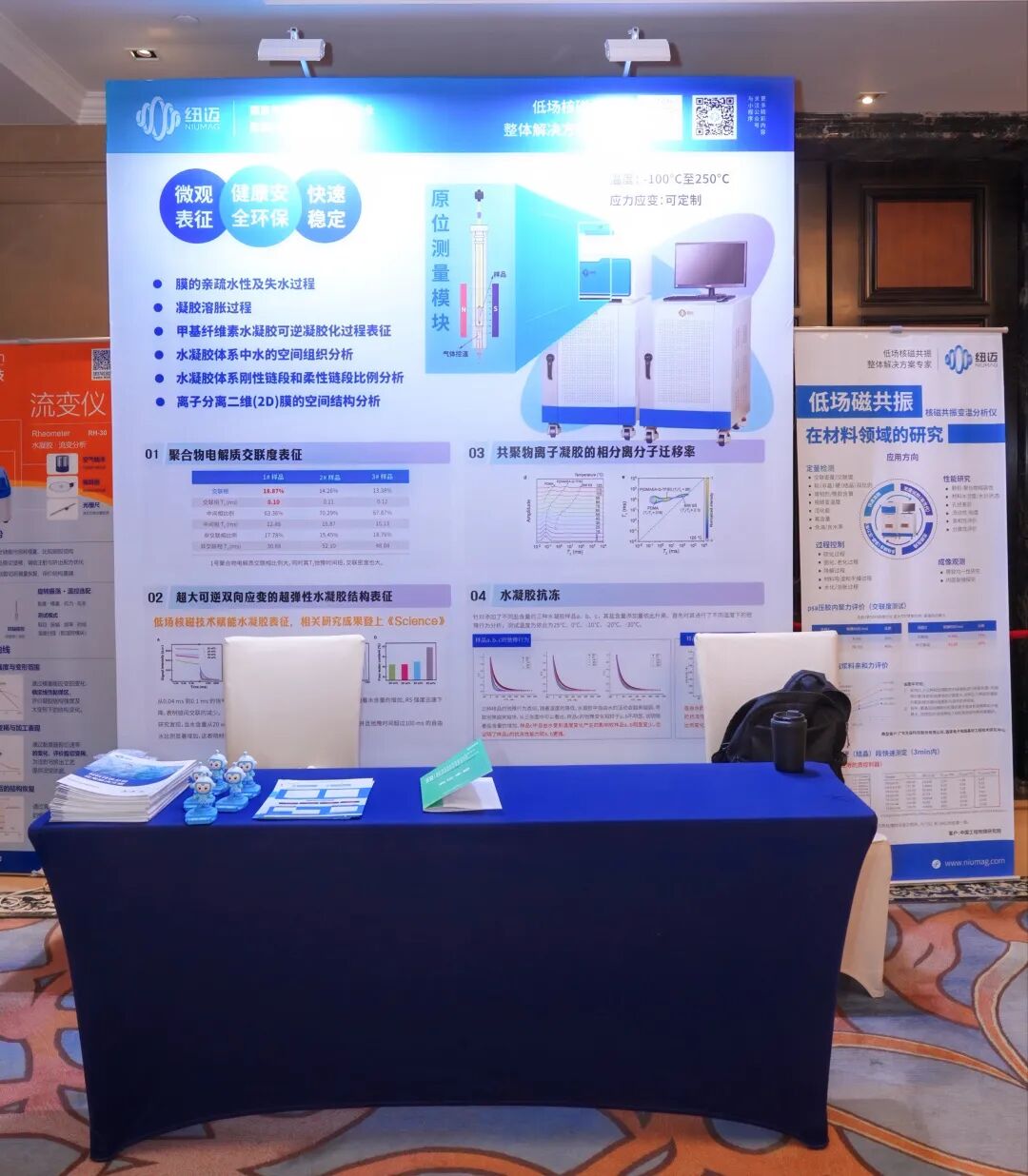
Suzhou Niumag Analytical Instrument Corporation was invited to set up a booth at the conference and delivered a keynote report titled “Microscopic Perspective on Material Molecular Motion—Key Applications of Low-Field NMR in Hydrogel Materials.”
01 Starting from Industrialization Pain Points: Microscopic Characterization of Hydrogels is Becoming a Key Link
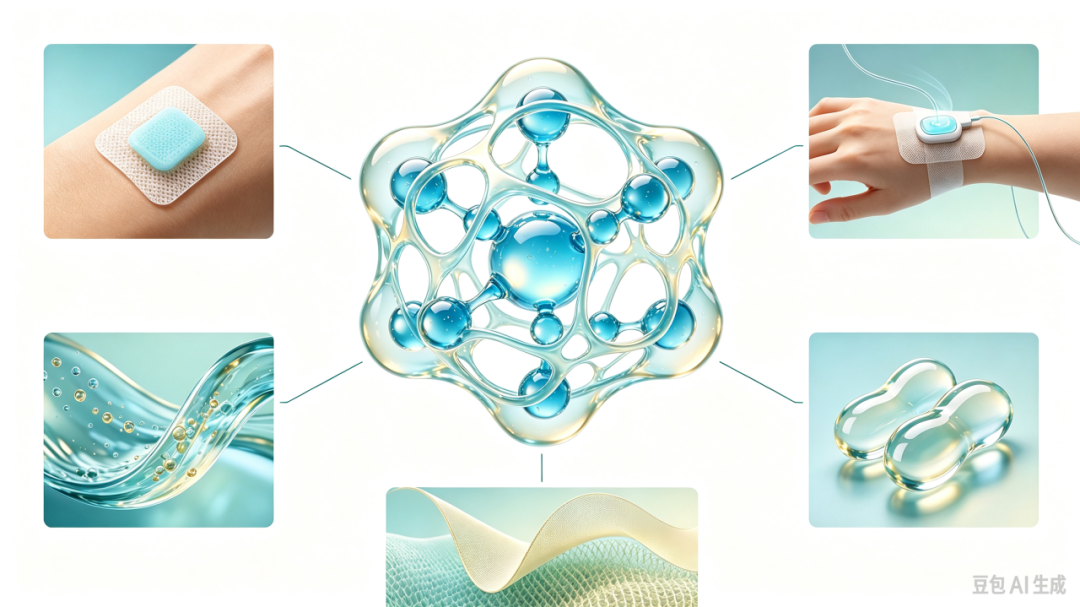
As a class of polymer functional materials with a three-dimensional network structure, hydrogels have continuously expanded their application boundaries in recent years in areas such as wound dressings, wearable flexible devices, high-strength and tough biomimetic materials, gel candies, and bio-based films. At the same time, the industry also faces common challenges in scaling up—how to quantitatively analyze the crosslinking network structure, how to distinguish the occurrence states of water within the network, and how to establish correlations between key performance metrics such as swelling and freezing resistance and the microstructure. These issues are directly related to formulation optimization, process window definition, and batch stability control.
Among traditional characterization methods, the swelling method, weighing method, DSC, and DMA mostly rely on macroscopic mechanical or thermal responses, either requiring solvent intervention, being time-consuming, or making it difficult to track the network evolution process in-situ. How to simultaneously obtain crosslink density and water phase information without changing the sample state has become one of the topics of common concern among researchers at this summit.
At the critical stage of hydrogels moving from the laboratory to industrialization, the improvement of microscopic characterization capabilities is becoming an important part of determining formulation iteration efficiency and quality stability; Niumag Analytical also hopes to participate in this process with Low-Field NMR, an in-situ tool.
02 Report Scene: Using T2 Relaxation as a Ruler to In-Situ Analyze Crosslinking Networks and Water States
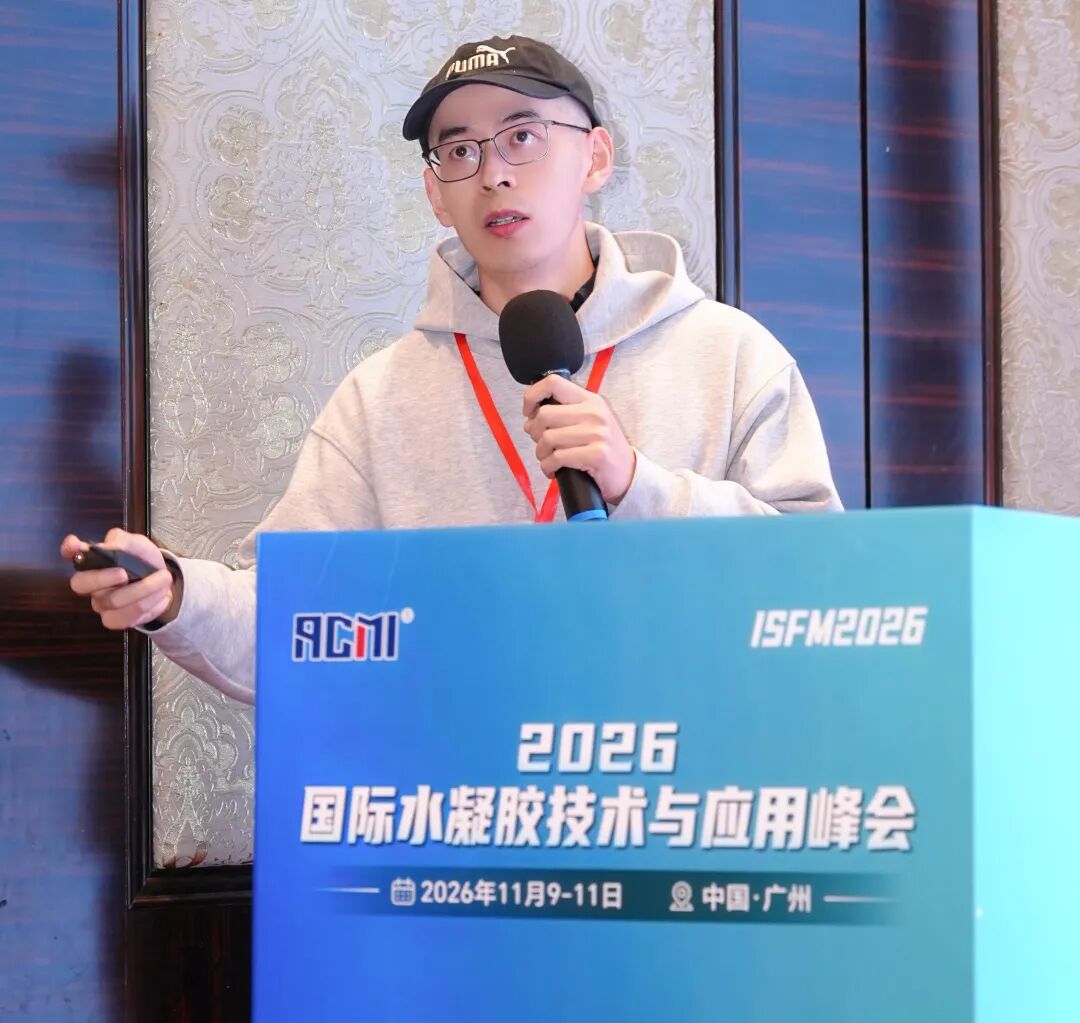
The speaker introduced that Low-Field Time-Domain Nuclear Magnetic Resonance (LF-NMR) uses a permanent magnet as the field source and reflects the degree of restricted motion of molecular chain segments by measuring the T2 transverse relaxation time of hydrogen protons.
The core logic is: the shorter the T2, the more restricted the hydrogen proton motion, corresponding to crosslinked chain segments, hard segments, or water molecules tightly bound to the network; the longer the T2, the more it corresponds to non-crosslinked flexible chain segments, soft segments, or free-flowing water. Based on this principle, a single measurement can simultaneously output the component proportions and respective relaxation times of the polymer signal, bound water signal, and free water signal, without the need for sample dilution, solvents, or destruction.
Focusing on the hydrogel scenario, the report elaborated on two technical paths:
First, Quantitative Characterization of Crosslinking Networks and Mesh Structures
The report, combined with validation data, demonstrated that the crosslink density measured by the NMR method and the results of the traditional equilibrium swelling method showed a high correlation across 9 samples (R² ≈ 0.95). The testing cycle is shortened from hours or days to minutes, and the sample is non-destructive and repeatable, making it convenient for continuous use in formulation screening and process monitoring. In tracking the curing or aging process, this method can provide the dynamic evolution of crosslink density, crosslinked chain segment proportion, and dangling chain segment proportion online, helping to determine the curing endpoint and network stability.
Second, Water State Partitioning and Correlation with Performance
The report pointed out that based on the T2 inversion spectrum, the water in hydrogels can be divided into three categories: strongly bound water (T2 < 1 ms), weakly bound water/intermediate water (T2 approx. 1-10 ms), and free water (T2 above approx. 50-100 ms). The proportion of bound water reflects the water retention capacity, and the proportion and mobility of free water are related to water release behavior and freezing resistance.
The report listed several typical applications in published research: non-destructive tracking of the hydrogel swelling process based on LF-NMR (Carbohydrate Polymers, 2016); evaluating the freezing resistance differences of different formulations through changes in the free water ratio during the cooling process; the evolution of inter-chain crosslinking signals and free water components in superelastic hydrogels at different water contents (Science, 2024); and quantitative observation of the thermal hysteresis behavior of the sol-gel transition of agarose hydrogels (Soft Matter, 2025), etc.
In addition, 2D T1-T2 joint analysis can further distinguish whether solvent molecules are anchored by the network or free-flowing, providing a microscopic basis for functional solvation design such as gel electrolytes and glycerol systems.
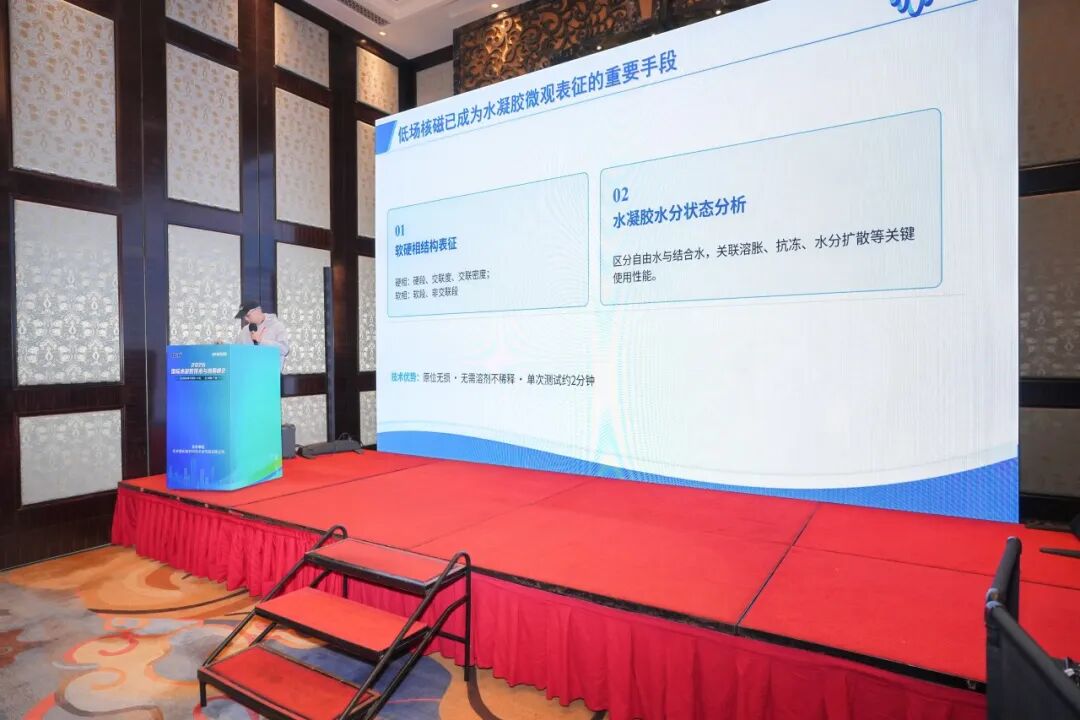
Finally, the speaker concluded: Low-Field NMR technology is an in-situ, rapid, and non-destructive testing method that can be combined with mechanical testing, morphological observation, and other characterization methods for cross-validation, providing support for material research and development and quality control.
03 Conclusion
This summit provided a dialogue platform from frontier science to engineering implementation for researchers and industry parties in the hydrogel field. The value of Low-Field NMR characterization technology is reflected in its ability to solve practical material problems. Niumag Analytical will continue to focus on directions such as hydrogel electrolytes and bio-based films, working with industry-academia-research partners to accumulate typical application cases, promoting the implementation and application of microscopic characterization methods in formulation research and development, process regulation, and quality control, and empowering soft matter material innovation and industrial upgrading with precise characterization.
 Scan QR Code
 Scan QR Code
 Phone Support
Phone: 400-060-3233
After-sales: 400-060-3233
 WeChat Support

 Official Account

Back to Top