


Unlike companies that focus on general-purpose instruments, Niumag specializes in customized and application-specific solutions, primarily serving academic research and industrial sectors. This has led Niumag to carve out a distinctive path — developing targeted solutions in areas such as seed testing and illegal cooking oil detection.
As a leading domestic scientific instrument manufacturer, Suzhou Niumag Analytical Instrument Co., Ltd. (hereafter referred to as Niumag) has remained focused on low-field nuclear magnetic resonance (NMR) technology and its application ecosystems. From its humble beginnings to establishing a solid presence in a competitive market, Niumag has spent 15 years dedicated to R&D, market exploration, and collaborative innovation. In this journey, the company has delivered original technologies, pioneered new products, and promoted industry–academia–research partnerships that have significantly contributed to the growth of the low-field NMR market in China.
To mark Niumag’s 15th anniversary, Instrument.com.cn sat down with Ma Lanfeng (Chairperson of the Shanghai Analytical Instrument Industry Innovation Alliance), Liu Baolin (Dean of the School of Medical Devices & Food Engineering, USST), Professor Nie Shengdong (also from USST), and Niumag Vice Presidents Li Xianghong and Zhang Yingli to discuss the company’s development, achievements, and vision for the future.
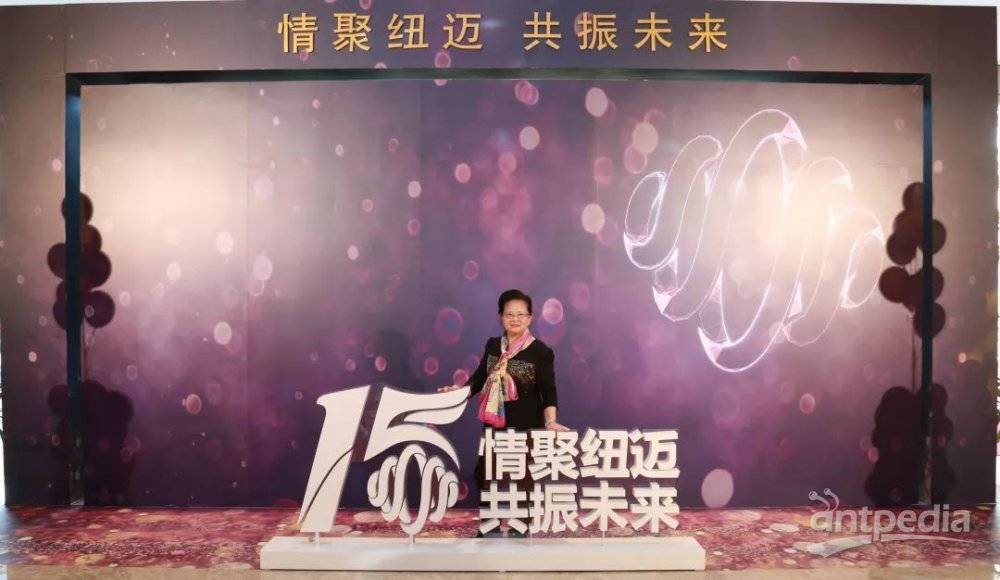
Ma Lanfeng, Chairperson of the Shanghai Analytical Instrument Industry Innovation Alliance
Instrument.com.cn: From its founding in 2003 to 2018, Niumag has steadily grown as a domestic instrumentation leader. What’s your evaluation of the company’s journey?
Ma Lanfeng: In the past, the low-field NMR market was entirely dominated by foreign players, with almost no presence from Chinese companies. Fifteen years ago, Niumag began its journey in Pudong, Shanghai — choosing a challenging road to develop mid- to high-end low-field NMR systems.
Despite many obstacles and setbacks along the way, the company persevered through innovation and grit. Their journey required not just technical expertise but true passion and conviction. Niumag didn’t just make instruments — they upheld a mission.
Unlike general-purpose vendors, Niumag focuses on custom-built, professional instruments tailored for universities and industrial applications. This led them to prioritize solutions in niche areas — like seed quality inspection, synthetic rubber testing, and the detection of illegal “gutter oil.” Notably, when the gutter oil scandal emerged, China’s Ministry of Science and Technology launched a national call for detection technologies. Niumag’s instrument was one of only three selected — praised for its speed, accuracy, and practicality.
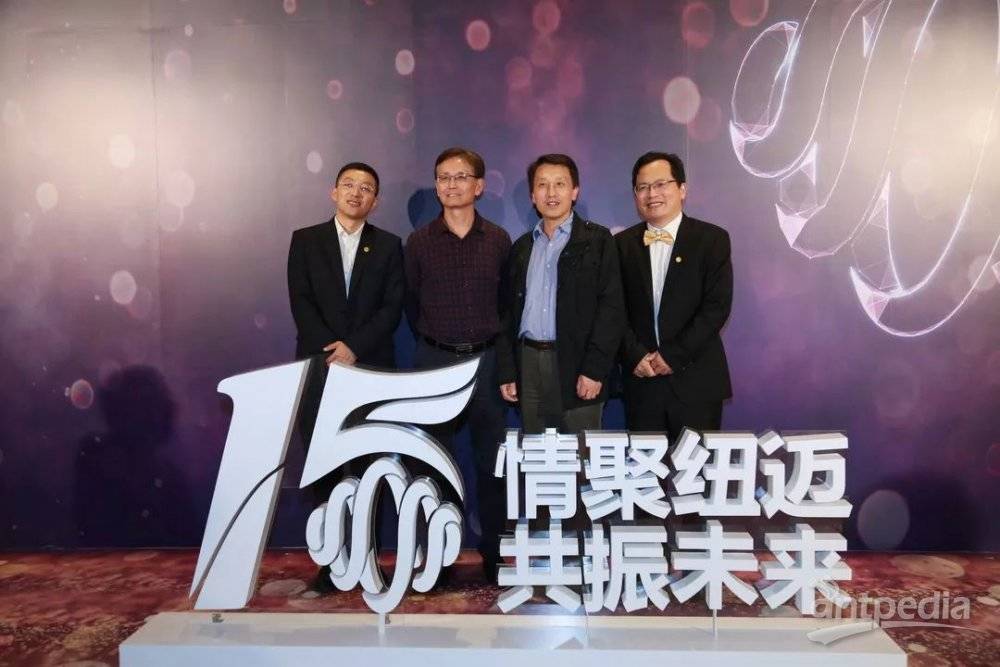
Zhang Yingli (VP, Niumag), Prof. Nie Shengdong, Dean Liu Baolin (USST), and Chairman Yang Peiqiang (left to right)
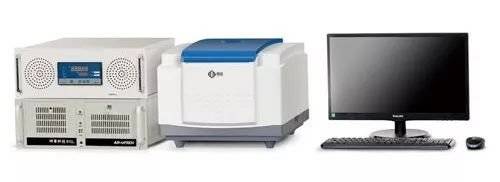
Niumag’s PQ001-20-025V Instrument for “Gutter Oil” Detection
Instrument.com.cn: Dean Liu and Professor Nie, as the very first customer of Niumag, your institution has maintained a strong partnership over the years. Could you share more about this collaboration?
Liu Baolin: Our School of Medical Devices and Food Engineering at the University of Shanghai for Science and Technology (USST) was established in 2003. Prof. Nie’s research team focuses on MRI, medical imaging, and X-ray technologies. When we first built our lab, we searched for NMR equipment and discovered Niumag — a domestic manufacturer of low-field NMR. We purchased four systems, becoming their first customer.
Since then, we’ve engaged in deep collaborative efforts — from co-training graduate students to joint project applications. Our partnership has helped Niumag expand into food safety and other industrial sectors. One major outcome was the development of testing technologies for food contaminants such as gutter oil, fake milk, toxic capsules, and counterfeit honey.
After the 2008 gutter oil scandal, our graduate students began research using Niumag’s low-field NMR to analyze illegal cooking oil. This project received funding from the National Natural Science Foundation and drew attention from the Ministry of Science and Technology — eventually helping Niumag secure major national science instrument grants and deepen its technical development and market reach.
Nie Shengdong: My research focuses on software algorithms — which are critical for interpreting NMR signals. Some of our PhD graduates have gone on to specialize in NMR software algorithms used in Niumag instruments. Mr. Yang (Chairman of Niumag) is very hands-on and involved in technical breakthroughs.
Through our cooperation, we’ve published numerous research papers and received several national invention patents. It’s a textbook example of a successful industry–academia–research partnership.
Instrument.com.cn: Dean Liu, in your opinion, which areas will low-field NMR technology focus on in the coming years?
Liu Baolin: I believe the future of low-field NMR lies in biopharmaceuticals — particularly in assisting drug development through small animal imaging. Additionally, it will continue to expand in national strategic sectors such as new energy and food quality and safety.
In the food industry, many current standards still rely on traditional analytical methods. As a newer technology, low-field NMR requires time, validation, and widespread adoption to be fully recognized as a standard tool.
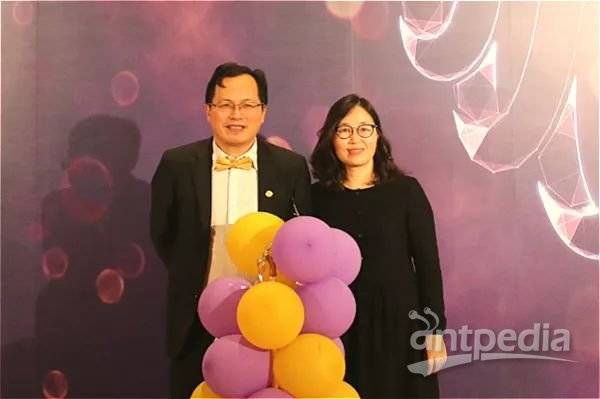
Niumag Chairman Yang Peiqiang with VP Li Xianghong
Instrument.com.cn: VP Li, as someone who officially took over company management in 2017, what do you see as the biggest challenge today? Where is Niumag headed next?
Li Xianghong: Although I began assisting with management after our relocation from Shanghai to Suzhou in 2009, I fully assumed responsibility by the end of 2017. The challenges are multi-dimensional, but I’d say the biggest ones stem from people — and from management itself.
Our customers are mainly research institutions and universities. These users have high expectations for innovation and technical performance, so our products must often be customized. As a result, our sales teams must act as consultants — helping clients refine needs and co-develop solutions. This makes the sales cycle longer and more complex — sometimes it takes more than five years to close a deal.
Customized solutions also introduce technical variability, which complicates post-sale service and maintenance. That’s why seamless collaboration between pre-sales, mid-sales, after-sales, and R&D teams is so critical. We also require a highly educated workforce — most of our staff hold master’s degrees or higher.
Before I stepped into the role, I often found myself “picking out problems” from the outside. But once inside, I realized some of these issues take time to resolve. With over 160 employees and a growing postdoctoral talent pool — 2/3 of whom stay with us — our biggest challenge now lies in internal management.
We’re actively improving organizational structure, optimizing internal systems, establishing career growth pathways, and building a long-term incentive system — all to support sustained growth while continuing our technological innovation.
From a strategic perspective, Niumag is building an application ecosystem around four core sectors: education, agriculture, life sciences, and materials — along with energy and georesources.
We’re actively transitioning from traditional manufacturing to “intelligent manufacturing” and service-oriented operations. This includes scaling up our low-field NMR testing services and expanding in education and research markets. Meanwhile, we’re also exploring broader industrial applications.

Exterior view of Niumag Analytical headquarters
Instrument.com.cn: Mr. Zhang, as a senior team member, you’ve grown alongside the company for over 11 years. Could you share some personal reflections from that journey?
Zhang Yingli: Before I became an employee, I was actually a Niumag user. As a graduate student under Prof. Nie Shengdong, I joined Niumag in 2007 — the company’s first employee with a research background.
I dove straight into R&D. At times, I would launch 7–8 projects within just two months. Many of those projects quickly entered the market. We would gather feedback fast, iterate quickly, and improve continuously. It was demanding but fulfilling.
I remember one particularly tough assignment — a two-week deadline. I spent an entire week just reading literature. It was exhausting, but once we delivered the result, the sense of achievement was deeply rewarding. The company recognized this effort and, in 2015, supported my MBA studies at Antai College of Economics & Management, Shanghai Jiao Tong University. I’m incredibly grateful for that opportunity to grow.
Instrument.com.cn: Could you share Niumag’s strengths in new technology development and your outlook for future R&D directions?
Zhang Yingli: At Niumag, we’ve made continuous breakthroughs — resulting in many original technologies and products. Examples include our Solid Fat Content Analyzer, Fibre Oil Content Analyzer, Nano-Porosity Analyzer, and Crosslink Density Analyzer — all based on low-field NMR platforms.
Our current R&D team consists of 34 members across five departments — covering basic research, system integration, customer-specific applications, and standardization for mass production. We strive to manage every step in-house, from concept to commercialization.
Initially, we focused on educational instruments. As our technology matured in stability and precision, we moved into research applications. Later, we pushed even further into industrial scenarios — completing the transition from education to research to industry.
Looking ahead, we will continue to embrace our “Specialised, Agile, Persistent” culture. We plan to explore two key directions:
First, connectivity. We aim to integrate our NMR systems with other instruments to create a comprehensive technical platform.
Second, intelligent service. We envision a “self-feedback” system where every instrument can transmit operational data remotely — transforming after-sales support from passive to proactive and further enhancing the value we provide.
Postscript:
In this in-depth interview with Niumag’s leadership, long-term users, and industry experts, we saw how the company has carved out a unique path in low-field NMR technology. Niumag’s commitment to innovation and customer-focused solutions remains unwavering, despite many challenges. With this level of dedication, the future of China’s homegrown instrumentation industry looks very promising.
Source: Instrument.com.cn – Original Article
Instrument used:
NMI20-060H-I Low-Field NMR Imaging Analyzer
 Scan QR Code
 Scan QR Code
 Phone Support
Phone: 400-060-3233
After-sales: 400-060-3233
 WeChat Support

 Official Account

Back to Top