


[Introduction] Recently, Instrument Information Network conducted a special interview with Professor Yao Yefeng, Director of the Shanghai Magnetic Resonance Key Laboratory. He shared insights on university-industry collaboration, the future of low-field NMR technology, and more.
Located in the East China Normal University campus in Putuo District, Shanghai, there is a magnetic resonance key laboratory founded in the 1950s. It was established by Mr. Wu Xuewen, one of the founders of China’s spectroscopy field and former vice president of East China Normal University. This lab has produced countless talents in the field of NMR research, and it also gave rise to the predecessor of the domestic low-field NMR brand “Numag Analysis,” Shanghai Numag Electronics Technology Co., Ltd.
In August 2017, the Shanghai Magnetic Resonance Key Laboratory and Suzhou Numag Analysis Instrument Co., Ltd. jointly established the “ECNU-Numag Magnetic Resonance Technology Joint Laboratory,” continuing the tradition of university-industry collaboration to advance the research and application of low-field NMR technology. Recently, Instrument Information Network conducted a special interview with Professor Yao Yefeng to discuss topics such as university-industry collaboration and the future of low-field NMR technology.
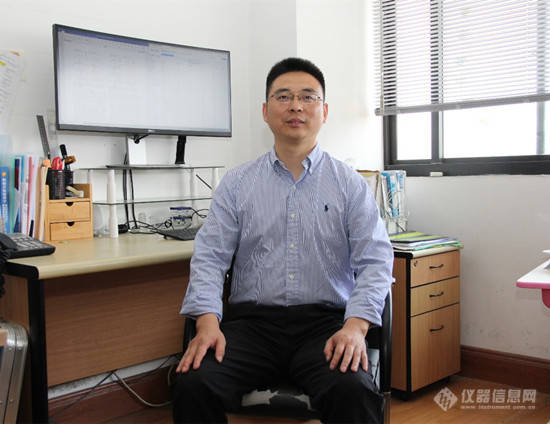
Professor Yao Yefeng of East China Normal University
Professor Yao Yefeng is a professor at East China Normal University and the Director of the Shanghai Magnetic Resonance Key Laboratory. He completed his graduate studies at East China Normal University, where he was mentored by the renowned solid-state NMR expert Professor Chen Qun. After graduating, he went to Germany’s Max Planck Institute of Polymer Research to pursue a Ph.D. under the guidance of Professor H.W. Spiess, continuing his research in solid-state NMR and polymer physics. In 2008, he returned to China and joined the Shanghai Magnetic Resonance Key Laboratory.
Since returning, Professor Yao has focused on the development and application of NMR technology. His research includes high-performance polyethylene materials, solid-state electrolytes and all-solid-state batteries, and perovskite materials. In NMR equipment development, Professor Yao developed a hyperpolarization device based on nuclear hydrogen and created a series of techniques to prolong the signal lifetime of nuclear hydrogen hyperpolarization. From 2013 to the present, he has published 49 SCI articles, with 26 articles having an impact factor above 5. His specialized research in high-performance polyethylene materials led him to be hired as a technical consultant by Teijin Aramid in the Netherlands to guide the development of ultra-high strength polyethylene fibers. His work in solid-state NMR research and applications earned him the prestigious Wang Tianjuan Spectroscopy Award in China.
Looking back at the development of the laboratory, Professor Yao recalls, “The lab was established in 1952 under the name ‘East China Normal University Spectroscopy Department.’ The founder, Mr. Wu Xuewen, made significant contributions to NMR, and as early as 1958, he used instruments he built himself to observe NMR phenomena for the first time in China. In the 1980s, he won the Shanghai Science and Technology Award for developing NMR instruments. Building on the foundation laid by Mr. Wu in instrument development and engineering, the lab developed two major strengths: magnetic resonance medical imaging and low-field NMR instrument system development. It gave rise to Shanghai Calerfe Magnetic Resonance Technology Co., Ltd. (focused on medical imaging NMR) and Shanghai Numag Electronics Technology Co., Ltd. (now Suzhou Numag Analysis Instrument Co., Ltd., focused on low-field NMR instrumentation).”
The lab currently houses high-end NMR equipment, including Siemens 3T MRIs, 500 MHz liquid/600 MHz solid-state/700 MHz liquid NMR spectrometers, and Numag’s VTMR NMR temperature-variable analyzer. Professor Yao Yefeng stated, “We see great prospects for low-field NMR in industrial and scientific fields. Together with Numag, we established the Magnetic Resonance Technology Joint Laboratory to create a domestic-leading, internationally competitive lab, focused on low-field NMR development and application.”
After the joint laboratory was established, East China Normal University and Numag Analysis began to experiment with various ways to combine the technological strengths of academia with the needs of businesses, integrating them into the deep development and transformation of low-field magnetic resonance system technology. Professor Yao shared a few successful cases, including the development of a method for measuring cross-link density using the double quantum (DQ) method and the creation of a high-throughput intelligent quality analysis system for edible oil based on low-field NMR technology.
In daily life, we encounter many “soft materials” such as rubber, adhesives, jelly, detergents, and cosmetics. These materials are soft condensed states between solids and ideal fluids, typically made of large molecules or groups. Due to their sensitivity to small external forces, non-linear response, self-organizing behavior, and performance closely related to network structure, traditional analytical methods struggle to effectively observe them. The double quantum NMR research method, once exclusive to foreign manufacturers, has now been successfully implemented on Numag’s temperature-variable NMR equipment (0.5 Tesla) through joint efforts, and has been applied to measuring the cross-link density of natural rubber, with performance metrics approaching imported instruments.
The second case is the authenticity identification of edible oil. Some unscrupulous merchants mix low-cost oils into high-end oils for profit. This blending is difficult to detect using traditional methods, but through developing a data processing algorithm model, the laboratory has developed an NMR fingerprint spectrum sequence for edible oils on Numag’s low-field NMR equipment. This system can now distinguish between genuine and counterfeit oils. With support from the Shanghai Science and Technology Commission, Numag has developed a high-throughput intelligent quality analysis system based on low-field NMR technology for edible oils. The next step is to make this system portable for use by industry, commerce, and quality inspection agencies for on-site fast testing.
Professor Yao Yefeng is particularly impressed with Numag’s relentless pursuit of technology. He provided an example: “We once purchased a low-field NMR device from Numag for relaxation measurements. Although relaxation measurements don’t require high-performance equipment, Numag continually upgraded the technology, integrating our feedback to improve the instrument’s capabilities, which showcases their commitment to technological advancement.”
Every weekend, Numag’s technicians attend NMR-related courses at East China Normal University. Professor Yao says this is one of the experiences that both sides have learned from in their collaboration. “In our cooperation, we found that the language of business and academia does not always align. Even though we both operate within the niche field of NMR, we don’t always understand each other’s intent immediately. To make communication more seamless, it’s essential for teachers to go out and for technical personnel to come in, which is why we host technical exchange meetings and Numag engineers take classes at the university.”
Achieving communication between academia and business also involves many challenges in university-industry transformation, and Professor Yao has deep insights into this. “After years of communication with various enterprises, we’ve summarized a few key points. First, both enterprises and researchers should be clear about their roles: research focuses on fundamental exploration, while businesses handle market development and technology promotion—blurring these roles leads to disaster for both. Second, communication must be strengthened. All unsuccessful cases boil down to poor communication, which is why we’ve established a long-term communication mechanism with Numag. Third, it must be mutually beneficial. Both sides must create a space where both can benefit—not just in terms of money, but also through knowledge exchange and a win-win collaboration.” Professor Yao added, “If these three points are achieved, then cooperation between enterprises and research institutions has a promising future.”
At the end of 2018, the Peking University after-sales rights protection incident triggered significant attention in the NMR industry. Professor Yao believes the key to the development of domestic NMR instruments lies in the evaluation system and craftsmanship. He pointed out, “When NMR technology transitioned from continuous wave to Fourier transform, it was in a critical phase. The lack of technical accumulation in China caused domestic NMR to miss the golden development period. However, in the process of catching up, the original research evaluation system placed too much emphasis on SCI articles, leading to a severe shortage of engineering and technical talents in the research system. Additionally, the lack of a craftsmanship mentality in the industry made domestic NMR instrument manufacturing levels far inferior to foreign products.”
However, this situation is gradually reversing. The development and engineering of instruments is a tedious and long-term process. Professor Yao hopes that when universities and research institutes develop evaluation systems for engineering and technical talents, they will create more targeted assessment indicators based on the development patterns of engineering research. He also hopes that the instrument development community will be better supported in the evaluation and incentive systems. In the future, if disruptive technologies such as high-temperature superconductivity and hyperpolarization can be successfully applied to NMR instruments, domestic NMR instruments, especially domestic high-field NMR, will have the opportunity to “catch up” with imported brands.
Of course, compared to high-field NMR devices that focus on the research market, Professor Yao is more optimistic about the development prospects of low-field NMR technology. “High-field NMR instruments are too delicate and are subject to many space and cost constraints. It is difficult to imagine applying them in certain industrial scenarios. The best application of low-field NMR technology lies in industrialization.”
“For example, the improved edible oil authenticity identification method based on low-field NMR technology can also be applied to yogurt, nuts, grains, corn, and soybeans. In addition, low-field NMR technology can be used to measure the differences in oil content between haploids and polyploids, enabling effective screening of corn seeds. It can also develop pulse sequences and multi-relaxation inversion techniques suitable for core analysis, enabling rapid non-destructive testing of rock parameters such as porosity and permeability, thereby enhancing the efficiency of oil and gas exploration. Professor Yao stated, “The current applications of low-field NMR are just the tip of the iceberg. There are many more applications to explore. Low-field NMR technology has great potential, not only in traditional industries like fiber, food, materials, and energy but also in emerging industries like nanomaterials, new energy, smart manufacturing, and genetic medicine.”
In the next steps, the laboratory will continue collaborating with Numag to develop the double quantum (DQ) method for measuring cross-link density and provide Numag with a complete set of analysis and testing methods, explanations, and procedures for natural rubber cross-link density DQ analysis. Additionally, the lab will continue developing low-field NMR fingerprint spectra sequences and work on setting up relevant standards for the food industry to safeguard food safety.
Professor Yao Yefeng concluded: “Currently, the domestic NMR industry is still at an early stage with small enterprises and low-level competition. It is essential to accelerate the technological innovation capabilities of the NMR instrument industry and strengthen the university-industry collaboration for NMR instrument research and development.”
As we move towards the industrial market, Professor Yao also sees potential for combining low-field NMR with other technologies. His research team has already started experiments in photocatalysis, and this could be a future direction for collaboration with Numag or other enterprises, contributing to the growth of the domestic NMR instrument industry.
[Source: Instrument Information Network]


 Scan QR Code
 Scan QR Code
 Phone Support
Phone: 400-060-3233
After-sales: 400-060-3233
 WeChat Support

 Official Account

Back to Top