


“Three-Year National Weight Management Campaign”
“The country won’t let you stay overweight”
…
During this year’s Two Sessions, these buzzwords became focal points of national discussion.
Lei Haichao, Director of the National Health Commission, stated that the “Year of Weight Management” initiative will continue to be promoted. At present, the leading risk factors and diseases affecting the health of Chinese citizens stem primarily from chronic non-communicable diseases. Many of these conditions are closely related to individual behaviours, lifestyles, diets, and physical activity — with abnormal weight being a key contributor.

Abnormal body weight significantly increases the risk of hypertension, diabetes, cardiovascular and cerebrovascular diseases, fatty liver, and is even linked to certain types of cancer. Taking personal responsibility for one’s health is absolutely vital.
In March 2024, a study published in The Lancet revealed that global obesity has surpassed one billion cases. Obesity and its associated complications have become one of the most pressing health threats worldwide. As researchers explore the causes, complications, and treatments of obesity, a major challenge lies in acquiring accurate and reproducible body composition data quickly and efficiently.
Against this backdrop, low-field Nuclear Magnetic Resonance (NMR) technology has emerged as a game-changer. Compared to traditional methods of fat analysis in animals — such as Carcass Chemical Analysis (CCA), Bioelectrical Impedance Analysis (BIA), and Dual-energy X-ray Absorptiometry (DXA) — low-field NMR stands out for its low operational costs, non-invasiveness, and high repeatability, making it an ideal tool for studying obesity-related metabolic diseases and evaluating anti-obesity treatments.
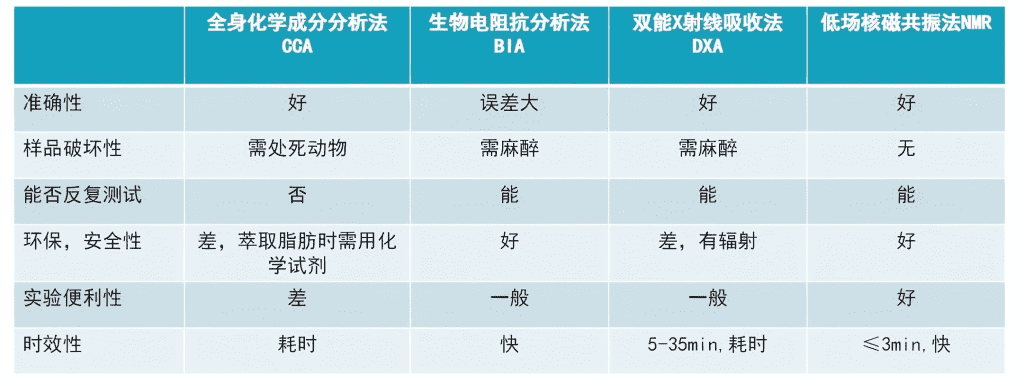
Low operational costs: Reduces barriers to both research and clinical applications, enabling wider adoption across institutions.
Non-invasive: Eliminates the need to sacrifice test animals, preventing damage caused by traditional methods.
Repeatable results: Ensures consistency and reliability of data, providing a strong foundation for scientific research.
Low-field NMR technology is now widely used in small animal models (mice and rats) to monitor fat distribution and deposition within the body. This not only aids in uncovering the underlying causes of obesity-related metabolic diseases in humans but also provides crucial data for evaluating obesity treatment drugs. The visualisation capabilities of low-field NMR allow researchers to observe fat changes within lab animals in real time, leading to a deeper understanding of obesity mechanisms.
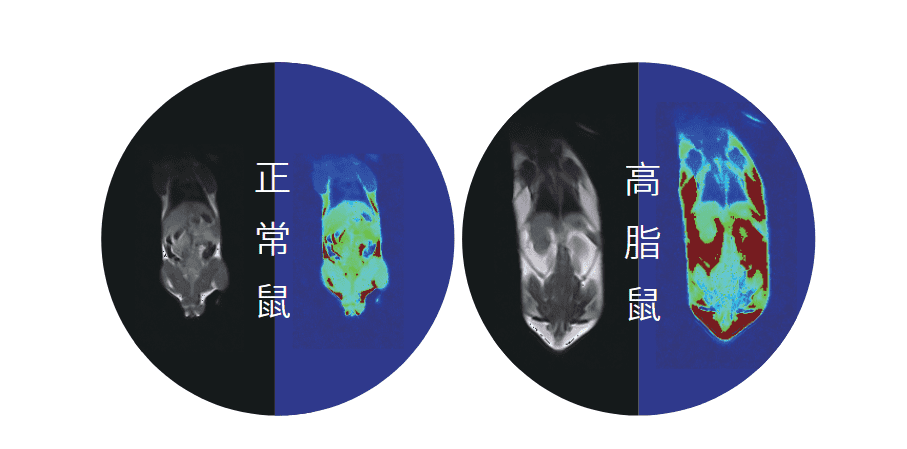
Fat distribution imaging
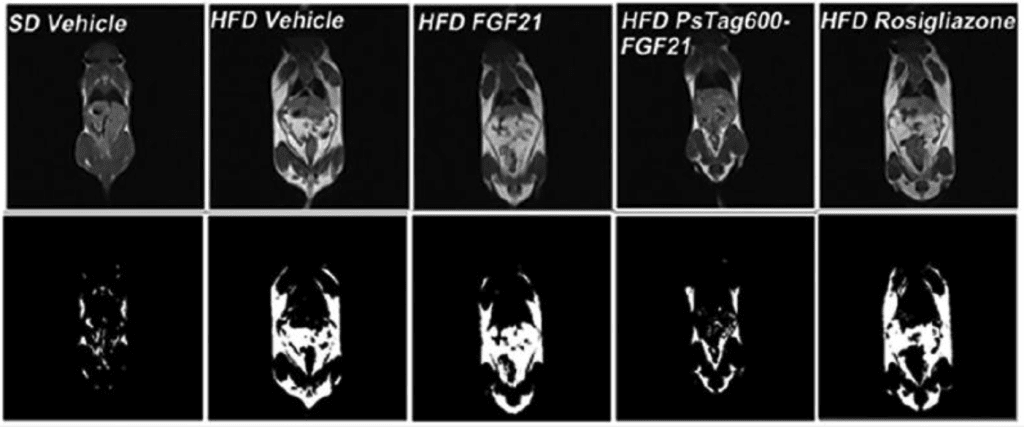
Treatment of high-fat diet mice with FGF21 and PsTag600-FGF21
In June 2024, the National Health Commission, together with 16 other departments, launched the “Year of Weight Management” campaign. Over the course of three years, the initiative aims to establish supportive environments for weight control, significantly raise public awareness and skills, and improve weight-related health issues across specific populations.
Driven by this nationwide campaign, the low-field NMR technology developed by Niumag Analytical (Suzhou) is injecting fresh momentum into obesity research and weight management strategies. We are confident that as this innovative solution continues to gain traction, it will help transform scientific breakthroughs into practical clinical applications — making a meaningful contribution to the global health agenda.
 Scan QR Code
 Scan QR Code
 Phone Support
Phone: 400-060-3233
After-sales: 400-060-3233
 WeChat Support

 Official Account

Back to Top