

In the green transformation wave of infrastructure construction, “soil-rock,” as a low-carbon and environmentally friendly new material, is gradually replacing traditional solidifying agents like cement and lime, becoming a mainstay in subgrade improvement and foundation reinforcement. During the solidification process, soil-rock fills micro-pores and forms a skeleton, significantly enhancing the shear strength and durability of the soil mass and reconstructing the internal moisture distribution. So, how does soil-rock alter the physical and chemical properties of soil at the microscopic level? What specific changes occur in the pore water distribution characteristics after improvement?
Compared to traditional soil moisture testing methods such as the oven-drying method and infrared method, low-field nuclear magnetic resonance (NMR) technology offers the advantages of being non-destructive, rapid, and precise. It can provide accurate moisture content results within minutes and characterize the internal water distribution in soil. Furthermore, low-field NMR technology can characterize pores across the full size range from nanoscale to millimeter scale within the soil, enabling the detection of real-time dynamic changes in water distribution during phase transitions under various environmental conditions (drying, saturation, pressurization, etc.).
Research on soil-rock improved soil based on NMR technology not only reveals the evolution patterns of microscopic pore water distribution characteristics but also provides a solid theoretical basis for optimizing the improvement agent formulation and predicting the long-term performance of the soil mass.
Case Study on Pore Water Distribution Characteristics of Soil During Compaction, Saturation, and Drying Processes Using Low-Field NMR[1]:
Sample Preparation and Testing:
Sample Source: The soil material used in the experiment was silty clay taken from Yanqing District, Beijing, China.
Pretreatment: The soil sample was first oven-dried at 105°C and then cooled in a sealed bag for later use.
Sample Configuration: Specimens were prepared using polytetrafluoroethylene (PTFE) ring knives (inner diameter 45.0 mm, height 20.0 mm). The preparation plan covered combinations of different compaction degrees (80%, 85%, 90%, 95%, 100%) and different initial moisture contents (12%, 16.5%, 20%).
Pore Water Distribution (PWD) Measurement: PWD measurements employed low-field nuclear magnetic resonance (NMR) technology. The core of the method lies in converting the NMR-measured T₂ spectrum into a pore water distribution curve with clear physical significance.
Experimental Conclusions:
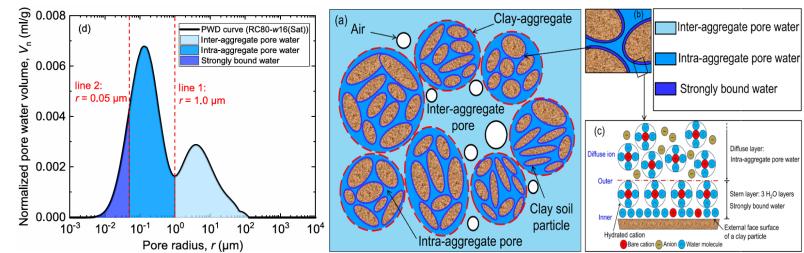
Figure 1: Models of Different Types of Pore Water Distribution
Figure 1 categorizes water types based on NMR: Strongly Bound Water: tightly adsorbed onto clay particle surfaces via van der Waals forces; Intra-Aggregate Pore Water: fills the internal pores within aggregates formed by the gathering of clay particles; Inter-Aggregate Pore Water: exists in the macro-pores between aggregates, being the freest and most easily discharged water in the soil. The distribution models clearly show the locations of different water components within the soil mass.
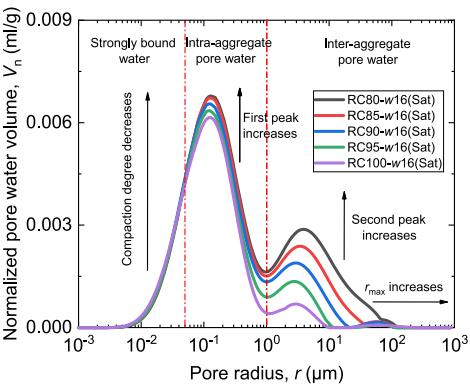
Figure 2: Pore Water Distribution Curves of Saturated Compacted Specimens
Figure 2 shows the pore water distribution characteristics of saturated compacted specimens under different compaction degrees: indicating that as the compaction degree increases, the pore water content generally shows a downward trend. This illustrates that during the compaction process, the pore space of the soil is compressed, leading to a reduction in pore water content.
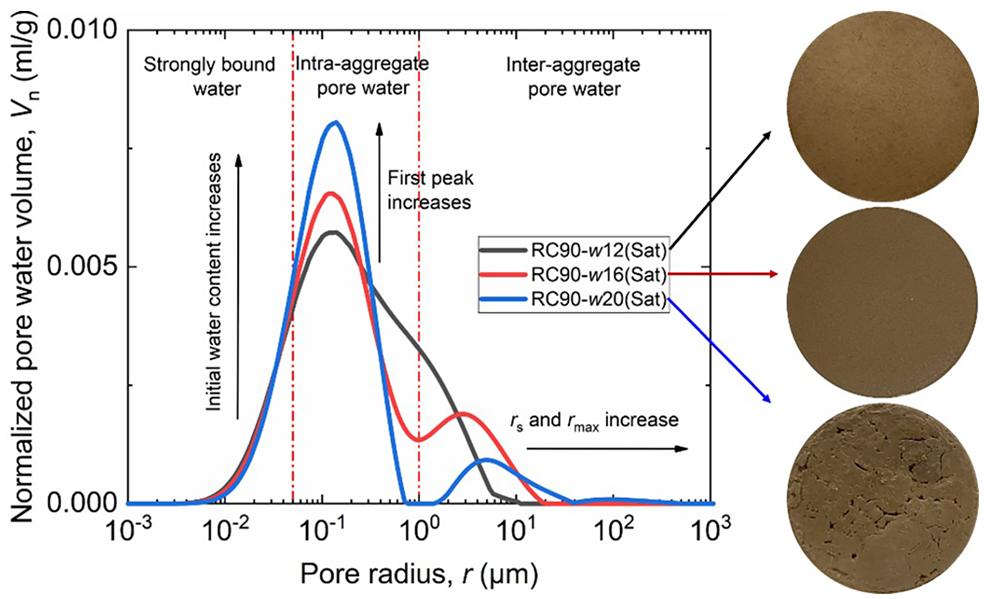
Figure 3: Water Distribution Characteristics of Saturated Compacted Specimens with Different Initial Moisture Contents
Figure 3 shows that at lower initial moisture content (w12), the curve exhibits a single-peak morphology, indicating that soil particles have not yet sufficiently aggregated to form an aggregate structure. When the initial moisture content increases to (w16) and (w20), the curve transforms into a double-peak morphology, signifying that soil particles have aggregated into clumps, forming a typical dual structure where “intra-aggregate pores” and “inter-aggregate pores” coexist.
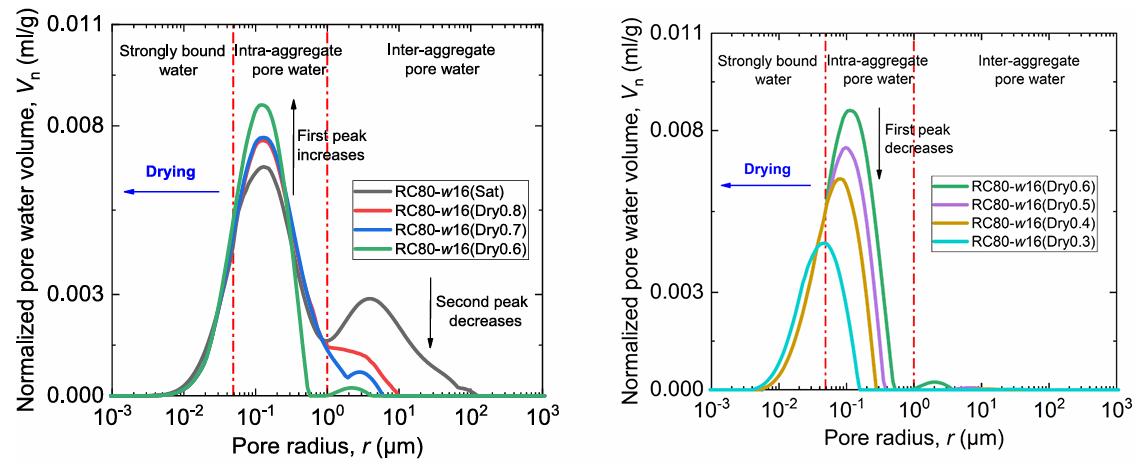
Figure 4: Dynamic Evolution Characteristics of Pore Water Distribution During Soil Drying Process (a, b)
Figure 4 presents the soil drying process based on NMR technology, divided into two stages:
Stage 1 (Figure 4a): In the early stage of drying, as saturation begins to decrease from 100%, the water in larger pores is rapidly discharged. The first peak may temporarily increase instead. This is because after water in large pores is replaced by air, discontinuous water may be identified as water in smaller pores, causing a “false” increase in measured pore water content.
Stage 2 (Figure 4b): As drying continues, the curve area decreases with the reduction in saturation, indicating an overall decline in soil water content. After the inter-aggregate pore water is completely discharged, the intra-aggregate pore water content begins to decrease rapidly. Simultaneously, the entire curve shifts to the left, reflecting the shrinkage phenomenon during the soil drying process.
This case study utilizes low-field NMR technology to classify water components in soil and investigates their distribution characteristics during compaction, saturation, and drying processes. It provides support for characterizing pore water distribution in soil-rock improved soil.
References:
[1] Zhao Y X, Wu L Z, Li X. NMR-based pore water distribution characteristics of silty clay during the soil compaction, saturation, and drying processes[J]. Journal of Hydrology, 2024, 636(000):12
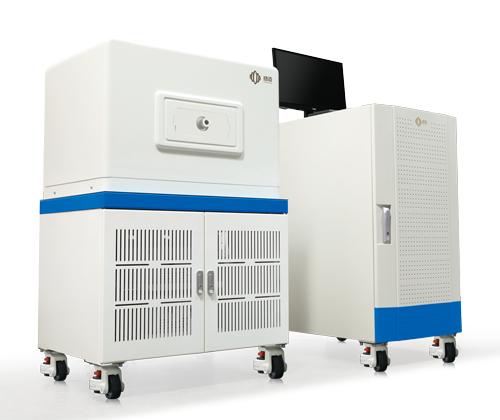
Recommended: Medium-Size Nuclear Magnetic Resonance Imaging Analyzer
 Scan QR Code
 Scan QR Code
 Phone Support
Phone: 400-060-3233
After-sales: 400-060-3233
 WeChat Support

 Official Account

Back to Top